


Somebody hands you a glass at a party, you sip, and the best verdict you can manage is “yeah, it’s nice” or “eh, not for me.” That’s not a personality flaw. It’s a vocabulary problem.
You’re having a real, specific, physical reaction to what’s in the glass. You just haven’t learned to point at the thing causing it. And almost everything you love or resent about a wine comes down to five levers: acidity, tannin, sweetness, alcohol, and aroma. Feel each one on its own and you stop being at the mercy of the pour. “Too tart for me.” “The tannin’s what’s throwing me.” You’ll be able to say it, and be right.
So taste something. Pour whatever’s open; red teaches you more because it has tannin to notice, but anything works. Give it five quiet minutes and go in this order.
Look, then get your nose all the way in
Tilt the glass against something white and glance at the color. You’re not divining anything mystical; color mostly hints at age and grape. A red going brick-orange at the rim has some years on it. A white deepening toward gold is either older, oakier, or sweeter. Fine. Noted. Move on.
But do not, and this is the first mistake nearly everyone makes, swirl the glass, watch the liquid run down the sides in slow streaks, and conclude anything about quality from it. Those streaks (people call them “legs” or “tears”) are a physics trick. Alcohol evaporates faster than water and has lower surface tension, so the thin film left on the glass gets tugged into rivulets. Thick, slow legs mean the wine is high in alcohol, maybe carrying some sugar. They say nothing about whether it’s any good. A cheap 15-percent bruiser has gorgeous legs. Let them go.
Swirl, and no, it’s not snobbery
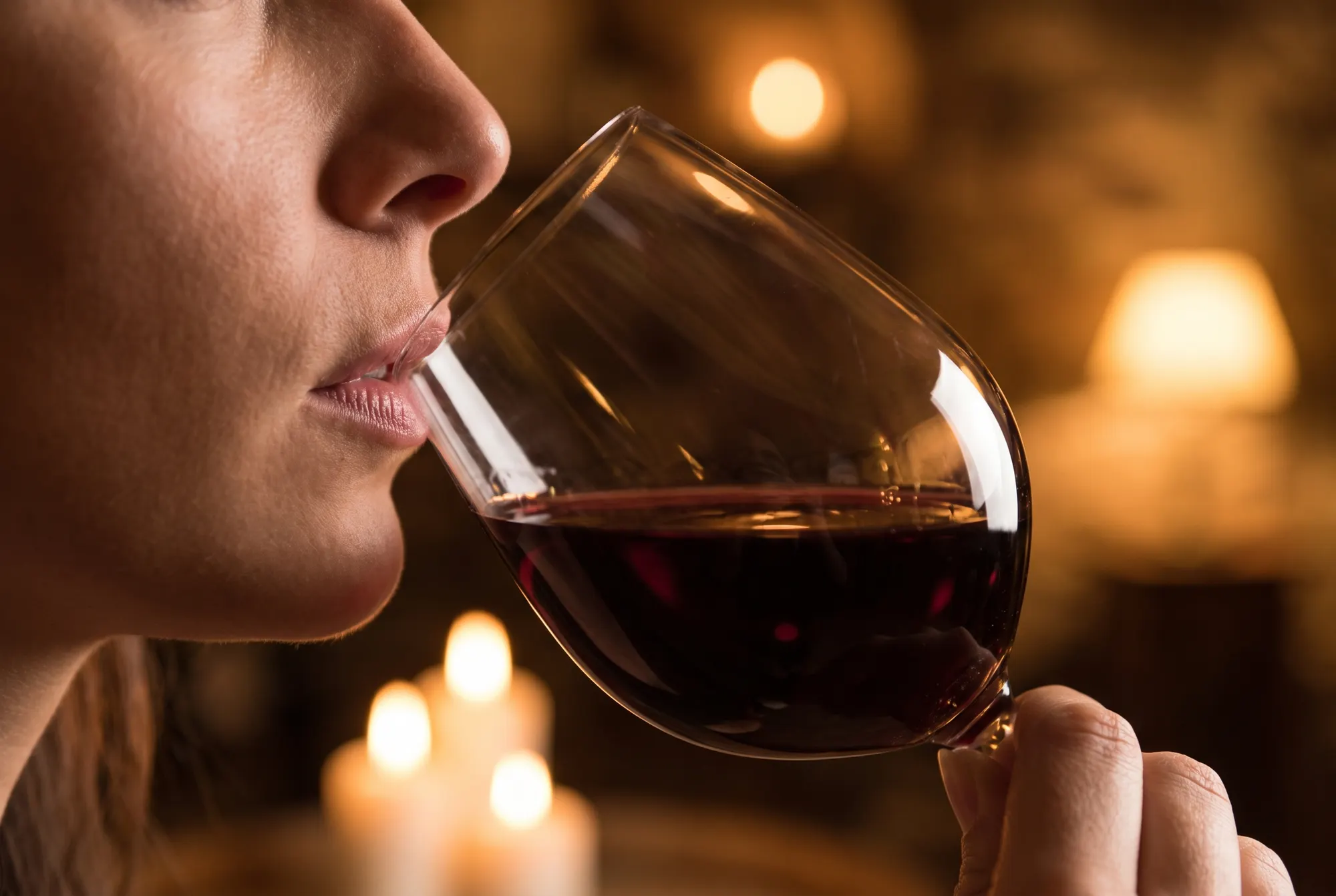
The real reason to swirl: smell is where most of what you call “taste” actually happens, and swirling multiplies what you can smell. Aroma rides on volatile compounds, molecules light enough to float off the surface into the air. Swirling smears a thin film of wine around the inside of the glass, which sharply increases the surface area exposed to air, so more of those molecules evaporate up toward your nose. That’s the whole trick. You’re building a bigger cloud to sniff.
Most people swirl too violently, sloshing wine halfway up the bowl like they’re trying to start a whirlpool. Keep the base of the glass on the table, make small tight circles, three or four turns, done. Then get your nose actually into the glass, not hovering politely an inch above the rim but down in it, and take a couple of short sniffs instead of one long dramatic inhale. Short sniffs work better. Your nose fatigues fast.
What are you smelling for? At this point, just broad categories. Fruit or not-fruit. If a red smells like a green bell pepper you forgot in the crisper drawer, that’s a real, nameable thing: an under-ripe note common in Cabernet Sauvignon and its cousins, caused by a family of compounds called pyrazines. Not a flaw exactly, but if you dislike it, at least now you know what to call it. If a white smells like a wet river stone after rain, or a just-struck match, that’s the flinty, stony character people chase in certain crisp whites. You don’t have to like any of it. You just have to notice it.
The first sip is for structure, not flavor
Now sip, but don’t try to “taste” it in the flavor sense yet. Treat the first sip as a diagnostic. You’re feeling for the skeleton of the wine, and there are three things to find.
Acidity is the tartness, the zing that pricks the sides of your tongue and sets your mouth watering a second after you swallow. Bite a raw lemon wedge; that flood of saliva is a pure acid response. In wine, more acid reads as fresh, crisp, lively; too little reads as flabby and dull, like soda gone flat. If a wine strikes you as sharp or sour and you don’t love it, that’s acid talking, and there’s no shame in wanting less of it.
Tannin is the drying, grippy sensation, not a taste but a texture, that leaves your gums and the insides of your cheeks feeling blotted with a towel. Steep a black tea bag too long and drink it plain; that pucker is tannin. It comes from grape skins, seeds, and the oak barrels wine ages in, which is why big reds have it and most whites barely do. Some people love the grip. Some feel like they’re chewing a leather wallet. Both reactions are legitimate.
Alcohol shows up as warmth, a faint heat at the back of the throat and down the chest, a distant echo of the burn from a shot of vodka. Most dry table wines land somewhere between about 12 and 15 percent, and when a glass strikes you as hot or heavy, high alcohol is usually why.
Move the sip across your whole mouth as you check for these three. And ignore everything you were ever told about a “tongue map,” that diagram claiming sweet lives on the tip and bitter at the back. It’s a century-old mistranslation that refuses to die. Your taste buds pick up all the basic tastes just about everywhere.
Now find the smell again, from the inside
Keep a little wine in your mouth and breathe out gently through your nose. That bloom of flavor that suddenly arrives? That’s retronasal smell, aroma reaching your nose through the back of your throat rather than through your nostrils. It’s why food goes flat when you’re congested, and why wine seems to “taste” of so much more than the handful of structural things you just measured. The cherry, the vanilla, the leather, the lime peel: they all live here. Most of what you call flavor is happening in your nose, backward.
Put it together, and name the lever
Here’s the payoff. Ask one question: if you don’t love this glass, which lever is doing it to you? Too tart is acid. Too drying and bitter is tannin. Too sweet is sugar you can feel coating your tongue. Too hot and heavy is alcohol. Smells like something you’d rather not put in your mouth, that’s aroma. Nine times out of ten it’s one or two of these pulled too far, not some mysterious failure of the wine or of your palate.
And once you can name it, you can shop. Hate the grip of a big Cabernet? Point yourself at lower-tannin reds like Pinot Noir or Gamay. Find most whites too sharp? Steer away from the lean, high-acid ones toward rounder, softer styles. “I just don’t like wine” was never true. You dislike specific levers, pulled too far, and now you can say which.
So pour the next glass slower. Read it before you rate it. The wine has been talking the whole time. You just learned the language.