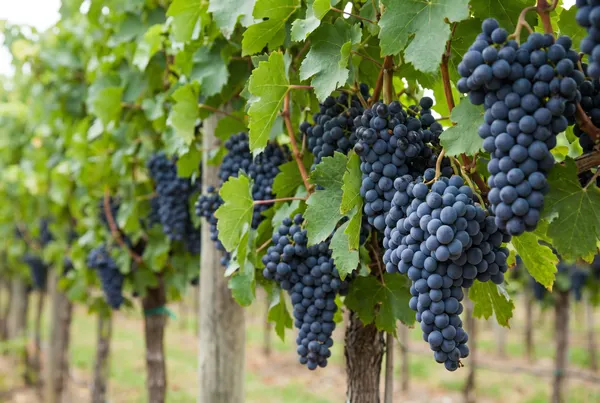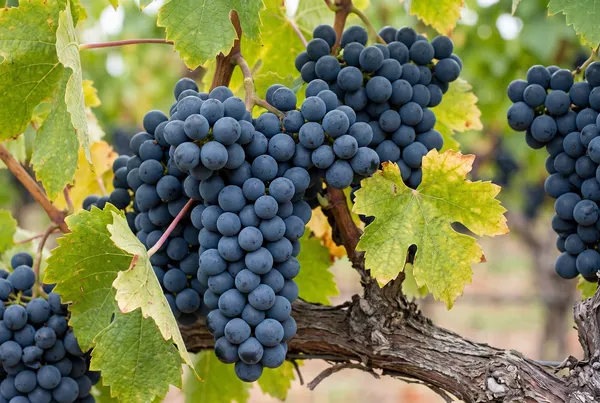


Bairrada's fierce, tannic red, often called Portugal's Nebbiolo and just as unforgiving when young.
At a Glance
Baga is the tough, high-acid red grape of Bairrada, on Portugal's central Atlantic coast. Small berries and thick skins give wines packed with tannin (the drying, grippy compound from grape skins) and acidity, wines that can be brutal in youth and stunning with age. The comparison you will hear is Nebbiolo, the grape behind Italy's Barolo, and it fits: both demand patience.
Color: Black
Also known as: Tinta Bairrada; Tinta Fina; Poeirinho
Origin: Central Portugal, most likely Bairrada; Dão also proposed
Grows best in: Bairrada; also Dão and the wider Beiras
Signature flavors: Sour cherry, red plum, blackberry, with coffee, hay, tobacco, and a salty freshness
Body & style: Light sparkling and bright rosé, through to dense reds that age for decades. Very high tannin and acidity.
What It Tastes Like
Baga leads with acidity and tannin, not fruit. The flavors are red-fruited: sour cherry and red plum, with blackberry underneath, and savory notes of coffee, hay, tobacco, and smoke. From the coastal Bairrada vineyards there is often a salty, briny freshness. The wine can be deeply colored, but the sensation is lean and firm, not lush.
Handling changes everything. Cropped high and picked underripe, Baga is astringent and mean, all grip and sourness. Given low yields, a warm year, full ripeness, and sensitive winemaking, it becomes structured and complex, and it ages beautifully. Modern producers destem the fruit and soften the extraction to tame the tannins; traditionalists make wines for the very long haul.
How to tell it apart: the honest confusables are Nebbiolo and Pinot Noir, for the high acid and firm structure rather than any shared flavor. Against Portugal's other famous red, Touriga Nacional, the contrast is clear: Touriga is dense, dark, and floral with blueberry and violet, while Baga is leaner, redder-fruited, higher in acid, and far more astringent. It is Portugal's most rewarding red for patient drinkers and its most punishing for impatient ones.
Where It Grows
Baga is Bairrada's grape, making up the large majority of the region's red plantings, and Bairrada is where it belongs. The clay-limestone soils and cool, damp Atlantic climate shape its high-acid, structured style, though that same maritime weather threatens the late-ripening grape with autumn rot.
It also grows in neighboring Dão and across the wider Beiras, and a little turns up in the Douro under the name Tinta da Bairrada. Some producers hedge against the weather by picking part of the crop early for sparkling wine, a Bairrada specialty. But this is a grape with one true home.
In the Vineyard and Cellar
Baga's small berries and thick skins are the source of its ferocious tannin and color, and its late ripening is its great liability. In Bairrada's wet coastal autumns, growers gamble at harvest: pick early to dodge the rain and get harsh, acidic wine, or wait for full ripeness and risk rot from September downpours. Its naturally high acidity lets it hang late without going flat. It is high-yielding, so quality demands severe crop reduction. In the cellar the choices split sharply, from destemming and gentle extraction for approachable reds to old-school long maceration (extended contact between juice and skins) for age-worthy monsters.
Reading the Label
Most quality bottles read Baga, usually with Bairrada alongside. You may see the synonyms Tinta Bairrada or Poeirinho, and in the Douro, Tinta da Bairrada. A US varietal wine needs 75% of the named grape. The one thing the label often will not tell you: a large share of Baga goes, unnamed, into Mateus Rosé, the medium-sweet pink wine that was for decades one of the best-selling wines on earth.
A Short History
Baga has grown in Bairrada for centuries and is almost certainly native there, given the diversity of its old vines; some attribute it instead to the neighboring Dão. Its parentage is not established. For years its harsh, rustic reputation held it back and much of the crop went into rosé, until a wave of quality-focused producers, led by Luís Pato, proved from the 1980s that it could make serious, ageable wine.
Did You Know? Much of Portugal's Baga never ends up in a serious red at all. It goes into Mateus Rosé, the slightly sweet, faintly fizzy pink wine in the flask-shaped bottle that was a global phenomenon for decades and still sells widely.
At the Table
Serve it at 60 to 64°F (16 to 18°C), and decant young bottles. Baga's tannin and acidity are made for fatty, salty, substantial food. In Bairrada the classic partner is leitão, whole suckling pig roasted until the skin crackles, and that instinct is right: rich pork, roast and grilled meats, duck, and hearty stews all work. The acidity cuts the fat and the tannin grips the protein. Skip delicate dishes, which it will flatten. Cheaper Baga is for drinking young; the best traditional Bairrada can age fifteen years or more, softening into cedar and dried fruit.
SOURCING & METHOD
Sourcing: origins,
parentage, and synonyms drawn from Robinson, Harding &
Vouillamoz, Wine Grapes (2012), the Vitis International Variety
Catalogue, and peer-reviewed parentage studies; planting figures from OIV, the
University of Adelaide winegrape database, national bodies, and Wine-Searcher,
each anchored to a stated year; regional detail from the relevant consortia and
D'Agata's Native Wine Grapes of Italy. Every fact was corroborated by at
least two independent sources.