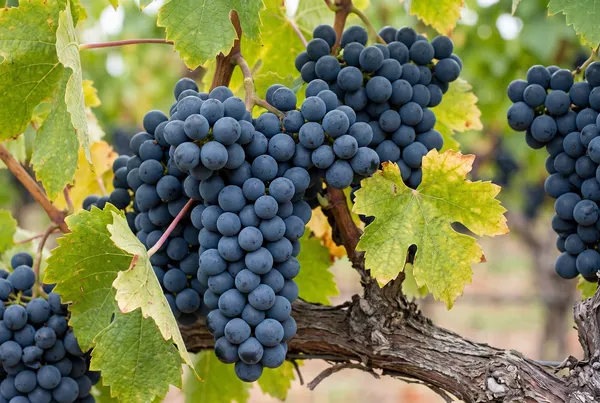

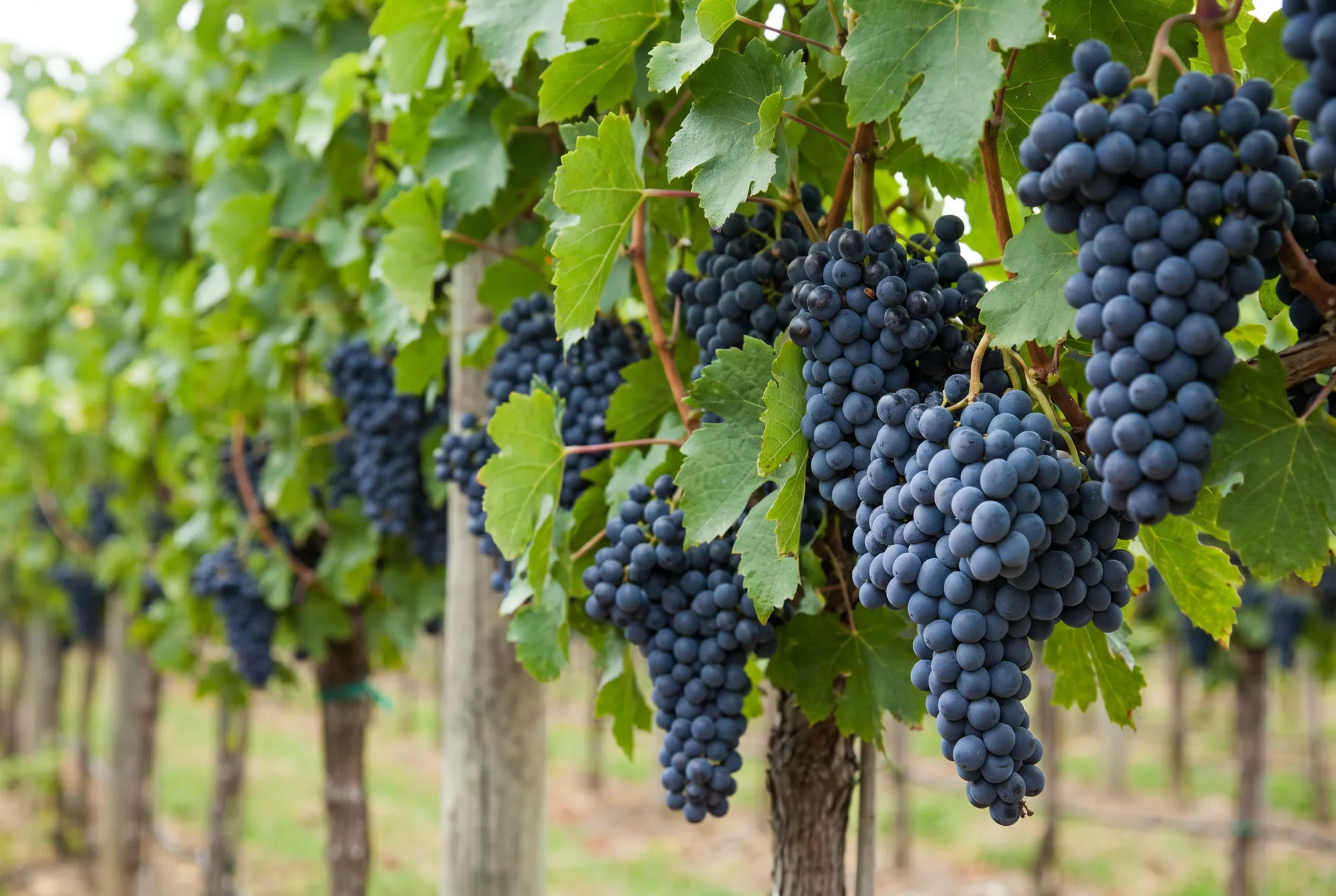
A grape so tannic that Uruguayans, not the French, taught the world to love it.
At a Glance
Tannat is about as tannic as a red grape gets, and its name most likely comes from a local word for the tan color of its near-black skins. It built its reputation in southwest France, then found a second, more famous home in Uruguay, where it is the national grape. Expect a dark, powerful, structured red.
Color: Black-skinned; makes deeply colored red wine
Also known as: Harriague (Uruguay, historical); Moustrou; Bordeleza Belcha (Basque); Tanat
Origin: Southwest France, in the Basque and Gascon foothills of the Pyrenees
Where it grows best: Madiran (France) and Uruguay; also Argentina, Virginia, and California
Signature flavors: Blackberry, black plum, cassis, licorice, smoke, cocoa
Body & style: Firm and austere to plush and oak-softened; always full-bodied
What It Tastes Like
Tannat hits with tannin first — the drying, grippy feel that coats your gums, here dialed higher than in almost any other grape. Behind it sits dark fruit: blackberry, black plum, and cassis, with licorice, smoke, and often a note of cocoa or roasted coffee. The wine is full-bodied, meaning it feels heavy and rich in the mouth, and its firm acidity, the tart quality that keeps a heavy wine lively, stops it from feeling flat. In its French homeland the style is austere and slow to open, needing years to soften. In Uruguay, a milder maritime climate and riper fruit give a rounder, juicier wine with the same backbone but friendlier edges. Winemakers tame the tannin with oak aging (time in wooden barrels, which also adds vanilla and spice) and with a technique invented for this very grape.
How to tell it apart: Tannat is most often confused with Malbec, its neighbor in the Americas. Both are dark and full-bodied. But Tannat is grippier and more structured, with higher acidity and a savory, tarry edge, where Malbec is plusher, softer, and more floral. Next to Cabernet Sauvignon, Tannat is darker and more brooding, with less of the green, herbal streak.
Where It Grows
Madiran, a small appellation (a legally defined wine zone with rules on which grapes and methods are allowed) in southwest France, is Tannat’s ancestral home. France had about 2,900 hectares (roughly 7,200 acres) as of 2009, most of it here in Gascony. Madiran reds are dense and built to age, and the rules require Tannat to make up the bulk of the blend, commonly 60 to 80 percent, rounded out with Cabernet Sauvignon and Cabernet Franc (Bouchy).
Uruguay is where Tannat became a star. The country had roughly 1,600 hectares (about 4,000 acres) as of 2022, making it the most-planted grape and about a quarter of the national vineyard. The Atlantic-cooled, humid climate and clay soils yield a softer, fruitier Tannat than France’s, and it is usually bottled on its own. Elsewhere, in Argentina, Virginia, and California, plantings stay small and mostly experimental.
In the Vineyard and Cellar
Tannat’s thick skins are the whole story. Skins carry tannin, color, and the plant compounds called polyphenols, so thick skins mean a near-black, ferociously tannic wine. The bunches are large but the berries small, which raises the skin-to-juice ratio and concentrates all of that further. The vine is vigorous and fairly hardy, though the compact bunches can invite rot in Uruguay’s humidity. Left alone, the wine is punishing when young. To handle it, a Madiran producer named Patrick Ducournau developed micro-oxygenation around 1990 — feeding tiny, controlled amounts of oxygen into the wine to soften the tannins. The method has since spread across the wine world.
Reading the Label
Most of the time the label simply says Tannat, in both France and Uruguay. In France, though, you will rarely see the word itself: the wine hides inside the place name Madiran, and also turns up in the Irouleguy, Saint-Mont, and Bearn appellations. Older Uruguayan bottles may call it Harriague, after the man who brought it over. US law lets a wine use a grape’s name when that grape is at least 75 percent of the blend, so an American “Tannat” may carry a little Merlot or Cabernet for softness.
A Short History
Tannat was first recorded in southwest France in the 1780s. DNA analysis points to a parent-offspring link with Manseng Noir, a local dark grape, though which of the two came first is not settled. In 1870 a Basque immigrant, Pascual Harriague, planted Tannat near Salto in Uruguay, where it thrived and eventually became the national grape. Uruguay honors him with Tannat Day every April 14.
Did You Know?
Tannat may be the healthiest red wine grape. A 2006 study in the journal Nature found it carries unusually high levels of procyanidins, plant compounds tied to heart health, and linked them to the long lifespans of people in Gascony, the corner of France where Tannat dominates.
At the Table
Tannat and red meat are made for each other, which is lucky, because Uruguay runs on beef. High tannin binds to protein and fat, so a fatty grilled steak, lamb, or a whole Uruguayan asado (open-fire barbecue) melts the grip and lets the fruit come forward. Hard aged cheeses and a rich cassoulet work the same way. Skip delicate fish, which the tannin will steamroll. Serve Tannat around 64°F (18°C) in a large glass, and decant a young bottle an hour ahead to let it breathe. French Madiran often needs five to ten years to soften; most Uruguayan Tannat drinks well younger, though the best examples still reward age. Tannat deserves more attention than its harsh reputation suggests.
SOURCING & METHOD
Sourcing: origins, parentage, and synonyms drawn from Robinson, Harding & Vouillamoz, Wine Grapes (2012), the Vitis International Variety Catalogue, and peer-reviewed parentage studies; planting figures from OIV, the University of Adelaide winegrape database, national bodies, and Wine-Searcher, each anchored to a stated year; regional detail from the relevant consortia and D'Agata's Native Wine Grapes of Italy. Every fact was corroborated by at least two independent sources.