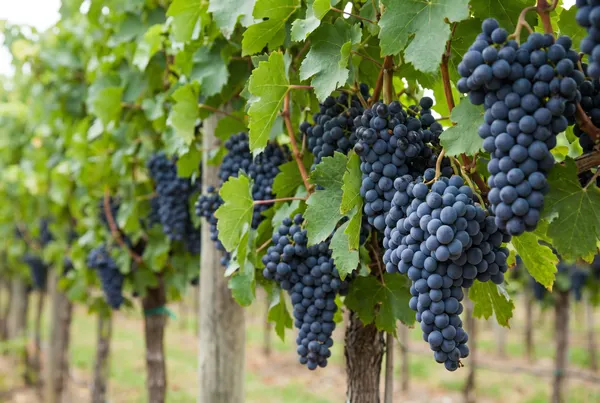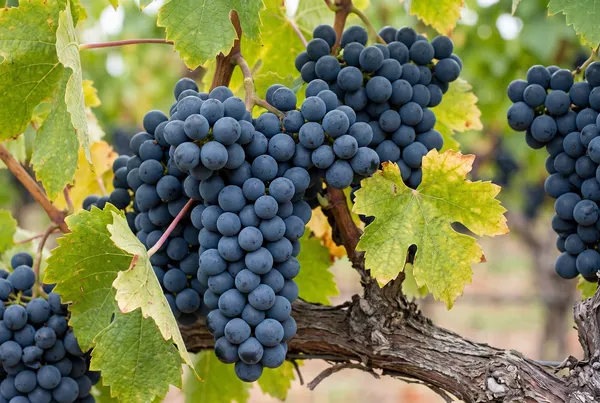


Piedmont's dark, low-tannin red with acidity so bright it drinks like a lighter wine.
1 AT A GLANCE
Barbera is Piedmont's everyday red and the region's most-planted grape. Its trick is a combination you seldom find together: deep color, low tannin, and searing acidity. That makes it taste juicy and refreshing in spite of a nearly black hue. For a century it was the cheap wine that filled taverns and dance halls across northern Italy; since the 1980s, serious producers have shown it can carry oak and age with the best of the region. It has long stood in the shadow of Nebbiolo, the region's prestige grape.
COLOR: Black (deeply pigmented)
ALSO KNOWN AS: No widely used synonym; sold by appellation
ORIGIN: The Monferrato hills of Piedmont, Italy; parentage unresolved
GROWS BEST: Piedmont: Asti, Alba, Monferrato
SIGNATURE FLAVORS: Sour red cherry, dried strawberry, plum, blackberry, dried herbs
BODY & STYLE: Bright and juicy to rich and oak-aged; always high-acid, low-tannin
2 WHAT IT TASTES LIKE
Medium-to-full body, high acidity, low tannin (the drying grip from skins and seeds), and a deep ruby-purple color that comes from unusually strong staining pigments. Unoaked, it's fresh red and dark cherry, dried strawberry, and plum, mouth-watering and easy to drink. Barrel-aged versions, such as Nizza or Barbera d'Alba Superiore, move toward cherry syrup, plum, chocolate, and baking spice, picking up extra tannin from the wood itself, and the alcohol can climb past 15%.
How to tell it apart: Barbera is easily muddled with its Piedmont neighbor Dolcetto and overshadowed by Nebbiolo. The structure sorts them out. Barbera is high acid and low tannin, so it drinks juicy and sharp. Dolcetto is lower in acid, with moderate, faintly bitter tannin and an almond-skin finish. Nebbiolo is high acid, high tannin, and pale in color. If a Piedmont red is dark but juicy and sharp, with a smooth texture and no grip, it's Barbera.
3 WHERE IT GROWS
Piedmont holds most of it. Barbera d'Asti is the benchmark, bright and supple, and its top sub-zone, Nizza, bottles 100% Barbera with oak aging and real cellaring potential. Barbera d'Alba, on the clay soils of the Langhe, is richer and rounder but often relegated to lesser slopes, because growers reserve the best sites for the pricier Nebbiolo of Barolo and Barbaresco. Barbera also grows in Lombardy's Oltrepò Pavese and in Emilia-Romagna, where it's frequently softened by blending with the plumper Croatina. Italian emigrants carried it to California's Sierra Foothills and Central Valley and to Argentina's Mendoza, where its acidity holds up in the heat.
4 IN THE VINEYARD AND CELLAR
Barbera is vigorous and productive, ripens earlier than Nebbiolo, and resists fungal disease, which is exactly why it became the region's workhorse and got handed the cooler, secondary vineyard sites. Its natural profile of low tannin and high acid pushed producers toward two tools. The first is malolactic fermentation, a natural second conversion that turns sharp malic acid, the acid of a green apple, into softer lactic acid, the acid of milk. The second, adopted since the 1980s, is oak barrels that lend the tannin and body the grape lacks on its own.
5 READING THE LABEL
You'll read the appellation rather than the word "grape": Barbera d'Asti, Barbera d'Alba, Nizza, Barbera del Monferrato. "Superiore" and "Nizza" signal riper fruit and time in oak, so they point to a bigger, more serious wine. There's essentially no synonym to decode, which for once makes Barbera one of the simpler Italian reds to buy: the name on the label is the grape in the glass.
6 A SHORT HISTORY
Barbera turns up in Monferrato cathedral records in the 1200s and enters the first official list of Piedmont grapes in 1798. Its parentage stays unresolved: proposed genetic links exist, but none has been confirmed, so no one yet knows Barbera's parents. The 1986 methanol scandal, in which criminals spiked cheap Barbera-based bulk wine with wood alcohol and killed people, gutted the grape's reputation and pushed the region hard toward quality.
Did you know? Barbera stains the glass nearly black yet carries almost no tannin. Its color comes from a different type of pigment than Nebbiolo's, so it can look powerful while drinking soft and juicy.
7 AT THE TABLE
High acid with low tannin makes Barbera one of Italy's most food-flexible reds, since the acidity cuts fat while no harsh tannin picks a fight with the dish. Pair it with tagliatelle in meat ragù, salumi, pizza, roast chicken, mushroom risotto, and mild cheeses. Serve it slightly cool, 58–62°F (14–16°C), which lifts the fruit. Fresh, unoaked styles drink young; Nizza and oak-aged Alba can hold 10 to 15 years. For a weeknight red under $20, Barbera beats almost anything France offers at the same price.
SOURCING & METHOD
Sourcing: origins, parentage, and synonyms drawn from Robinson, Harding & Vouillamoz, Wine Grapes (2012), the Vitis International Variety Catalogue, and peer-reviewed parentage studies; planting figures from OIV, the University of Adelaide winegrape database, national bodies, and Wine-Searcher, each anchored to a stated year; regional detail from the relevant consortia and D'Agata's Native Wine Grapes of Italy. Every fact was corroborated by at least two independent sources.