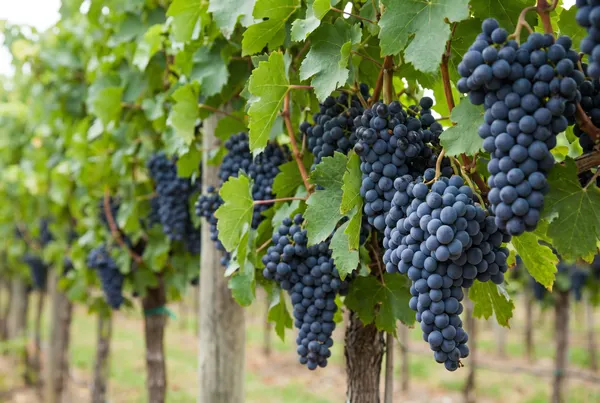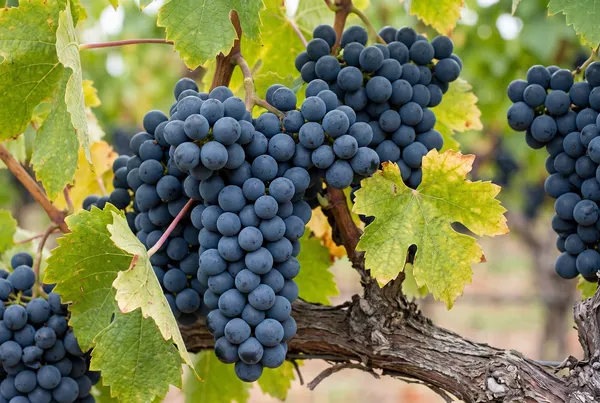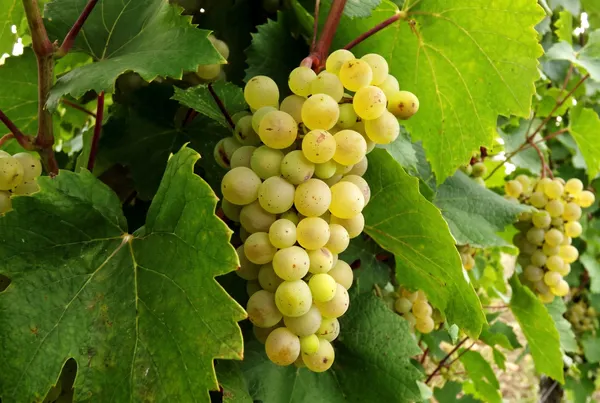


A chance crossing of a red grape and a white one, conquered the wine world.
At a Glance
Cabernet Sauvignon is the most widely planted wine grape on Earth, covering about 840,000 acres (340,000 hectares) as of 2016. It makes structured red wines that can age for decades, and it anchors the great reds of Bordeaux and Napa. It is the backbone of Bordeaux's Left Bank and the grape most likely to be inside a serious “big red” from anywhere in the world. The wine is built for the long haul.
Color: Black (red wine)
Also known as: Vidure, Petit-Vidure, Bidure (historical; almost never seen on labels)
Origin: Bordeaux, southwest France
Where it grows best: Bordeaux (Médoc, Graves), Napa Valley, Coonawarra, Maipo Valley
Signature flavors: Blackcurrant (cassis), black cherry, cedar, graphite, green bell pepper when underripe
Body & style: Firm and tannic to plush and oak-rich
What It Tastes Like
Cabernet's calling card is blackcurrant, or cassis if you want the French word. Behind that sits black cherry, and often something savory: cedar, pencil shavings, sometimes a graphite or crushed-gravel note. Pick the grapes underripe and you get green bell pepper, a smell that comes from natural compounds called pyrazines. Cabernet runs high in tannin, the drying, astringent compound in grape skins that makes your gums pucker and helps a wine age. It usually carries firm acidity too, and the fruit tends toward the dark end of the spectrum.
Climate rewrites the script. In cooler Bordeaux, Cabernet leans toward cassis, tobacco, and a leafy edge, with moderate alcohol. In warm Napa or Coonawarra, the fruit turns riper and darker, all blackberry and cassis liqueur, with softer tannins, higher alcohol, and more obvious sweetness of fruit. Oak aging, meaning time spent in wooden barrels, layers on vanilla, baking spice, and smoke.
How to tell it apart: people mix up Cabernet with Merlot, its usual Bordeaux blending partner. Merlot is rounder and softer, with plummy fruit and gentler tannins. Cabernet is firmer and more angular, built around that cassis-and-cedar spine. If the wine grips your gums and finishes long and dry, you're probably drinking Cabernet.
Where It Grows
Homeland: Bordeaux. On the Left Bank of the Gironde estuary, in the Médoc communes of Pauillac, Saint-Julien, and Margaux, Cabernet is king, planted in deep gravel soils that hold heat and help this late grape finish ripening. These wines are blends, firm and age-worthy, built on cassis and cedar, with Merlot and Cabernet Franc rounding out the middle.
Napa Valley, California, is Cabernet's second home. Warmer sun gives riper, fuller wines with plush fruit and generous oak. The benchmark sites cluster on the valley floor around Oakville and Rutherford. Napa Cabernet made its name in 1976 and has commanded high prices ever since.
Coonawarra, in South Australia, grows Cabernet on a narrow strip of red “terra rossa” soil over limestone, giving wines with a signature eucalyptus or minty edge alongside the cassis.
Chile's Maipo Valley, near Santiago, turns out reliable, blackcurrant-driven Cabernet at every price, often with a dusty, faintly herbal note. It is some of the best value in the wine world, and American drinkers still overlook it.
In the Vineyard and Cellar
Cabernet Sauvignon has small berries with thick skins. More skin per drop of juice means more tannin and color, which is why the wine is so dark and structured. The vine ripens late, so it needs a long, warm growing season; in cool years or cool sites it stays green and vegetal (those pyrazines again). Thick skins also make it fairly resistant to rot. In the cellar, winemakers usually age it in oak for a year or more to soften the tannins and add spice, and they often blend in Merlot to fill out the mid-palate — the impression of weight in the middle of a sip.
Reading the Label
In the United States, a wine labeled “Cabernet Sauvignon” must be at least 75% Cabernet; the rest can be anything, so a California “Cabernet” can legally carry up to a quarter of other grapes without saying so. Many Napa bottlings run close to pure, but plenty are blends. In Bordeaux, you won't see the grape name at all: the label says “Margaux” or “Pauillac,” and you're expected to know Cabernet leads the blend. Australian labels may pair it as “Cabernet Shiraz.” Oregon is stricter than most states but exempts Cabernet from its 90% rule, so 75% still applies there. The famous blends it hides in: red Bordeaux, Napa “Meritage,” and many Super Tuscans.
A Short History
DNA testing published in 1997 settled Cabernet's origin. It is an accidental cross of Cabernet Franc, a red grape, and Sauvignon Blanc, a white one, that happened in Bordeaux, probably in the 1600s. Nobody planned it. The grape spread with Bordeaux's fame, then went global in the twentieth century. Its defining moment came in 1976, when a Napa Cabernet beat top Bordeaux in a blind Paris tasting.
Did You Know? Cabernet Sauvignon's parents are a red grape and a white grape. That red-white pairing is unusual, and it means the world's most famous red wine grape is half-descended from a white one, Sauvignon Blanc, the same grape behind crisp Loire and New Zealand whites.
At the Table
Cabernet's tannin is the whole strategy at the table. Tannin binds to protein and fat, so it softens against a ribeye, a lamb chop, or a hard aged cheese like cheddar. Skip delicate fish and very spicy dishes; the tannin turns metallic and mean. Serve it slightly below room temperature, around 60–65°F (16–18°C), in a large-bowled glass, and give young, tannic bottles an hour in a decanter to breathe and soften. Good Cabernet rewards patience: everyday bottles drink well young, but serious Bordeaux and Napa can improve for ten to twenty years, trading primary blackcurrant fruit for tobacco, leather, cigar box, and dried herbs.
SOURCING & METHOD
Sourcing: origins,
parentage, and synonyms drawn from Robinson, Harding &
Vouillamoz, Wine Grapes (2012), the Vitis International Variety
Catalogue, and peer-reviewed parentage studies; planting figures from OIV, the
University of Adelaide winegrape database, national bodies, and Wine-Searcher,
each anchored to a stated year; regional detail from the relevant consortia and
D'Agata's Native Wine Grapes of Italy. Every fact was corroborated by at
least two independent sources.