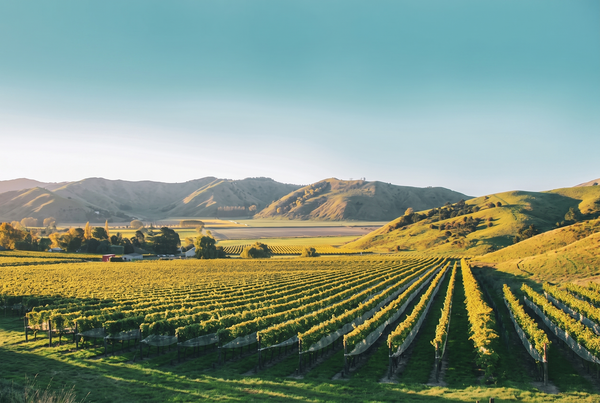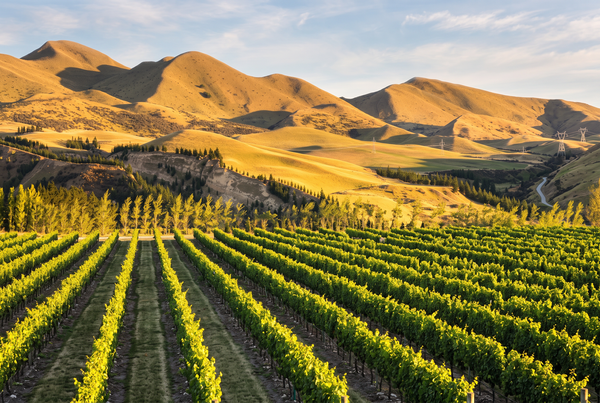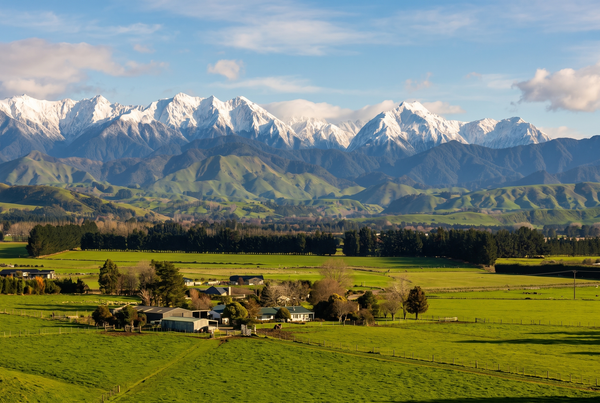


Pinot Noir from the bottom of the world, grown on ground gold miners abandoned.
At a Glance
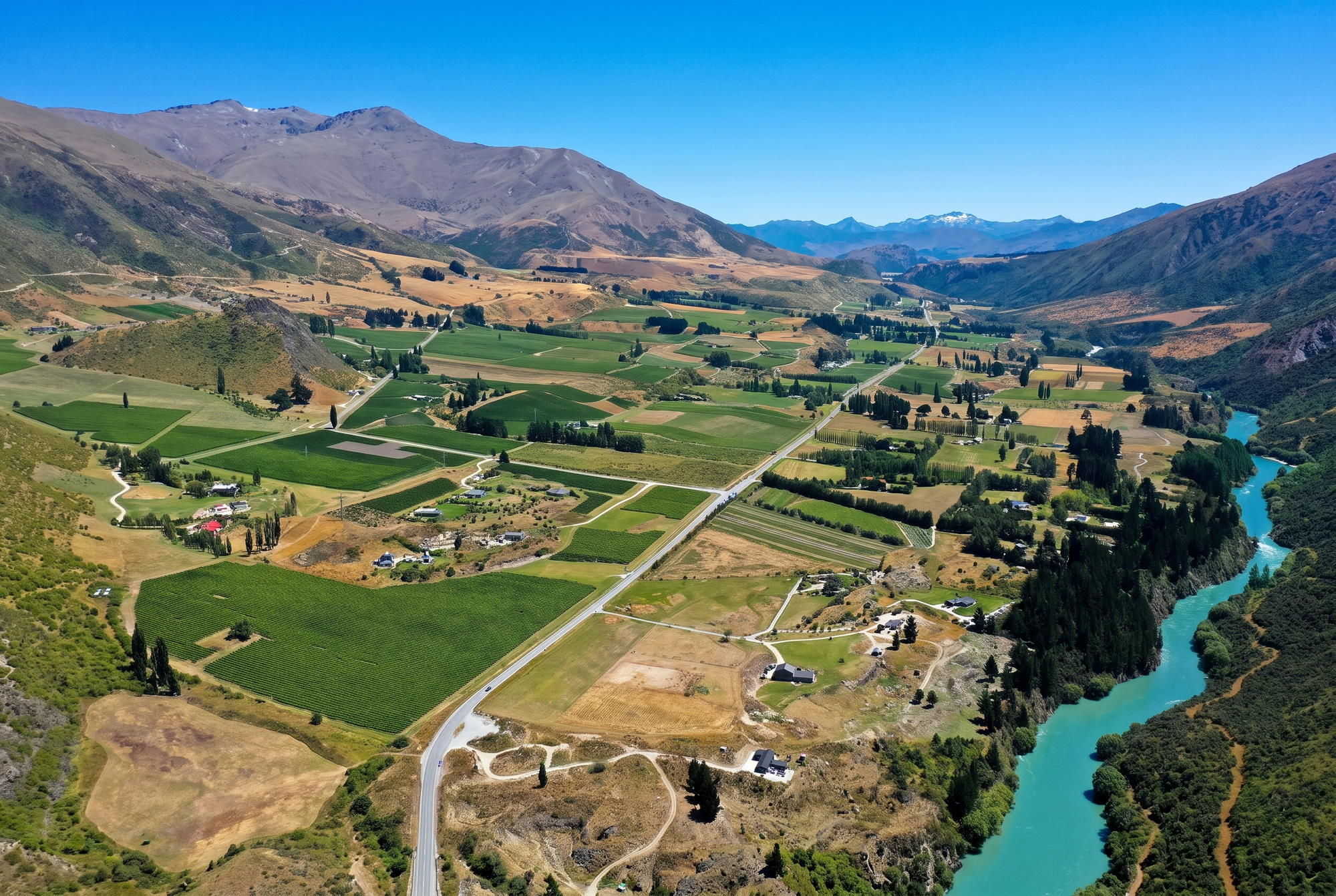
Central Otago sits deep in the South Island's mountainous interior, spread across basins around Queenstown, Cromwell, and Alexandra. At roughly 45 degrees south it is the southernmost commercial wine region on earth, and the only part of New Zealand with a semi-continental climate. Pinot Noir dominates utterly. The region held about 5 percent of New Zealand's vines in 2024, spread among roughly 240 mostly small vineyards (2023), with Queenstown at its western edge.
Country: New Zealand
Main grapes: Pinot Noir, Pinot Gris, Chardonnay, Riesling
Signature styles: Powerful, perfumed Pinot Noir; dry and off-dry aromatic whites; Pinot Noir rose
Climate: Dry semi-continental; hot days, cold nights
Key appellations: Central Otago GI; sub-regions Bannockburn, Gibbston, Bendigo, Cromwell-Lowburn-Pisa, Alexandra, Wanaka
Vineyard area: About 5,340 acres (2,163 hectares) in 2024
Why It Matters
Pinot Noir made Central Otago's name, and it happened fast. Commercial vineyards barely existed here in 1990; the region is now one of the Southern Hemisphere's most respected sources of Burgundy's fickle red grape, with prices and ambitions to match. Its rise handed New Zealand a second international calling card after Marlborough Sauvignon Blanc, and cellar doors now cluster along the Kawarau Gorge and around Cromwell, within easy reach of Queenstown's visitor traffic.
Land and Climate
The Southern Alps wring the moisture out of the westerly winds before they arrive, leaving a rain shadow: a dry zone downwind of mountains. Annual rainfall runs about 16 to 24 inches (400 to 600 millimeters), semi-desert by New Zealand standards. Summers are hot and cloudless, nights are cold, and that daily swing, called the diurnal range, lets grapes ripen fully while keeping their acidity. It is why the wines manage to be dark and fresh at once. Frost menaces both spring and fall, so vineyards climb slopes between about 660 and 1,300 feet (200 and 400 meters), the highest in the country. The soils are weathered mica schist, a flaky, glittering rock, mixed with wind-blown silt. They drain fast and offer little nourishment, so crops stay small and flavors concentrate. The air is exceptionally dry and clear, which lowers disease pressure and lets growers farm with a light touch.
Grapes and Styles
Pinot Noir is more than 80 percent of the vineyard, about 4,360 acres (1,765 hectares) in 2024. The regional signature is dark cherry, wild thyme (a plant that literally blankets the hillsides), and ripe but firm tannin. Sub-regions matter. Warm Bannockburn gives the darkest, most muscular wines; high, cool Gibbston gives lighter, red-fruited ones; Alexandra, with the widest temperature extremes, adds spice. Bendigo's north-facing slopes rival Bannockburn for warmth, the Cromwell basin holds the region's largest concentration of vines, and lake-cooled Wanaka stays lightest of all.
The whites play a supporting role, and play it well. Pinot Gris, about 420 acres (170 hectares) in 2024, is textural and stone-fruited. Riesling, about 135 acres (54 hectares), runs bone-dry to sweet with electric acidity, and remains the region's most underpriced wine. Chardonnay is small but climbing in both area and reputation. Pinot Noir also feeds excellent rose and some traditional-method sparkling wine, made by refermenting wine inside the bottle.
Reading the Label
'Central Otago' is a registered Geographical Indication (GI), a protected statement of origin with no rules about variety or style attached. The 85 percent rule applies: region, variety, and vintage claims must each be at least 85 percent true of the blend. Sub-region names such as Bannockburn or Gibbston appear constantly on labels here and are genuinely informative, since they track real differences in warmth and style. 'Single vineyard' is common and usually sincere but legally undefined. Check the vintage before buying in quantity: frost years bring tiny crops and sometimes leaner wines. Producer matters as much as place, since this is a region of small estates rather than big brands, and prices reflect hand work on steep, frost-prone sites.
A Short History
A French gold miner, Jean Desire Feraud, planted vines near Clyde in 1864 at the height of the Otago gold rush. When the gold ran out, the wine went with it, and nearly a century passed without an industry. Trial plantings resumed in the 1970s, commercial vineyards followed in the early 1980s, and growth then turned explosive: 11 wineries in 1996 became 133 by 2020, with vineyard area up more than twentyfold.
Did you know?
New Zealand picks grapes across a six- to seven-week spread, and Central Otago anchors the far end. Harvest in the country's northern regions can begin in late February; here it often waits until mid or late April, the last fruit picked in the wine-growing world's southernmost region.
At the Table
Pinot Noir and slow-roasted duck is the textbook match; local venison and merino lamb work just as well, and mushroom dishes echo the wine's savory side. Serve it at 57 to 61 F (14 to 16 C), give young top bottlings thirty minutes in a decanter, and expect the best to improve for eight to fifteen years. Dry Riesling cuts through Asian spice, and the off-dry versions handle real chili heat. Pinot Gris suits pork and creamy cheeses. The most regional match of all leans on what came before the vines: stone-fruit orchards preceded wine here, and duck with cherry sauce beside a Bannockburn Pinot tastes like the place on a plate.
Links
Central Otago Winegrowers Association: https://www.centralotagowine.co
Tourism Central Otago (official): https://www.centralotagonz.com