

A prohibition vote killed this region's vines in 1905; today it sets Pinot Noir standards.
At a Glance
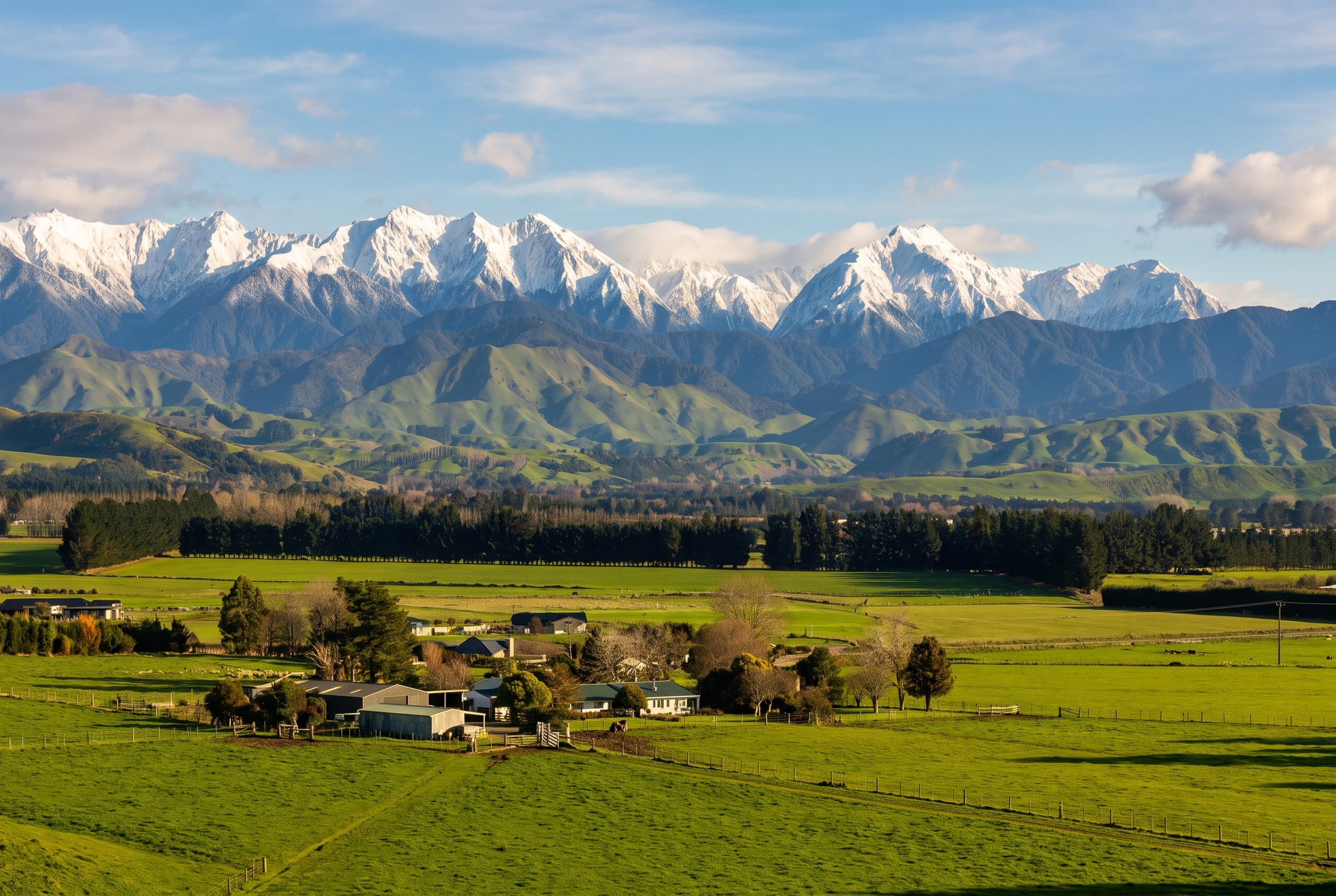
Wairarapa occupies the southeastern corner of the North Island, an hour's drive over the Remutaka Range from Wellington. It is the smallest of New Zealand's major regions, a cluster of mostly family-owned vineyards across three sub-regions: Martinborough, Gladstone, and Masterton. Its Pinot Noir punches far above the region's size. Martinborough village anchors the southern end, with dozens of small wineries within walking or cycling distance of its central square.
Country: New Zealand
Main grapes: Pinot Noir, Sauvignon Blanc, Chardonnay, Pinot Gris
Signature styles: Savory, structured Pinot Noir; textural Sauvignon Blanc; aromatic whites and dessert wines
Climate: Cool and dry, with strong spring winds
Key appellations: Wairarapa GI, with Martinborough and Gladstone GIs inside it
Vineyard area: About 2,730 acres (1,105 hectares) in 2024
Why It Matters
Modern New Zealand Pinot Noir started here. When Martinborough's pioneers planted in 1979 and 1980, they proved the country could make serious, age-worthy Pinot years before Central Otago's boom. The region holds only about 3 percent of the national vineyard (2024), yet names such as Ata Rangi and Dry River sit on any short list of New Zealand's greatest producers. The scale stays deliberately human: most labels are family names, and the average vineyard here covered just 22 acres (9 hectares) in 2023, against a national average of 49 acres (20 hectares).
Land and Climate
The Remutaka and Tararua ranges to the west catch the rain, leaving Wairarapa dry through summer and, crucially, through fall, when long settled autumns let Pinot Noir ripen slowly. A 1978 government soil study judged Martinborough New Zealand's closest match to Burgundy, and the comparison holds: warm summers, cold winters, free-draining gravel. The wind is the hidden author of the style. Fierce spring gusts off Cook Strait disrupt the vines' flowering and cut the crop, so berries are few and small, with thick skins, and that concentrates color, flavor, and tannin. The prized Martinborough Terraces are old river gravels that drain almost instantly; Gladstone sits on silt loams; threads of limestone surface near Masterton. The Ruamahanga River runs the length of the valley, and its old terraces supplied the gravels the best vineyards sit on.
Grapes and Styles
Pinot Noir is the flagship, about 1,275 acres (516 hectares) in 2024, nearly half the region's vines. The style stands apart from other New Zealand Pinot: darker, more savory, spicier, with a firmer backbone that rewards cellaring. Yields are meager by national standards, and you taste the shortage: concentrated wines from stingy vines. Mature Martinborough Pinot Noir is, for my money, the most Burgundian wine New Zealand makes.
Sauvignon Blanc, about 1,030 acres (416 hectares) in 2024, is riper and more textural than Marlborough's version, often with some barrel work. Chardonnay, about 157 acres (63 hectares) in 2024, and Pinot Gris, about 116 acres (47 hectares), are small but polished. Riesling and Gewurztraminer run from dry to fully sweet, and the region has a quiet knack for dessert wines. A handful of growers make convincing Syrah in warm years. Expect the Pinots to open on dark cherry and plum, then shift toward dried herbs and spice as they age, while the whites keep a streak of chalky freshness.
Reading the Label
'Wairarapa' is the regional Geographical Indication (GI), a protected place name with no style rules attached. Two sub-regions, Martinborough and Gladstone, hold their own registered GIs, and Martinborough is the prestige name to look for. The 85 percent rule governs all claims: region, variety, and vintage statements must each cover at least 85 percent of the wine. One warning that trips up even wine-shop staff: Wairarapa is not Waipara. Waipara is a valley in Canterbury, on the other island. Producer names carry real weight here because almost everything is small-batch; 'estate grown' is common and usually literal, though not legally defined. Bottles labeled simply 'Wairarapa' typically blend fruit from across the three sub-regions.
A Short History
William Beetham planted vines near Masterton in 1883, and the government's touring viticulturist praised the area's potential in 1897. Then, in 1905, the district voted itself dry under the temperance movement, and the vineyards disappeared. Wine returned only after a 1978 soil study by Dr. Derek Milne pointed to Martinborough; Dry River, Ata Rangi, and Martinborough Vineyard planted in 1979 and 1980. The gamble paid off within a decade, as Martinborough Pinot Noir began collecting awards and international attention through the late 1980s.
Did you know? Martinborough's founder, John Martin, laid out the town in 1879 with its streets forming a Union Jack radiating from a central square, and named them for places he had visited: Venice, Panama, Suez, New York. Today's wine village still follows that flag-shaped grid.
At the Table
Roast lamb is the region's own answer to its Pinot Noir; duck, quail, and wild mushroom dishes work on the same savory frequency. Serve Pinot at 57 to 61 F (14 to 16 C), decant young top bottlings briefly, and hold the best for ten years or more. The textural Sauvignon Blancs suit shellfish and richer fish dishes rather than raw oysters. Late-harvest whites pair with fruit tarts and blue cheese. If you time a visit for November, the one-day Toast Martinborough festival opens the wineries for food, music, and Pinot, and it draws thousands.
Links
Wairarapa Winegrowers (regional body): https://www.wairarapawine.co.nz
Destination Wairarapa (official tourism): https://wairarapanz.com