

Fifty years ago this was potato country. Now it grows New York’s answer to Bordeaux.
1. At a Glance
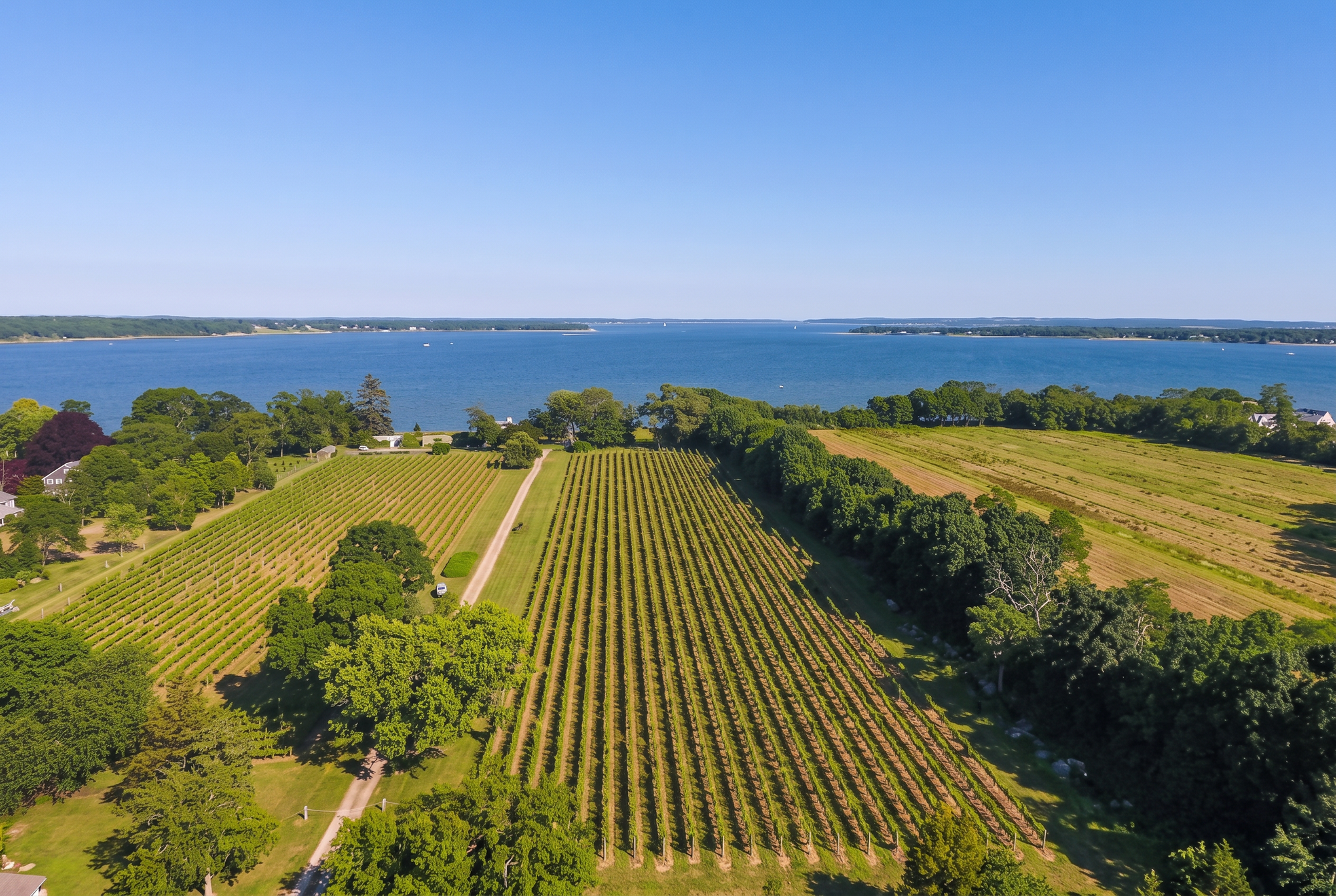
Long Island’s wine country occupies the island’s rural East End, two hours from Manhattan, split between the quiet North Fork and the celebrity-heavy Hamptons on the South Fork. The industry is young; the first vines went in only in 1973. Surrounded by water on three sides, it is the most genuinely maritime wine region in the eastern United States, and its Merlot and Cabernet Franc invite the Bordeaux comparison on purpose. Nearly all of the wine is sold within a hundred miles of where it is grown, so the tasting rooms are the best place to find it.
Country: United States
Main grapes: Merlot, Chardonnay, Cabernet Franc, Sauvignon Blanc
Signature styles: Restrained Merlot and Bordeaux-style blends; unoaked Chardonnay; dry rosé; traditional-method sparkling wine
Climate: Mild maritime, moderated by the Atlantic Ocean, Long Island Sound, and Peconic Bay
Key appellations: Long Island AVA, containing the North Fork of Long Island AVA and The Hamptons, Long Island AVA
Vineyard area: Roughly 3,000 acres (1,200 hectares), mostly on the North Fork, as of the mid-2020s
2. Why It Matters
Long Island proved that classic European red grapes could ripen on the East Coast. The surrounding water grants it a growing season several weeks longer than the rest of New York State, long enough for Merlot, Cabernet Franc, and even Cabernet Sauvignon. The wines run counter to American fashion: moderate alcohol, fresh acidity, and savory rather than jammy fruit, which has made the region a darling of New York City sommeliers. For East Coast drinkers, it is also the rare fine-wine region reachable by commuter train.
3. Land and Climate
Water does the work of mountains here. The Atlantic to the south, Long Island Sound to the north, and Peconic Bay between the forks store heat through the fall, stretching the frost-free season weeks beyond the mainland’s and softening winter lows that would kill vines farther inland. Constant sea breezes dry the vine canopy, which matters in a humid climate where fungal disease is the grower’s main enemy.
The ground itself is glacial outwash: deep, sandy loam that drains rapidly, warms quickly in spring, and forces vines to work for water. The North Fork, sheltered by the South Fork from raw ocean weather, is measurably warmer and holds most of the vineyards. The Hamptons side is cooler and later-ripening, better suited to whites and rosé. Hurricanes and salt spray remain genuine occupational hazards, and the humidity demands meticulous canopy work all summer long.
4. Grapes and Styles
Merlot is the most planted grape and the region’s signature red: medium-bodied, fresh, tasting of plum, red cherry, and dried herbs, often with a saline note locals attribute to the sea air. Cabernet Franc, though, may be the island’s most exciting red, aromatic and peppery in the style of France’s Loire Valley. Bordeaux-style blends, combining Merlot with the Cabernets and Petit Verdot, top many portfolios, sometimes under the trademark term “Meritage”.
Chardonnay leads the whites, typically crisp and lightly oaked or not oaked at all, a deliberate contrast with California. Sauvignon Blanc is zesty; Chenin Blanc and Albariño are small but well-regarded specialties. Dry rosé is practically the house wine of the Hamptons summer, and traditional-method sparkling wine, made the same way as Champagne, is a quiet strength on the North Fork. Alcohol levels typically sit between 11 and 12.5 percent, noticeably lower than California norms, which keeps the wines light on their feet at the table.
5. Reading the Label
“North Fork of Long Island” or “The Hamptons, Long Island” on a label means at least 85 percent of the grapes grew in that AVA, the federally defined region; plain “Long Island” covers the whole island under the same 85 percent rule and often signals a blend from both forks.
A grape name guarantees 75 percent of that variety. “Meritage” marks a Bordeaux-style blend from a licensed producer. “Estate bottled” means the winery grew, made, and bottled the wine within the AVA, a meaningful claim in a region where some producers buy fruit. As everywhere in America, “Reserve” is decoration, not regulation.
6. A Short History
Vineyards were tried here in the 1800s and lost to disease. The modern industry began in 1973, when Louisa and Alex Hargrave planted European vines on a former potato farm in Cutchogue, against expert advice. Success drew a wave of followers through the 1980s, The Hamptons and North Fork AVAs arrived in 1985 and 1986, and the island-wide Long Island AVA followed in 2001. Roughly half a century in, the region counts more than 50 producers.
Did You Know? In 1973 Long Island had no wine industry at all. Louisa and Alex Hargrave, a young couple with no farming background, planted European wine grapes on an old Cutchogue potato farm that experts considered hopeless for the purpose. That single decision seeded a region of more than 50 producers within their lifetimes.
7. At the Table
These wines were made for the local table: oysters, clams, striped bass, and lobster rolls. Crisp Chardonnay and Sauvignon Blanc, chilled to 45 to 50°F (7 to 10°C), handle the raw bar; rosé covers everything else at a summer clambake.
Serve Merlot and Cabernet Franc slightly cool, around 58 to 62°F (14 to 17°C); their moderate tannins pair as happily with roast duck or mushroom dishes as with steak. Most bottles are ready on release. Top Merlot blends from good vintages reward 5 to 10 years of patience, and an hour in a decanter helps the young ones.
Links
Regional wine organization (Long Island Wine Country): https://liwines.com
State wine institute (New York Wine & Grape Foundation): https://newyorkwines.org
Federal AVA regulator (TTB): https://www.ttb.gov/regulated-commodities/beverage-alcohol/wine/american-viticultural-area-ava