

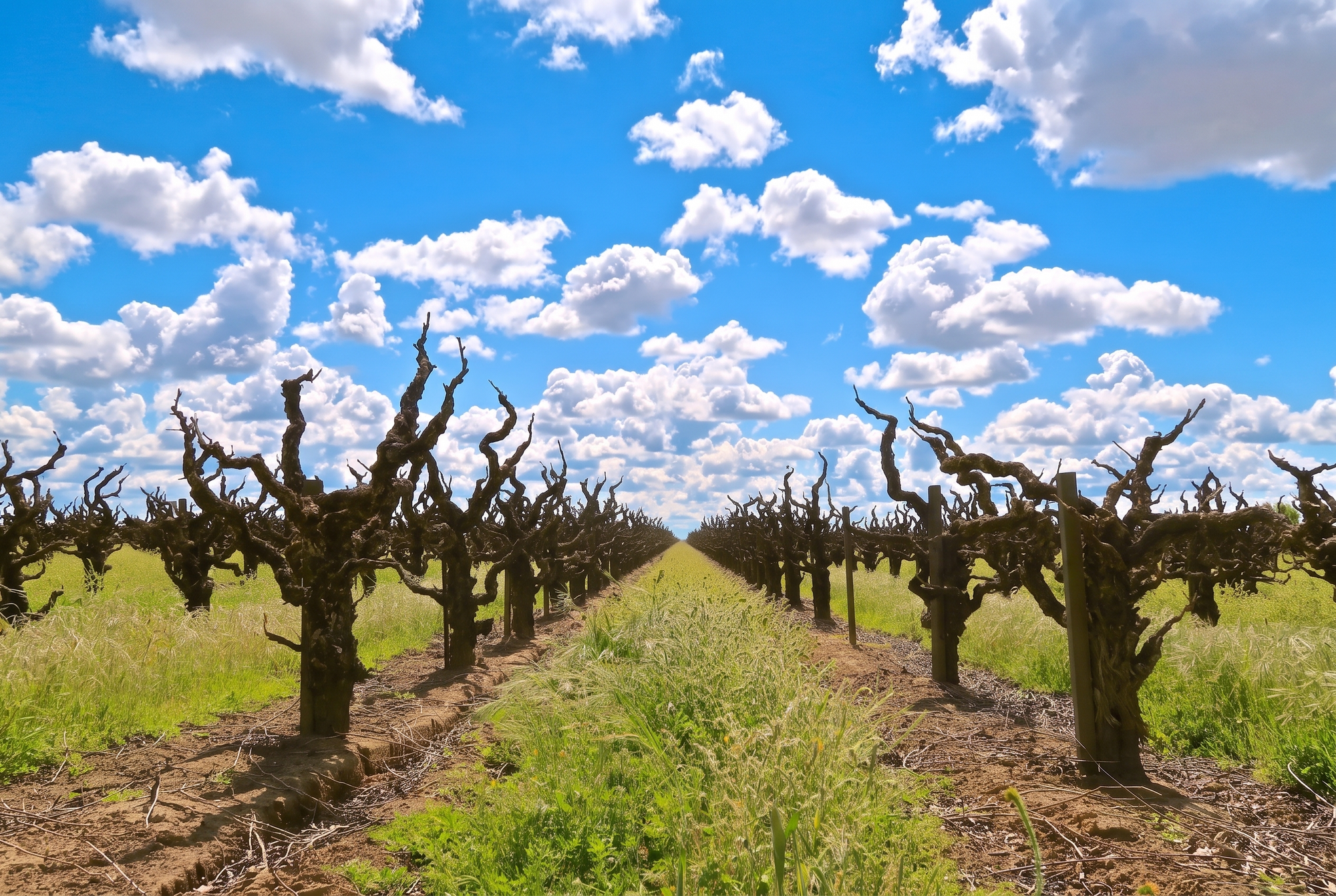
Some vines here have been producing wine grapes since Grover Cleveland was president.
1. At a Glance
Lodi sits in California’s Central Valley, 90 miles (145 kilometers) east of San Francisco, where cool evening winds off the Sacramento-San Joaquin Delta take the edge off the inland heat. It is the workhorse of American wine, crushing roughly 20 percent of California’s wine grapes (2024), and at the same time the keeper of the state’s greatest trove of century-old Zinfandel vines. More than 80 wineries now bottle under their own labels here, most of them run by the same families who grow the grapes.
Country: United States
Main grapes: Cabernet Sauvignon, Chardonnay, Zinfandel, Merlot, plus over 100 other varieties
Signature styles: Old-vine Zinfandel; ripe, affordable Cabernet and Chardonnay; adventurous Spanish, Italian, and German varieties
Climate: Warm Mediterranean, cooled nightly by delta breezes from San Francisco Bay
Key appellations: Lodi AVA with seven nested AVAs, including Mokelumne River, Clements Hills, and Jahant
Vineyard area: About 82,000 acres (33,200 hectares) as of 2025
2. Why It Matters
Odds are you have drunk Lodi wine without knowing it, since much of it disappears into big-brand California bottlings. But the region matters for two better reasons. Its sandy soils preserve thousands of acres of ungrafted, head-trained Zinfandel planted a century or more ago, a living archive most regions lost to pests and replanting. And its LODI RULES program, launched in 2005, was among the first third-party-audited sustainable farming certifications in wine.
3. Land and Climate
Lodi should be too hot for fine wine, and here is why it is not. Every afternoon, cool marine air pulled in from San Francisco Bay funnels through the delta and across the vineyards, dropping nighttime temperatures sharply. Grapes ripen fully in the sun, then rest in the cool dark, keeping more acidity and fresher fruit flavor than the rest of the Central Valley manages.
The land is nearly flat, built from river deposits. Around the town of Lodi itself, the Mokelumne River laid down deep, fine sandy loam, and that sand is the region’s secret weapon: phylloxera, the root-eating insect that destroyed most of the world’s vineyards, cannot thrive in it. Vines here grow on their own natural roots, ungrafted, some for well over a century. The eastern sub-zones rise into low hills with older, rockier soils and slightly cooler exposures. Rainfall is modest, about 18 inches (460 millimeters) a year, and falls in winter, so vineyards rely on irrigation through the long dry summer.
4. Grapes and Styles
Two Lodis coexist in the same vineyards. By acreage, the region in 2024 was mostly Cabernet Sauvignon (about a third of plantings) and Chardonnay, ripe and generous wines that anchor value-priced California brands. Merlot, Pinot Gris, and Sauvignon Blanc play similar roles.
Zinfandel is the soul. Lodi grows roughly 40 percent of California’s premium Zinfandel (2024), and the old-vine bottlings are the ones to seek: brambly blackberry and raspberry fruit, black pepper, warm spice, and a plushness that comes from ancient, low-yielding vines. Old-vine Lodi Zinfandel is one of California’s great bargains. Beyond that, Lodi has become the state’s sandbox, with 136 varieties in commercial production as of 2024: crisp Albariño, savory Tempranillo, sturdy Petite Sirah, and German whites like Riesling and Kerner from a handful of specialists. That range means a mixed case of Lodi wine can taste like a guided tour of three continents.
5. Reading the Label
“Lodi” on a label means at least 85 percent of the grapes grew in the AVA, the federally defined region. The seven nested AVAs, such as “Mokelumne River”, appear mostly on small-production bottles and signal a site-focused producer.
Treat “Old Vine” with friendly suspicion: the term has no legal definition anywhere in the United States. Serious producers back it up with a planting date or a named vineyard, such as Bechthold or Marian’s. A “Certified Green” seal from LODI RULES means the vineyard passed an independent yearly sustainability audit, one of the few label claims here that is verified by outsiders. A grape name on the front guarantees at least 75 percent of that variety under federal rules.
6. A Short History
Commercial grape growing began around 1850, feeding Gold Rush markets, and German and Italian farming families planted the Zinfandel and Cinsault vines that still stand today. For most of the 1900s Lodi sold grapes and bulk wine to others. The AVA arrived in 1986, seven nested AVAs followed in 2006, and a slow shift from anonymous supplier to named region has been underway since, led by growers bottling their own old-vine fruit instead of selling it anonymously by the ton.
Did You Know? Lodi’s Bechthold Vineyard was planted to Cinsault in 1886, during Grover Cleveland’s first term as president, and it is still farmed and still producing wine on its original, ungrafted roots. It ranks among the oldest continuously producing vineyards in the United States.
7. At the Table
Old-vine Zinfandel is barbecue wine, full stop, and Lodi sits conveniently close to some of California’s best barbecue country. Ribs, brisket, burgers, and sausages all echo its smoky-sweet fruit and spice, and it is the rare red that can handle tomato-based barbecue sauce. Serve it at 60 to 62°F (16 to 17°C); high-alcohol bottles taste hot and blurry when served warmer.
Lodi Albariño, chilled to 45°F (7°C), is excellent with fish tacos and shellfish. Most Lodi wines are made for drinking within five years or so; decanting is unnecessary except for the densest Petite Sirah. Old-vine Zinfandel also handles a slight chill on a hot day better than most reds.
Links
Growers’ organization (Lodi Winegrape Commission): https://www.lodiwine.com
Grower resources (Lodi Growers): https://lodigrowers.com
Federal AVA regulator (TTB): https://www.ttb.gov/regulated-commodities/beverage-alcohol/wine/american-viticultural-area-ava