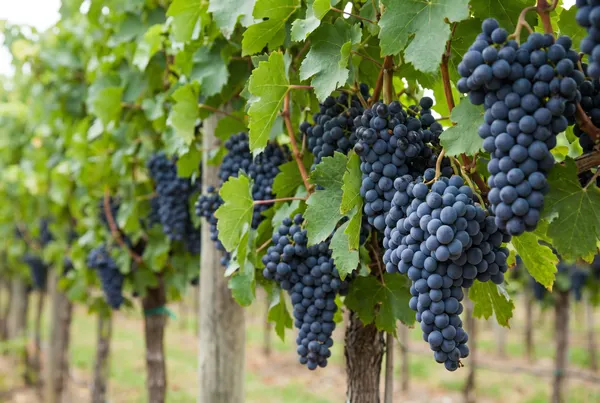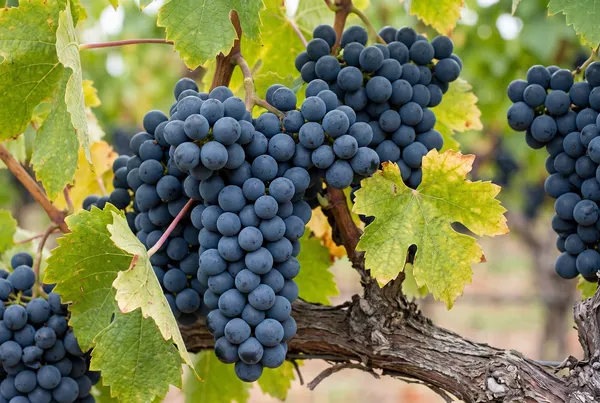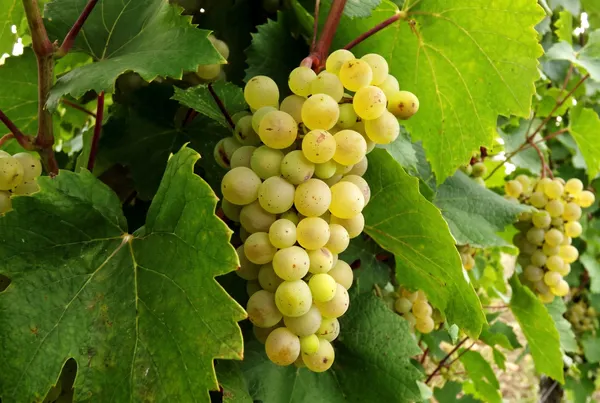


A near-neutral grape that tastes like whatever the winemaker decides, from Chablis to buttery oak.
At a Glance
Chardonnay is the world's most planted white wine grape, about 521,000 acres (211,000 hectares) as of 2016, and its most malleable. On its own the grape is fairly neutral, which is its secret: it takes the stamp of climate and cellar more than it imposes its own character. That's why Chardonnay tastes like flint in Chablis and like butter and vanilla in warmer, oaky styles. The “anything but Chardonnay” backlash of the 2000s was always misguided; the grape's ceiling is as high as any white's.
Color: White
Also known a: Morillon (Austria), Beaunois (Chablis, historical), Aubaine
Origin: Burgundy, France
Where it grows best: Burgundy (Chablis, Côte de Beaune), Champagne, California, Australia
Signature flavors: Green apple, lemon, pear, melon; oak adds butter, vanilla, toast
Body & style: Lean and mineral to rich and oaky
What It Tastes Like
Chardonnay's flavor depends almost entirely on where it grew and how it was made. The grape itself gives orchard and citrus fruit: green apple, lemon, pear, sometimes melon or peach in warmer spots. That's the raw material. Everything else is a winemaking decision.
Two techniques dominate. Oak aging, time spent in wooden barrels, adds vanilla, toast, baking spice, and sometimes a coconut note. Malolactic conversion, a natural process that turns sharp malic acid into softer lactic acid, gives that famous buttery, creamy texture and smell. Cool-climate, unoaked Chardonnay is lean, crisp, and appley, even flinty. Warm-climate, oaked Chardonnay is rich, round, and golden. Same grape, opposite wines.
How to tell it apart: unoaked Chardonnay gets confused with Pinot Gris or Pinot Blanc. Chardonnay usually has more weight and a broader, rounder mouthfeel, with apple and melon rather than the pear-and-almond of Pinot Blanc. Chardonnay was long muddled with Pinot Blanc historically, but they're distinct grapes — Pinot Blanc is a color mutation of Pinot, unrelated to Chardonnay in flavor or ambition.
Where It Grows
Homeland: Burgundy. In Chablis, in Burgundy's cool north, Chardonnay is all green apple, lemon, and a wet-stone minerality from the fossil-rich limestone soils, usually with little or no oak. Down in the Côte de Beaune, villages like Meursault and Puligny-Montrachet make the world's benchmark rich, oaked Chardonnay — full but balanced, and extraordinarily long-lived at the top level.
California, especially Napa, Sonoma, and cooler spots like the Sonoma Coast, built its reputation on ripe, oaky, tropical-fruited Chardonnay, though many producers now dial back the oak toward fresher styles.
Australia followed a similar arc, from heavily oaked in the 1990s to tighter, more mineral styles today, with Margaret River and cool-climate regions like the Adelaide Hills leading.
Champagne grows Chardonnay as one of its three main grapes, prized for the finesse, citrus, and aging backbone it brings to sparkling wine.
In the Vineyard and Cellar
Chardonnay is easy to grow, which partly explains its global spread; it adapts to almost any climate and ripens reliably. It buds early, though, so spring frost is a real threat, a particular problem in Chablis, where growers light heaters or spray water to protect the buds. The grape has no strong personality of its own, so the site and the winemaker's choices carry the wine. That's why Chardonnay became the winemaker's canvas: barrel or steel, malolactic or not, lees stirring (leaving the wine on spent yeast to add creaminess and a bready flavor) or not, and how much new oak to use. Each lever changes the wine dramatically, which is how one grape produces both flinty Chablis and golden, buttery blockbusters.
Reading the Label
White Burgundy is Chardonnay, even though the label says “Chablis,” “Meursault,” or “Pouilly-Fuissé” instead of the grape. In the New World, “Chardonnay” is stated plainly. A Champagne or sparkling wine labeled “Blanc de Blancs” is made entirely from white grapes, in practice almost always Chardonnay. In Oregon, Chardonnay must be at least 90% of the wine, stricter than the 75% federal rule. And the old term “Pinot Chardonnay” on a dusty bottle is a historical misnomer; it's just Chardonnay.
A Short History
DNA testing in the 1990s revealed Chardonnay's parentage: a natural cross of Pinot (the Pinot Noir family) and Gouais Blanc, an old, low-status grape once widespread in France. That makes Chardonnay a full sibling of Gamay and several other French varieties, all from the same two parents. It rose from Burgundian obscurity to global dominance in the twentieth century, riding the popularity of California wine.
Did You Know? Chardonnay and Gamay, the light red grape of Beaujolais, are full siblings. Both come from the same accidental crossing of Pinot and Gouais Blanc. One became the world's most famous white; the other makes cheerful, fruity red. Same parents, wildly different children.
At the Table
Match the Chardonnay to its style. Lean, unoaked Chablis-type Chardonnay works like a squeeze of lemon: oysters, raw shellfish, white fish, sushi, goat cheese. Rich, oaked Chardonnay wants richer food, like roast chicken, lobster with butter, creamy pasta, or mild cheeses, because the wine's own weight and creaminess meet the dish halfway. Blanc de Blancs Champagne, all Chardonnay, is a fine aperitif and a match for fried and salty food. The acidity in every style cuts through fat. Serve unoaked versions cold, around 45–50°F (7–10°C), and oaked versions a little warmer, near 50–55°F (10–13°C), so the aromas open. Most Chardonnay is best young; top white Burgundy can age a decade or more, though bottle-to-bottle it's a gamble.
SOURCING & METHOD
Sourcing: origins,
parentage, and synonyms drawn from Robinson, Harding &
Vouillamoz, Wine Grapes (2012), the Vitis International Variety
Catalogue, and peer-reviewed parentage studies; planting figures from OIV, the
University of Adelaide winegrape database, national bodies, and Wine-Searcher,
each anchored to a stated year; regional detail from the relevant consortia and
D'Agata's Native Wine Grapes of Italy. Every fact was corroborated by at
least two independent sources.