

The red, high-alcohol grape behind Châteauneuf-du-Pape that Spain quietly owns.
1 AT A GLANCE
Garnacha ripens late and stockpiles sugar, so its wines run warm and high in alcohol. The skins are thin, which keeps the color light and lets the wine brown quickly once air gets to it. It plays nearly every role a red grape can: dark structured reds, pale dry rosé, and sweet fortified wine. Spain grows more of it than anyone, even though the wine trade learned the grape under its French name, Grenache. For most of the twentieth century it ranked among the most-planted red grapes on earth, and it still anchors several of the Mediterranean's most famous bottles.
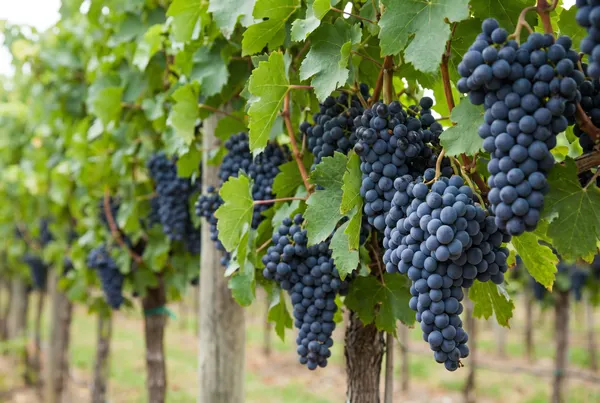
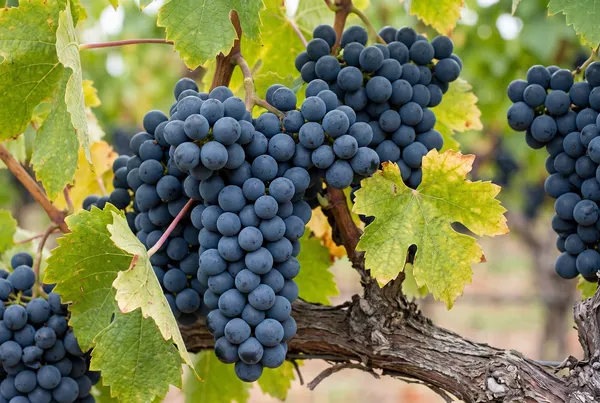
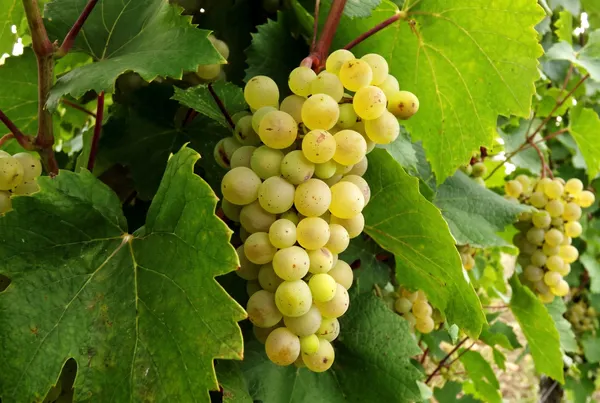
COLOR: Black (with white and gray mutations)
ALSO KNOWN AS: Grenache (France), Cannonau (Sardinia), Garnatxa (Catalonia)
ORIGIN: Spain, most likely Aragón
GROWS BEST : Hot, dry, windy sites: southern Rhône, Aragón, Priorat, Sardinia
SIGNATURE FLAVORS: Ripe strawberry, raspberry, white pepper, dried herbs, orange peel
BODY & STYLE : Light and juicy to dense and high in alcohol; always pale and perfumed
2 WHAT IT TASTES LIKE
Alcohol is the headline, often 14.5% or more. Acidity, the tart quality that makes a wine feel fresh, runs low to medium, and tannin, the drying grip that comes from skins and seeds, sits soft to medium. In hot vineyards the fruit stews into strawberry jam and raspberry, sometimes with a whiff of dried fig. In cooler, high-elevation sites it turns brighter, showing red cherry, orange rind, and a dried-herb note the French call garrigue, after the wild rosemary-and-thyme scrub of the south. Oak aging layers on baking spice and cocoa. Made as rosé it gives pale, dry, strawberry-scented wine; left to oxidize on purpose in the fortified wines of Banyuls and Rasteau, it tastes of coffee, cocoa, and dried fruit.
How to tell it apart: in blends Garnacha stands next to Syrah (Shiraz), and its pale color makes people guess Pinot Noir. Against Syrah, Garnacha is lighter, browner at the rim, sweeter-fruited (strawberry rather than black pepper and cured olive), and higher in alcohol. Against Pinot Noir, it's riper and warmer, with that sun-baked herb note where Pinot shows cool forest floor and beetroot.
3 WHERE IT GROWS
Spain is home. In Aragón, the likely birthplace, and in Catalonia's Priorat, old bush vines dig into poor soil (Priorat's black slate is called llicorella) and give dense, mineral, concentrated reds. In Campo de Borja, Calatayud, and Cariñena, gnarled old vineyards turn out some of the wine world's best inexpensive red. In Rioja Oriental and Navarra the wines are lighter, and much goes into crisp rosé. Across the border in France's southern Rhône, Garnacha forms the backbone of Châteauneuf-du-Pape, often 70% or more of the blend, and pairs with Syrah and Mourvèdre (Monastrell) in the GSM reds of the Rhône, Languedoc, and Provence. On Sardinia it becomes Cannonau, riper and a touch rustic; in Australia's Barossa it makes old-vine reds. Worldwide plantings fell from about 530,000 acres (216,000 hectares) in 2000 to roughly 370,000 acres (150,000 hectares) by 2016, dropping it from the second most-planted red grape to around seventh.
4 IN THE VINEYARD AND CELLAR
Garnacha grows as a vigorous, upright bush vine that shrugs off drought and wind, which is why it thrives around the Mediterranean where little else will. It ripens late, so it needs real heat to finish, and its thin skins mean pale color and a habit of oxidizing, of browning and tiring from contact with air. It's also prone to coulure, when the flowers fail to set into fruit and the crop drops. Old vines yield tiny amounts of intense fruit, which is why old-vine bottlings command a premium. In the cellar, winemakers watch the ripeness window closely, favor large, seasoned oak that won't dry the wine out, and often blend in Syrah or Mourvèdre for color and grip.
5 READING THE LABEL
You'll see Grenache, Garnacha, Garnatxa, or Cannonau depending on the country. Just as often the grape goes unnamed inside a blend: Châteauneuf-du-Pape and the other southern Rhône reds, GSM blends, Rioja, and Priorat all lean on it without saying so. The sweet fortified wines Banyuls and Maury are mostly Garnacha, as is much of the dry rosé from Tavel and Provence. In the United States, a wine labeled by a single grape needs only 75% of that variety, so a bottle marked "Grenache" can legally carry a quarter of something else.
6 A SHORT HISTORY
The heavy clonal diversity found in Aragón points to a Spanish origin, though no parent grapes have ever been identified. The medieval Crown of Aragón most likely carried the vine around the Mediterranean, which explains Sardinia's Cannonau. After 2000 the European Union paid growers to pull vines and drain a wine surplus, and Garnacha's acreage collapsed before today's old-vine revival began.
Did you know? Garnacha's black, white, and gray versions share one DNA profile. Grenache Blanc and Grenache Gris aren't separate grapes; they're stable color mutations of the same vine.
7 AT THE TABLE
High alcohol, soft tannin, and ripe fruit want rich, savory food: roast lamb, grilled sausage, cassoulet, paella, hard sheep's cheese. Because the acidity is low, Garnacha is happier with fat and gentle spice than with a sharp tomato sauce. Serve the reds slightly cool, around 60–64°F (16–18°C), and chill the rosés hard, to about 48°F (9°C). Save a fortified Banyuls for dark chocolate, where it beats almost any other match. Everyday reds drink well young; old-vine Spanish bottles and top Châteauneuf can improve for 10 to 20 years. American drinkers still treat Garnacha as a blending afterthought, when old-vine Spanish versions are quietly some of the best value in serious red wine.
SOURCING & METHOD
Sourcing: origins, parentage, and synonyms drawn from Robinson, Harding & Vouillamoz, Wine Grapes (2012), the Vitis International Variety Catalogue, and peer-reviewed parentage studies; planting figures from OIV, the University of Adelaide winegrape database, national bodies, and Wine-Searcher, each anchored to a stated year; regional detail from the relevant consortia and D'Agata's Native Wine Grapes of Italy. Every fact was corroborated by at least two independent sources.