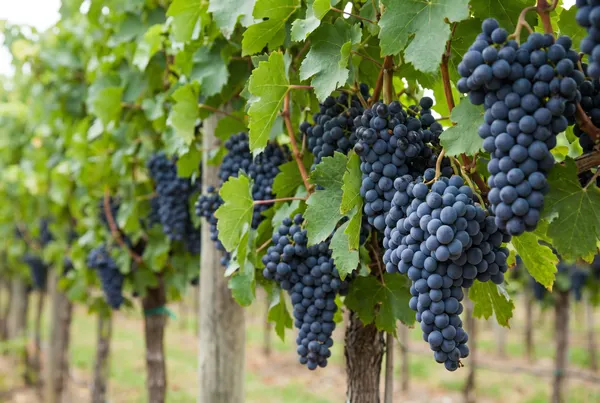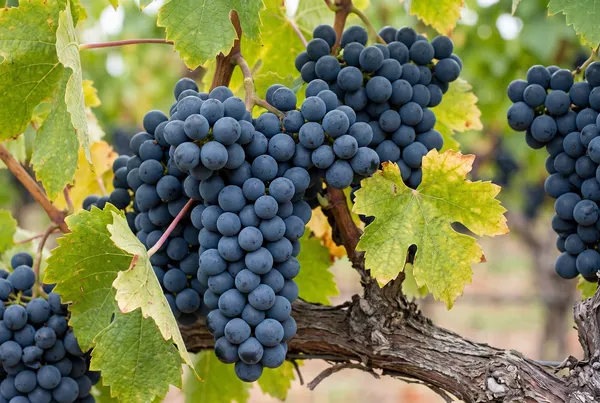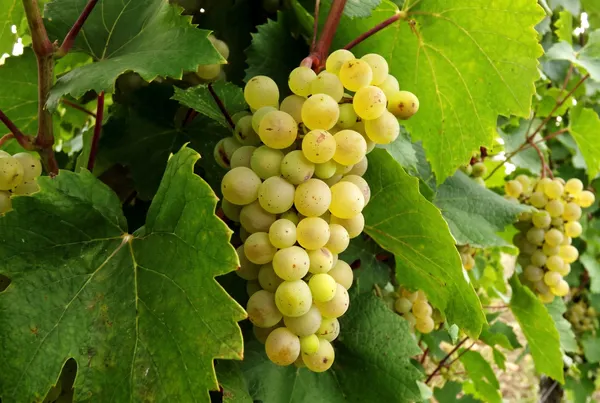

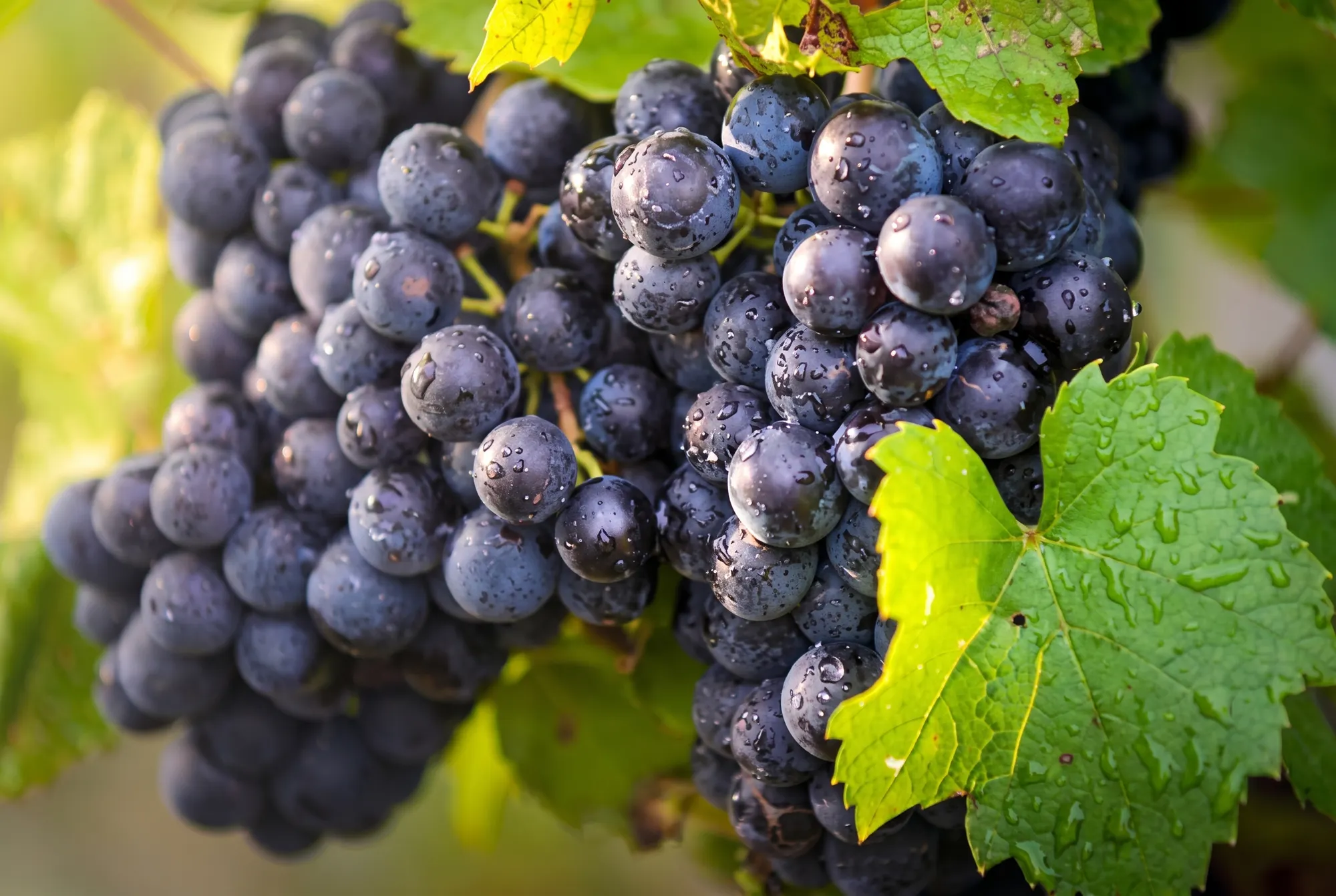
Once banished by a Duke, it now makes the bright, thirst-quenching reds of Beaujolais.
At a Glance
Gamay is the light, juicy red grape behind Beaujolais. It makes wines that are pale and fruity, low in tannin, with high, refreshing acidity — reds you can chill and drink young. Only about 74,000 acres (30,000 hectares) grow worldwide as of the mid-2010s, most of it in France. Cru Beaujolais, from the region's ten named villages, is bottle for bottle some of the most underpriced serious red in France.
Color: Black (red wine)
Also known as: Gamay Noir à Jus Blanc (full name), Gamay Noir
Origin: Burgundy, France
Where it grows best: Beaujolais (France); also Loire, Switzerland, Oregon
Signature flavors: red cherry, raspberry, cranberry, violet; banana and bubblegum via carbonic maceration
Body & style: Light and juicy to structured and age-worthy (cru Beaujolais)
What It Tastes Like
Gamay is light and bright. Expect tart red fruit like red cherry, raspberry, and cranberry, with floral violet notes and very low tannin, the drying grip that comes from skins. Acidity is high, which makes the wine juicy and refreshing. Many Beaujolais wines are made by carbonic maceration, a technique where whole grapes ferment intact before crushing; it produces the telltale banana, bubblegum, and candied smells of cheap Beaujolais Nouveau. Not all Gamay tastes that way. The serious cru wines skip or limit that method and show darker cherry, more structure, and a mineral, granitic edge.
How to tell it apart: Gamay is most often confused with Pinot Noir, its Burgundian neighbor and genetic relative. Both are pale and red-fruited. Gamay is usually more purple in color, juicier, simpler, and even lower in tannin, often with that banana note Pinot never has. Pinot is earthier, more structured, and ages longer. If a light red is gluggable, grapey, and cheerful rather than serious, it's probably Gamay.
Where It Grows
Homeland: Beaujolais, just south of Burgundy in eastern France. This is Gamay's stronghold; about half of the world's Gamay grows here, on granite and schist soils that suit it. The region's ten cru villages, among them Morgon, Fleurie, and Moulin-à-Vent, make the deepest, most structured, age-worthy Gamay, a world away from the Nouveau image.
Beyond Beaujolais, Gamay grows in France's Loire Valley and in Switzerland, and in small amounts in Oregon and Canada, usually as a light, fresh, food-friendly red.
In the Vineyard and Cellar
Gamay buds and ripens early, which lets it thrive in Beaujolais's relatively cool climate but exposes it to spring frost. It's vigorous and productive, so growers prune it hard and plant it densely to rein in yields and concentrate flavor; over-cropped Gamay makes thin, dilute wine. It suits Beaujolais's granite soils. In the cellar, carbonic maceration is the signature choice for fruity, early-drinking styles, while cru producers use more conventional fermentation to build wines that can age.
Reading the Label
In France, Gamay usually hides behind a place name. “Beaujolais,” “Beaujolais-Villages,” and the ten named crus (like “Morgon” or “Fleurie”) are all Gamay, and none says so on the front label. “Beaujolais Nouveau” is the young, just-fermented version released each November. Elsewhere, the grape is labeled “Gamay” plainly. Beware two false friends from old California labeling: “Gamay Beaujolais” was actually a clone (a slightly different version) of Pinot Noir, and “Napa Gamay” was a different grape called Valdiguié.
A Short History
Gamay is a natural cross of Pinot Noir and Gouais Blanc, confirmed by DNA — the same two parents that produced Chardonnay. It appeared in Burgundy in the fourteenth century. In 1395, Duke Philip the Bold of Burgundy banned it from the Côte d'Or, calling it a disloyal plant, to protect the reputation of Pinot Noir. Gamay retreated south to Beaujolais, where it found its home.
Did You Know? In 1395, the Duke of Burgundy outlawed Gamay, denouncing it as a “disloyal” grape unfit for his domain and ordering the vines torn out. The ban pushed Gamay south into Beaujolais. Centuries later, that exile turned out to be the making of the grape.
At the Table
Few reds are as food-friendly as Gamay: it's light, low in tannin, and high in acidity, so it doesn't overwhelm. It pairs with roast chicken, charcuterie, pork, salmon, and even Thanksgiving turkey; the acidity cuts through fat without the grip of a bigger red. It's one of the few reds you should serve lightly chilled, around 55°F (13°C), which sharpens its refreshing side. Drink most Beaujolais young and juicy. The exception is cru Beaujolais, which can age five to ten years and, in a blind tasting, is sometimes mistaken for Burgundy.
SOURCING & METHOD
Sourcing: origins, parentage, and synonyms drawn from Robinson,
Harding & Vouillamoz, Wine Grapes (2012), the Vitis International Variety Catalogue, and peer-reviewed parentage studies; planting figures from OIV, the University of Adelaide winegrape database, national bodies, and Wine-Searcher,
each anchored to a stated year; regional detail from the relevant consortia and D'Agata's Native Wine Grapes of Italy. Every fact was corroborated by at least two independent sources.