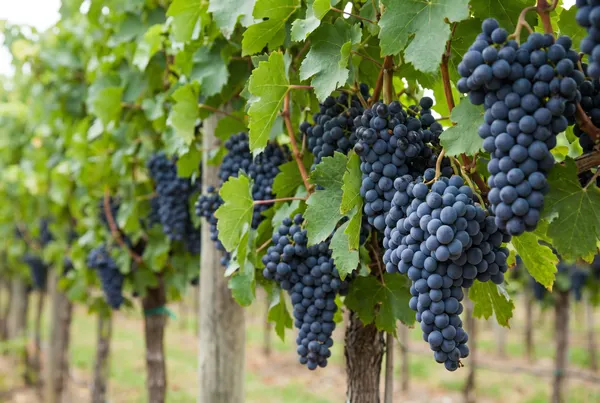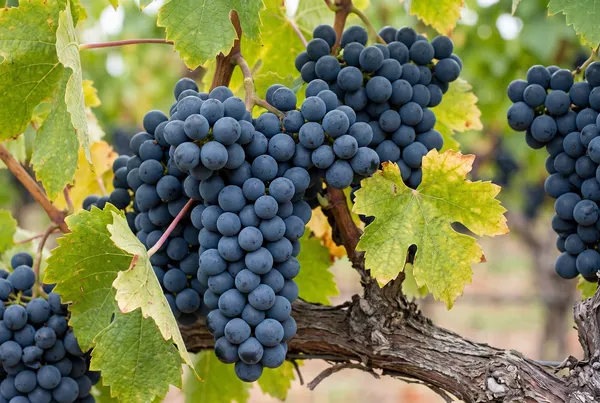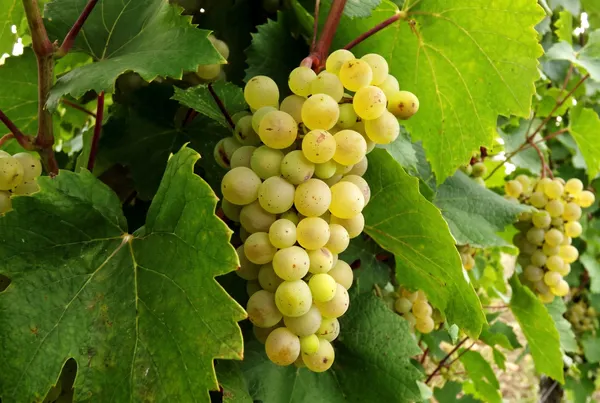

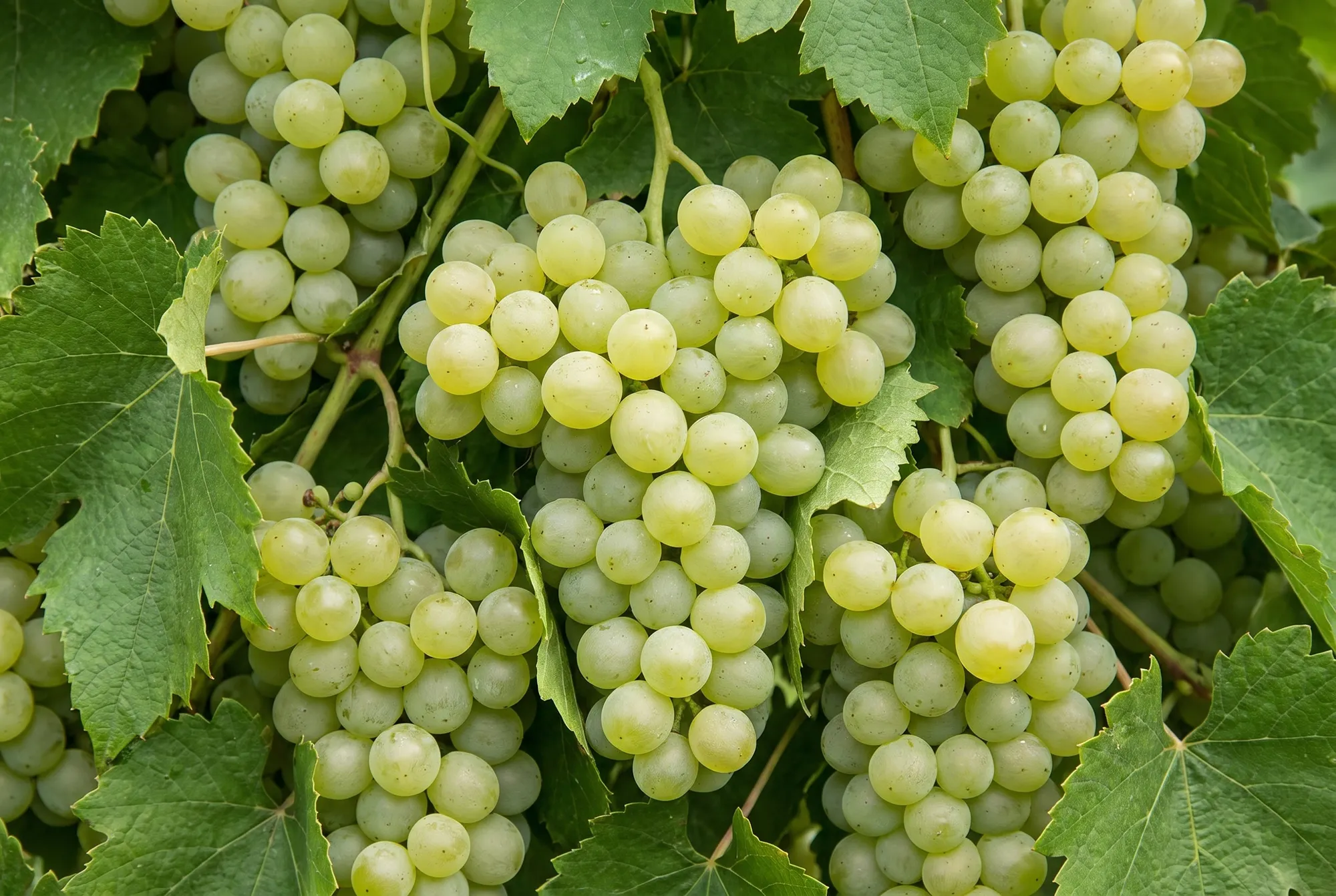
Portugal's white-Port grape and Spain's rising Godello star, one variety wearing two identities.
At a Glance
Gouveio is the Portuguese name for the grape Spain has turned into a star as Godello. It is the same variety. In Portugal it works quietly in white Port and Douro whites; in Spain's Galicia it makes some of the country's most admired whites. It gives textured, mineral, medium-bodied wines often compared to Chardonnay.
Color: White
Also known as: Godello (in Spain); Verdelho do Dão (a misleading local alias)
Origin: Northwestern Iberia; Galicia or the Douro, disputed
Grows best in: Valdeorras and Galicia, Spain; the Douro and Dão, Portugal
Signature flavors: Meyer lemon, green apple, pear, honeysuckle, wet stone; a creamy note when oaked
Body & style: Sleek, mineral, and crisp, through to full, creamy, barrel-aged whites
What It Tastes Like
Gouveio, or Godello, is a textural white. Expect Meyer lemon, green apple, pear, and honeysuckle over a stony base, with more weight than most Iberian whites. Unoaked, it is sleek and mineral-driven. Barrel-fermented and stirred on its lees (spent yeast), as it often is in Spain's Valdeorras, it turns creamy and fuller, which is why it draws constant comparison to white Burgundy and Chardonnay. A pink-skinned form, Gouveio Roxo, shares the same DNA and still turns up in old Douro vineyards.
How to tell it apart: the important confusion is with Verdelho. In the Dão this grape has long been called Verdelho do Dão, but DNA shows it is not the true Verdelho of Madeira; it is Gouveio. So a “Verdelho” from mainland Portugal is usually this grape, not the Madeira one. It is also a genetic sibling of Verdejo, the Rueda grape, but the two are distinct. Spain markets Godello better than Portugal markets Gouveio, and it shows in the price.
Where It Grows
The grape's identity today is Spanish. In Galicia, above all in Valdeorras, Godello makes intense, mineral whites that age for years, on granite and slate, and it is the most-planted grape in several Galician appellations. Bierzo, just east, makes it too, and Ribeira Sacra and Monterrei grow it as well, all trading on Godello's new prestige.
In Portugal, as Gouveio, it plays a supporting role in the Douro, where it goes into white Port and dry Douro whites alongside grapes like Viosinho and Rabigato. A little grows in the Dão. Portuguese plantings are modest, roughly 1,000 hectares (about 2,500 acres) across the Douro and Dão as of the early 2020s, against a larger and faster-growing Spanish base.
In the Vineyard and Cellar
Gouveio favors higher, cooler sites, which preserve the acidity that gives the wine its freshness and aging potential. It nearly disappeared in the 20th century; in Spain, Godello was down to a few hundred vines by the 1970s before a deliberate revival brought it back. In the Douro it ripens best on cooler, higher plots, which is why growers there value it for white Port and fresher dry whites. In the cellar it splits two ways: cool stainless steel for a crisp mineral style, or barrel fermentation with lees stirring for the richer, creamier, Burgundy-styled version that made its Spanish reputation.
Reading the Label
Godello on the label means Spain, almost always Galicia and usually Valdeorras. Gouveio means Portugal, generally the Douro or Dão. Same grape. Watch for “Verdelho” on a mainland Portuguese white, especially from the Dão: that is usually this grape, not Madeira's Verdelho. In white Port and Douro white blends, Gouveio typically appears unnamed, one voice among several indigenous grapes.
A Short History
The grape's first written record comes from the Douro in 1531, noted by the chronicler Rui Fernandes. Its parentage is unsettled, though modern DNA groups it with the Verdejo of Rueda as a close relative. For most of the 20th century it was neglected on both sides of the border, until Spain's Godello revival from the 1980s rescued it and turned it into a widely respected white.
Did You Know? By the 1970s, Spain's Godello had nearly gone extinct, down to a few hundred surviving vines. A deliberate rescue project brought it back, and today it is one of Spain's most prized white grapes. Portugal grew the same grape as Gouveio all along.
At the Table
Serve it at 48 to 52°F (9 to 11°C), a touch warmer than a crisp seafood white, especially for barrel-aged bottles. The unoaked mineral style suits shellfish, grilled fish, and light seafood pasta. The fuller, creamier, oak-influenced version has the body for richer dishes: roast chicken, pork, lobster, or cream sauces, much as a white Burgundy would. Crisp versions are best young; the serious barrel-aged Valdeorras whites can age well for several years.
SOURCING & METHOD
Sourcing: origins, parentage, and synonyms drawn from Robinson, Harding &
Vouillamoz, Wine Grapes (2012), the Vitis International Variety
Catalogue, and peer-reviewed parentage studies; planting figures from OIV, the
University of Adelaide winegrape database, national bodies, and Wine-Searcher,
each anchored to a stated year; regional detail from the relevant consortia and
D'Agata's Native Wine Grapes of Italy. Every fact was corroborated by at
least two independent sources.