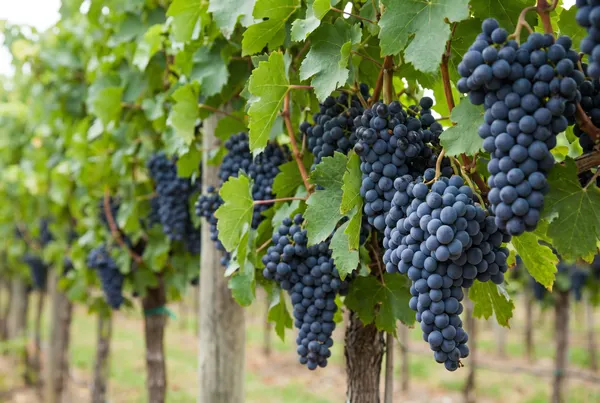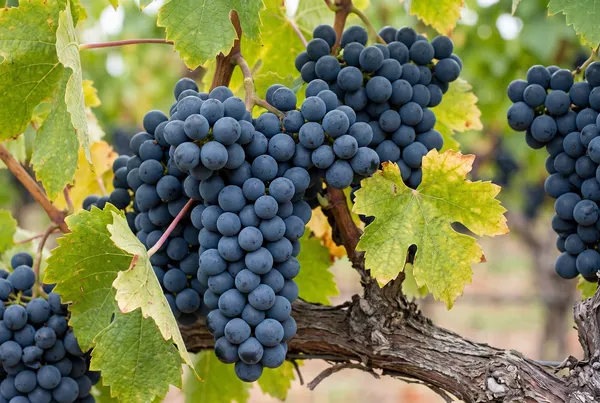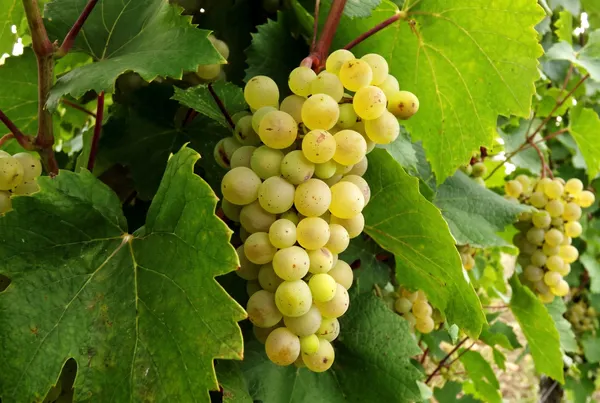


A family of a dozen grapes making the dry, sparkling reds Emilia drinks with lunch.
1 AT A GLANCE
Lambrusco names a family of related but distinct grapes, not clones or nicknames of one another, grown across Emilia in north-central Italy. They descend from wild vines of the Po Valley. Together they make sparkling red wine, most of it now dry to off-dry, despite the sweet reputation many Americans still carry from the 1980s. Three members carry the category: Sorbara, Grasparossa, and Salamino. Because they are separate varieties rather than one grape, a bottle of one can taste almost nothing like a bottle of another, which is the first thing to know about Lambrusco.
COLOR: Black (Sorbara pale; Grasparossa deep)
MAIN VARIETIES: Lambrusco di Sorbara, L. Grasparossa, L. Salamino, L. Maestri, L. Marani
ORIGIN: Emilia (Modena and Reggio Emilia), from wild Po Valley vines
GROWS BEST: The plains and low hills around Modena
SIGNATURE FLAVORS: Violet, strawberry, red cherry (Sorbara); black cherry, plum, blackberry (Grasparossa)
BODY & STYLE: From pale and tart (Sorbara) to dark and tannic (Grasparossa); lightly fizzy, dry to sweet
2 WHAT IT TASTES LIKE
Lambrusco is sparkling, usually frizzante (lightly fizzy) rather than spumante (fully sparkling). Expect high acidity, low-to-moderate tannin (the drying grip from skins), and moderate alcohol around 11%. The style depends most on the grape. Sorbara is pale and sharply acidic, with strawberry, red currant, and violet, and can look nearly rosé. Grasparossa is the darkest and most tannic, all black cherry and plum under a thick foam. Salamino sits between the two and is the most widely planted. Sweetness ranges from secco (dry) through amabile (off-dry) to dolce (sweet).
How to tell it apart: the confusables are other sparkling reds, chiefly Australian sparkling Shiraz (Syrah) and Italian Brachetto. Lambrusco is savory and tart, moderate in alcohol, and today usually dry. Sparkling Shiraz is dark and jammy, with sweeter fruit and higher alcohol, closer to a fizzy dessert wine. Brachetto is grapey and aromatic, a red cousin of sweet Moscato. If a sparkling red tastes dry and savory with cutting acidity, it's Lambrusco.
3 WHERE IT GROWS
Modena and Reggio Emilia hold nearly all of it, with about three-quarters of the vineyard in Modena. Sorbara grows on the sandy plains of central Modena and gives the palest, highest-acid wine. Grasparossa favors the clay hills around Castelvetro, south of Modena, and gives the darkest, most tannic. Salamino spreads across both provinces on the flatter alluvial ground. A little Lambrusco grows west into Lombardy around Mantua. The three main grapes together cover roughly 20,000 acres (about 8,000 hectares) of some 25,000 acres (10,000 hectares) planted to the family in the region as of the early 2020s.
4 IN THE VINEYARD AND CELLAR
These are highly productive vines suited to fertile, low-lying ground. Sorbara has a quirk that shapes its whole character: its flowers are female-only, so the vine cannot pollinate itself and is usually planted beside Salamino to set fruit at all. Its poor, patchy fruit-set, a condition called millerandage that leaves uneven and tiny berries, concentrates flavor in the little fruit that remains. Nearly all Lambrusco is made by the tank method, known in Italy as the Martinotti method and in France as Charmat, in which a second fermentation runs inside a sealed pressurized tank. That traps the bubbles and locks in fresh, primary fruit rather than the bready character of bottle-fermented sparkling wine.
5 READING THE LABEL
When a grape name appears, it usually sits inside the appellation: Lambrusco di Sorbara, Lambrusco Grasparossa di Castelvetro, Lambrusco Salamino di Santa Croce. Most bottles shipped to the US are blends sold under the broader IGT Emilia label, so they won't name a single variety. Secco, amabile, and dolce mark dry, off-dry, and sweet, and reading that one word is the difference between a food wine and a dessert. Ancellotta, a separate grape entirely, is often blended in for deeper color.
6 A SHORT HISTORY
The name comes from labrusca, Latin for wild vine, and the Etruscans and Romans already grew it. Modern DNA confirms the members are distinct varieties, related yet not interchangeable. Sweet Lambrusco, led by Riunite and its "Riunite on ice" jingle, was the best-selling imported wine in the United States through the late 1970s and 1980s. A dry, quality-minded revival followed, and today's serious bottles bear little resemblance to that era's sweet fizz.
Did you know? Lambrusco di Sorbara can't reproduce on its own. Its vines carry only female flowers, so growers plant Salamino in the same rows to supply the pollen and make the fruit set at all.
7 AT THE TABLE
High acidity plus fizz slices through fat, and the natural match is the food of its home: prosciutto, mortadella, Parmigiano-Reggiano, lasagna, pizza, and anything fried. Grasparossa's body and light tannin handle rich ragù and braised pork; pale Sorbara suits salumi and lighter plates. Serve it cold, 50–54°F (10–12°C), colder than you'd expect for a red, and drink it young, because freshness is the entire point. It isn't built to age, so there's no reward for cellaring it. Dry Lambrusco is the best pizza wine there is, and the sweet-plonk memory keeps too many Americans from ever finding that out.
SOURCING & METHOD
Sourcing: origins, parentage, and synonyms drawn from Robinson, Harding & Vouillamoz, Wine Grapes (2012), the Vitis International Variety Catalogue, and peer-reviewed parentage studies; planting figures from OIV, the University of Adelaide winegrape database, national bodies, and Wine-Searcher, each anchored to a stated year; regional detail from the relevant consortia and D'Agata's Native Wine Grapes of Italy. Every fact was corroborated by at least two independent sources.