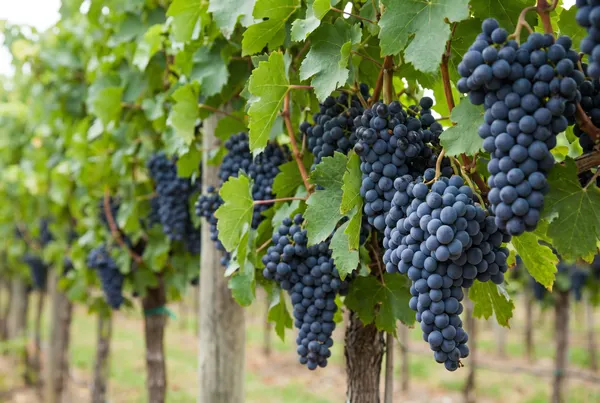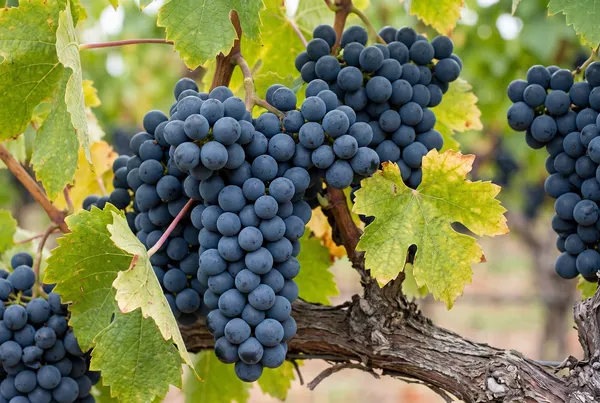

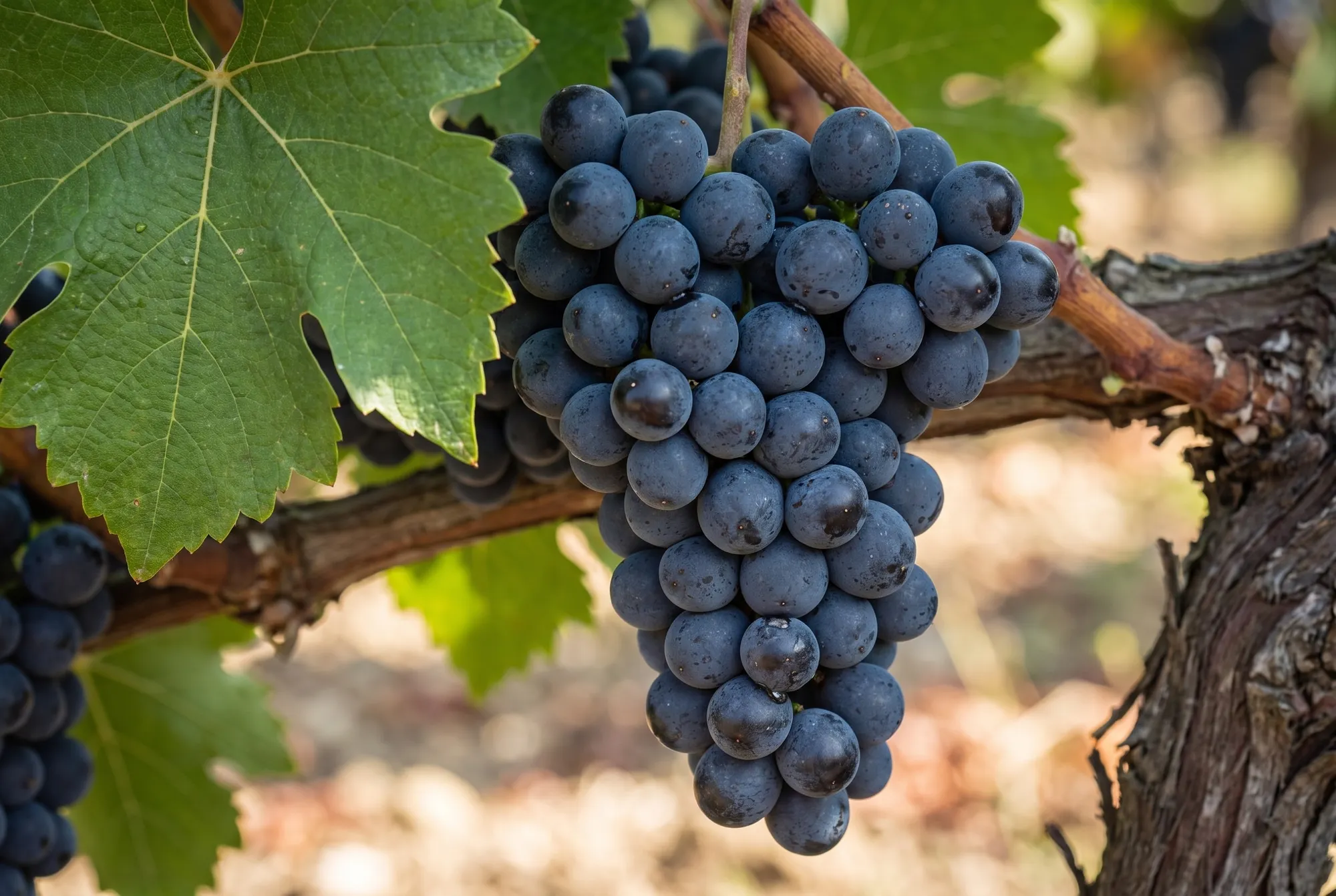
The grape France nearly abandoned, then Argentina turned into its national calling card.
At a Glance
Malbec is a dark-skinned red grape that left its French homeland behind and found fame 7,000 miles away. In southwest France it goes by Côt and makes the inky wines of Cahors. In Argentina it became the flagship, planted across about 116,000 acres (46,941 hectares) as of 2023 (INV; Wines of Argentina). Argentina is now the world’s largest grower of the grape, and the United States is its biggest export market. The same variety gives two faces: firmer and more savory in France, plusher and more fruit-driven at altitude in Mendoza.
Color: Red (dark-skinned)
Also known as: Côt, Côt Noir, Auxerrois (in Cahors); historically Pressac
Origin: Southwest France (Cahors, in the Lot Valley)
Where it grows best: Mendoza, Argentina (especially the high-altitude Uco Valley); Cahors, France
Signature flavors: Blackberry, black plum, violet, cocoa, black pepper
Body & style spectrum: Medium-bodied and savory to full-bodied and velvety
What It Tastes Like
Malbec gives you dark fruit first. Blackberry and black plum, sometimes stewed, sometimes fresh. Behind the fruit sits violet, a floral note that shows up more clearly here than in most reds. Warm sites add cocoa and a roasted edge. Cool sites keep the fruit tight and bring black pepper with a fresh, almost herbal lift.
The tannins, meaning the drying, grippy compounds from grape skins that make your gums feel scoured, are moderate to firm but rounder than Cabernet Sauvignon’s. Acidity sits medium. That mix is why Malbec drinks smooth even when it is big. Aging in oak barrels is common; new oak layers in vanilla and mocha, and can bury the fruit if a winemaker overdoes it.
How to tell it apart: people confuse Malbec with Syrah (Shiraz) and Merlot. Against Syrah, Malbec shows less smoked-meat and black pepper, more violet and a cocoa finish. Against Merlot, it is darker, firmer in tannin, and less soft-plummy. The real giveaway is color. Malbec stains the glass a deep, opaque purple-black that few grapes match.
Where It Grows
Homeland: Cahors, in southwest France. The Cahors appellation, meaning a legally defined wine zone with its own rules, covers about 10,600 acres (4,300 hectares) and requires at least 70% Malbec. The historic “black wine” here is dark and tannic, with more tar and dried herb than fruit. Growers divide the zone by soil and elevation, from the clay valley floor near the Lot River up to the limestone plateau, and each level gives a different weight of wine, from juicier to firmer.
Argentina is now the center of gravity. Mendoza holds roughly 84% of the country’s Malbec. High vineyards in the Uco Valley, some above 3,500 feet (1,100 meters), get strong sun and cold nights, which build color and hold acidity. The wines are riper and more perfumed than Cahors. Chile, Washington, California, and Australia grow smaller amounts, often as a blending grape.
In the Vineyard and Cellar
Malbec has thin-to-medium skin and buds early, which leaves it exposed to spring frost and to coulure, the poor fruit set that happens when cold or wet weather hits during flowering and leaves loose, uneven bunches. That sensitivity is why it struggled in damp France and thrives in dry, sunny Mendoza, and why old French vines were so unproductive. At altitude, thicker skins from strong UV light give darker, more structured wine. In the cellar, ripe tannins and deep color let winemakers push extraction and new oak.
Reading the Label
In Argentina and the US, the bottle simply says Malbec. In France it hides under place names. Any wine labeled Cahors is Malbec-dominant. In the Loire and Bordeaux it may appear as Côt. Watch the word Auxerrois: in Cahors it is an old name for Malbec, but Auxerrois Blanc is a completely different white grape from Alsace, so do not assume they are related. A US varietal wine, one labeled with a single grape, must be at least 75% Malbec. Malbec is also a minor blending partner in red Bordeaux.
A Short History
DNA testing in 2008–09 showed Malbec is a natural cross of two obscure French grapes, Magdeleine Noire des Charentes and Prunelard. That makes it a half-sibling of Merlot, which shares the same mother. French Malbec collapsed after the 1956 frost wiped out most of Cahors. Argentina, where cuttings arrived in the mid-1800s, carried the grape to worldwide fame.
Did you know? When geneticists identified Malbec’s mother grape, Magdeleine Noire des Charentes, they found it almost gone. Only a handful of surviving vines turned up in western France. Argentina’s signature red traces back to a parent nearly lost to history.
At the Table
Malbec’s tannin and dark fruit want protein and char. Grilled steak is the classic match, and it is no accident: Argentine Malbec grew up alongside asado, the country’s live-fire beef cooking. The tannins bind with fat and protein, so a fatty ribeye tastes smoother and the wine tastes fruitier. Lamb, short ribs, chorizo, and mushroom dishes all work. Skip delicate fish. Serve slightly below room temperature, around 60–64°F (16–18°C). Most Malbec drinks best within five years, though top Uco Valley and Cahors bottles reward eight to ten. American drinkers still treat Malbec as a cheap weeknight red, which undersells what the best examples do.
SOURCING & METHOD
Sourcing: origins, parentage, and synonyms drawn from Robinson, Harding & Vouillamoz, Wine Grapes (2012), the Vitis International Variety Catalogue, and peer-reviewed parentage studies; planting figures from OIV, the University of Adelaide winegrape database, national bodies, and Wine-Searcher, each anchored to a stated year; regional detail from the relevant consortia and D'Agata's Native Wine Grapes of Italy. Every fact was corroborated by at least two independent sources.