
A single movie dented its reputation, yet the world still plants it almost everywhere.
At a Glance
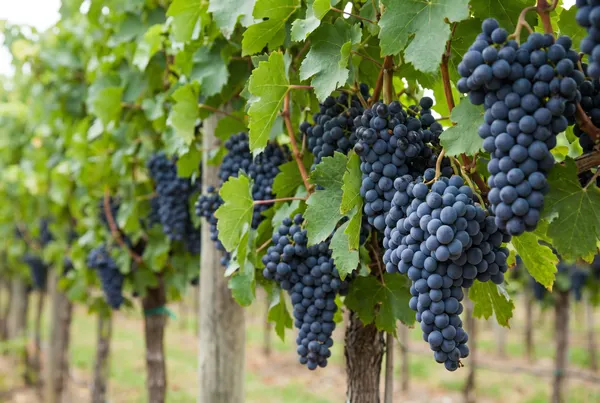
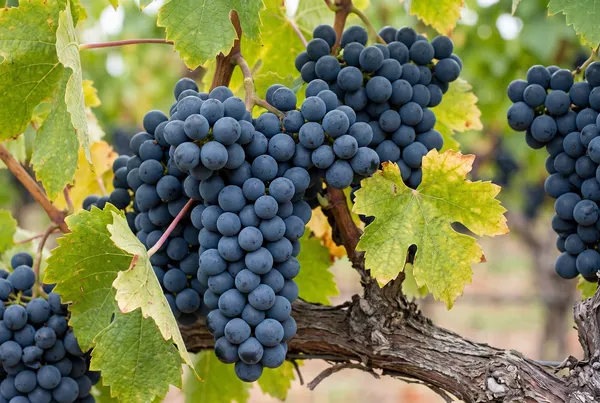
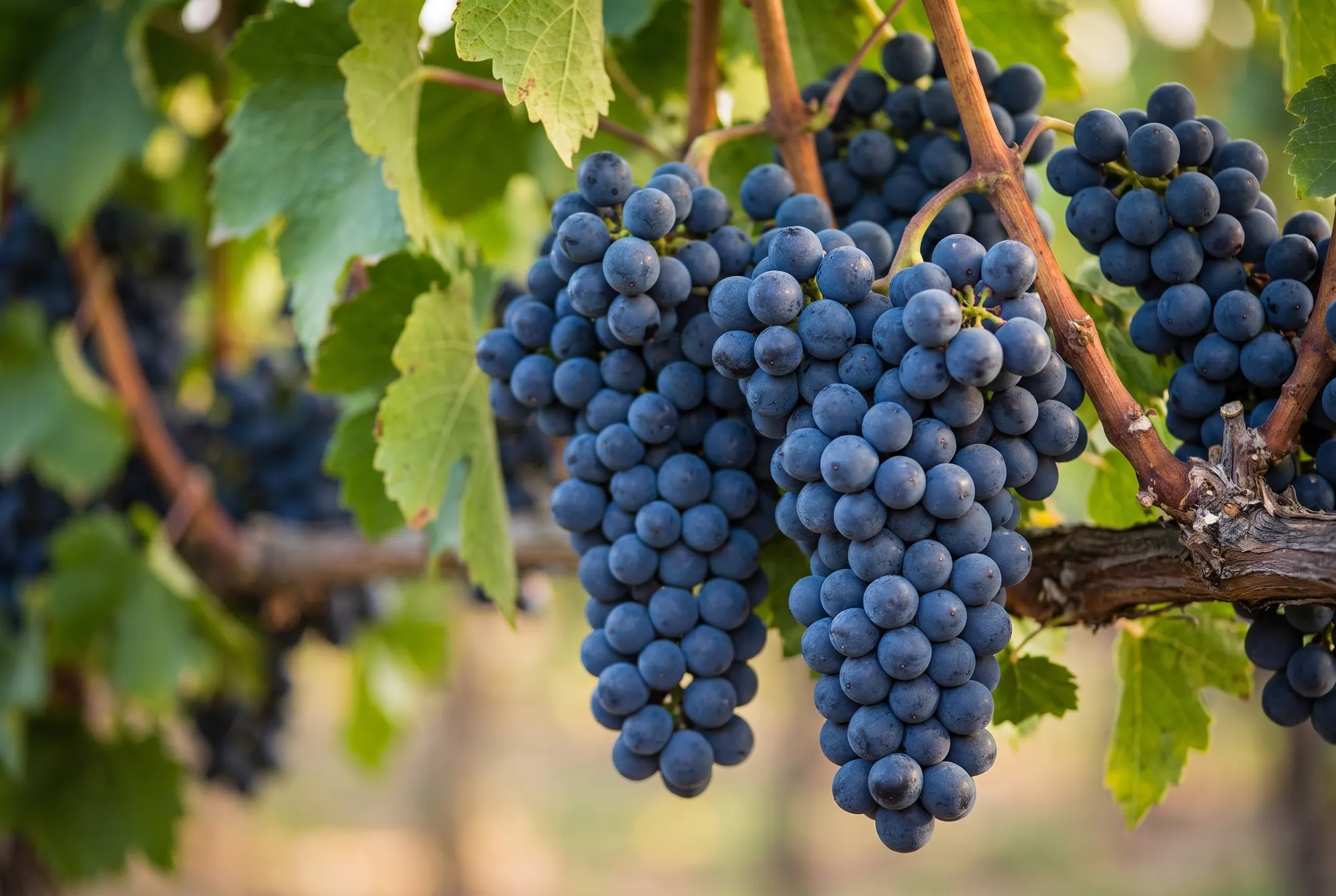
Merlot is the soft-spoken workhorse of Bordeaux and the second most planted red grape on earth, at about 657,000 acres (266,000 hectares) worldwide, per the OIV’s 2017 global variety survey. It ripens early, tastes plush, and blends easily, which is why it turns up in $8 supermarket bottles and in Château Pétrus, whose wines sell for thousands of dollars. That range is the whole story of Merlot’s image. The grape can be profound or forgettable, and the label rarely tells you which.
Color: Red
Also known as: No common label synonym (historically Merlau, Bordelais)
Origin: Bordeaux, France (the Right Bank, around Libourne)
Where it grows best: Pomerol and Saint-Émilion (Bordeaux); also Tuscany, Washington, California, Chile
Signature flavor: Black cherry, red plum, chocolate, bay leaf, cedar
Body & style spectrum: Soft and juicy to dense and age-worthy
What It Tastes Like
Merlot leads with round, ripe fruit: black cherry and red plum, wrapped in a chocolatey warmth. Cool climates like Bordeaux add savory notes of bay leaf, tobacco, and a graphite edge, with firmer structure. Warm climates like California push riper, jammier fruit and higher alcohol, sometimes 14.5% and up.
Texture is the signature. Merlot’s tannins, the drying compounds drawn from grape skins, are soft and rounded, so the wine feels plush where Cabernet feels gripping. Acidity is medium. Body ranges from light and gulpable to dense and serious, depending on the site and how ripe the fruit was picked. Winemakers tend to chase one of two targets: a leaner, savory style built for the table, or a darker, late-picked style with higher alcohol, built for immediate impact. Oak aging adds vanilla, cedar, and baking spice, and Merlot takes to it well.
How to tell it apart: the confusion is always with Cabernet Sauvignon, its constant blending partner. Cabernet gives you blackcurrant, green bell pepper, and a firm, tannic grip that dries the mouth. Merlot gives softer red-and-black fruit, rounder tannins, and a gentler finish. If a red is dark and plummy but does not scour your gums, it is probably Merlot or Merlot-dominant. Poured young, Merlot is the more approachable of the two.
Where It Grows
Homeland: Bordeaux, where Merlot is the most planted grape, well ahead of Cabernet Sauvignon. On the Right Bank, in Pomerol and Saint-Émilion, it is the star. The cool clay soils there suit its early ripening and yield rich, velvety reds. Pétrus is nearly all Merlot.
France grows more Merlot than any country, around 275,000 acres (112,000 hectares), much of it in the Languedoc for easygoing varietal wine. In cooler vintages Bordeaux Merlot can taste lean and herbal, and in warm ones it turns rich and generous, so vintage matters more here than for many reds. Italy plants a great deal, especially in the northeast and in Tuscany, where it feeds “Super Tuscan” blends. Washington State makes firm, structured Merlot that ages well. California spans mass-market to serious. Chile offers dependable value.
In the Vineyard and Cellar
Merlot buds and ripens early, usually the first major red picked in Bordeaux. Early budding exposes it to spring frost, and rain during flowering can trigger coulure, a poor fruit set that thins the crop. It is prone to downy mildew, a fungal disease that spreads in damp weather. Early ripening is also its advantage: it fills out on cool, clay-rich sites where Cabernet would struggle. In the cellar, its supple tannins and generous fruit make it forgiving, which is exactly why it is used to soften firmer grapes in a blend.
Reading the Label
In the New World, Merlot is labeled by name, so a bottle marked Merlot from California, Washington, or Chile is a varietal wine, meaning at least 75% of that grape in the US. In Bordeaux you almost never see the word. It hides inside the blend behind a château or an appellation, the name of a legally defined wine region. Pomerol and Saint-Émilion are Merlot-dominant by default, even though the grape is not printed. Merlot is also a quiet partner in Cabernet blends worldwide.
A Short History
DNA work published in 2009 identified Merlot’s parents as Cabernet Franc and an old, nearly extinct grape called Magdeleine Noire des Charentes. That makes Merlot a half-sibling of Malbec and a genetic relative of Cabernet Sauvignon. The name likely comes from merle, French for blackbird, a bird fond of the ripe berries. Merlot rose to dominate Bordeaux across the 20th century on the strength of its reliability.
Did you know? The 2004 film Sideways, whose lead character refuses to drink Merlot, is widely blamed for a real slump in US Merlot sales through the mid-2000s. Researchers later documented the drop. One line of movie dialogue dented a whole grape’s reputation.
At the Table
Merlot’s soft tannins make it one of the friendliest reds at the table. It does not need a slab of steak the way a tannic wine does. Roast chicken, pork, duck, mushroom dishes, and tomato-based pasta all work, and it handles herbs and mild spice better than Cabernet. With a plush New World Merlot, reach for burgers or barbecue; with a structured Bordeaux or Washington bottle, go for lamb or a rib roast. Serve around 60–64°F (16–18°C). Simple Merlot is best young and fruity, while top Pomerol and Saint-Émilion age gracefully for a decade or more. Well-made Merlot is unfairly overlooked, and it is often the smarter buy sitting next to pricier Cabernet.what the best examples do.
SOURCING & METHOD
Sourcing: origins, parentage, and synonyms drawn from Robinson, Harding &
Vouillamoz, Wine Grapes (2012), the Vitis International Variety Catalogue, and peer-reviewed parentage studies; planting figures from OIV, the University of Adelaide winegrape database, national bodies, and Wine-Searcher, each anchored to a stated year; regional detail from the relevant consortia and D'Agata's Native Wine Grapes of Italy. Every fact was corroborated by at
least two independent sources.