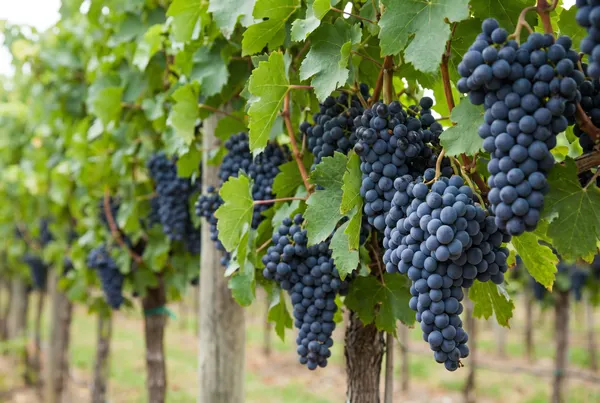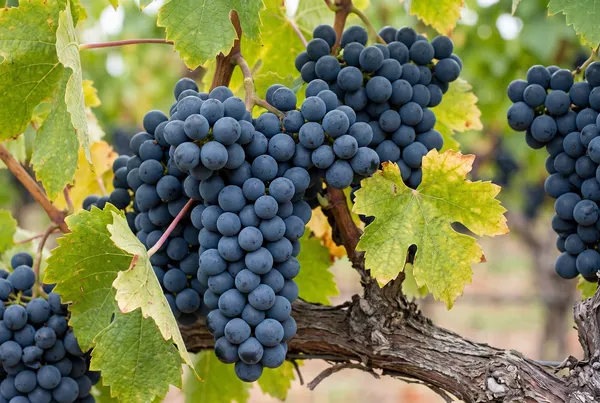

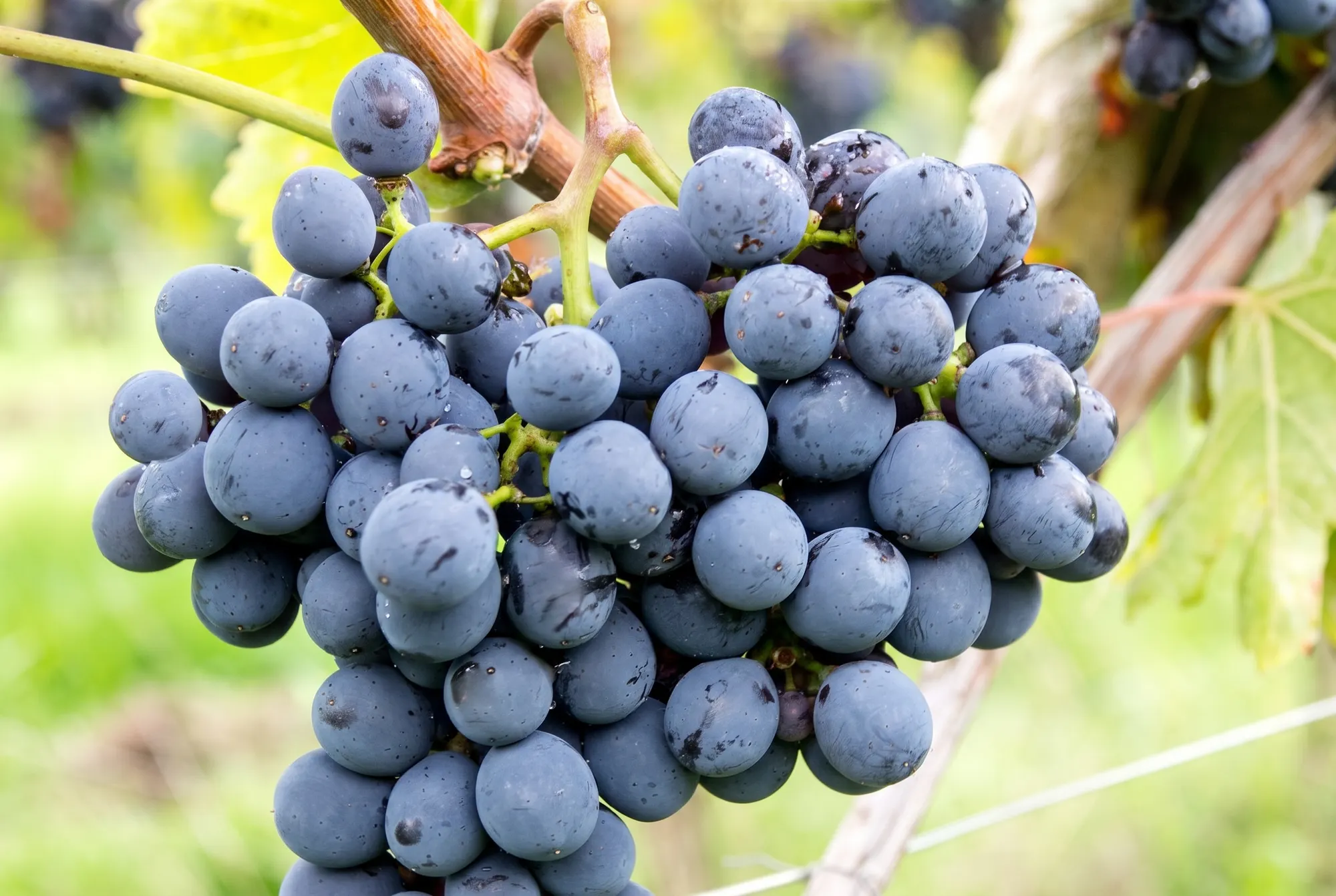
The sour-cherry acidity behind Chianti and Brunello, and Italy's most-planted red.
1 AT A GLANCE
Sangiovese is Italy's most widely planted red grape and the spine of Tuscany. It's built on high acidity and firm tannin, and it leads with a tart-cherry-and-tomato-leaf savor rather than plush, sweet fruit. One grape wears many faces here: Chianti, Brunello di Montalcino, Vino Nobile di Montepulciano, and the modern Super Tuscans all depend on it. More than almost any other variety, Sangiovese tastes of where it grew and which strain was planted, so no two of those wines lead with quite the same voice.
COLOR: Black (pale in the glass)
ALSO KNOWN AS: Morellino (Scansano), Nielluccio (Corsica)
ORIGIN: Central Italy; a cross of Ciliegiolo × Calabrese di Montenuovo
GROWS BEST: Tuscan hills: Chianti Classico, Montalcino, Montepulciano
SIGNATURE FLAVORS: Sour red cherry, dried tomato, tea leaf, dried herbs, leather with age
BODY & STYLE: Medium-bodied, high-acid, and grippy; bright and rustic to polished and age-worthy.
2 WHAT IT TASTES LIKE
Medium body, high acidity, high and grippy tannin (the drying grip from skins and seeds), and a pale-to-medium color that "bricks," turning orange-brown, earlier than most reds. The fruit is tart red cherry, never candied, layered with dried tomato, tea leaf, dried oregano, and, with age, leather and tobacco. Warm coastal sites like the Maremma give rounder, softer wine with more fruit; cool classic Chianti stays lean and savory with high acid. Oak adds spice, and a heavy hand with new wood can bury the fruit under vanilla.
How to tell it apart: Sangiovese is most often confused with Nebbiolo, since both are pale, high-acid, high-tannin Italian reds that brick with age. Sangiovese leads with sour cherry and a savory, almost tomato-leaf edge; Nebbiolo smells of tar and dried roses, grips even harder, and is far more perfumed. Put simply, Sangiovese is the earthier and less floral of the two, and it rarely reaches Nebbiolo's aromatic intensity.
3 WHERE IT GROWS
Chianti and its heartland Chianti Classico use Sangiovese as the dominant or sole grape, giving bright, savory, food-friendly reds; the top Chianti Classico tier is labeled Gran Selezione. Brunello di Montalcino is 100% Sangiovese from the "Brunello" strain (a local selection also called Sangiovese Grosso), and its rules force long aging, so it emerges powerful and built to last. Vino Nobile di Montepulciano uses the Prugnolo Gentile strain. Carmignano, west of Florence, blends in a little Cabernet, a practice that predates the Super Tuscans by centuries. Morellino di Scansano, down in the warmer coastal Maremma, is softer and fruitier for earlier drinking. The grape also anchors the reds of Romagna to the north. All told, Italy grows Sangiovese on the order of 150,000 acres (roughly 60,000 hectares) as of the early 2020s.
4 IN THE VINEYARD AND CELLAR
Sangiovese ripens late and wears thin skins, which explains both its pale color and its need for warm, well-exposed sites to ripen those hard tannins fully. It is unusually sensitive to its surroundings: the particular strain and the vineyard shift its character more than they do for most grapes, which is why growers obsess over clonal selection. In the cellar, the choice of vessel sets the style. Traditional large old casks, called botti, let the wine breathe slowly and keep its savory edge, while small new French oak barrels, the barriques borrowed from Bordeaux, push it toward a darker, richer, more international profile.
5 READING THE LABEL
You rarely see the word "Sangiovese" on the classic wines; you see the place instead: Chianti, Brunello, Vino Nobile. One trap is worth learning. Vino Nobile di Montepulciano is Sangiovese from the Tuscan town of Montepulciano, and has nothing to do with the grape called Montepulciano, a separate variety grown mostly across the country in Abruzzo. Corsica labels the same grape Nielluccio. Super Tuscans blend Sangiovese with Cabernet or Merlot and usually skip the grape name entirely, leaning on the producer's reputation.
6 A SHORT HISTORY
DNA analysis by José Vouillamoz in 2004 points to a cross of Ciliegiolo, an old Tuscan grape, and Calabrese di Montenuovo, an obscure southern relic. Later work disputes the direction of the Ciliegiolo link, so treat the parentage as likely rather than settled. Sangiovese was already known by the 1500s, and it has turned out to be the parent of several southern Italian varieties, spreading its own genes down the peninsula.
Did you know? Central Italy's signature grape isn't purely Tuscan by blood. DNA ties one of its parents to the deep south, around Campania and Calabria, so Sangiovese carries half its family tree in the toe of the Italian boot.
7 AT THE TABLE
High acid and grippy tannin make this a food grape engineered for the Italian table. The acidity cuts through tomato and fat; the tannin looks for protein to soften against. Reach for tomato-sauced pasta, pizza, roast pork, bistecca alla fiorentina, and aged pecorino cheese. Serve at 60–64°F (16–18°C). Everyday Chianti drinks young and cheerful, while Brunello and top Chianti Classico reward 10 to 20 years or more, unfolding into leather, dried cherry, and forest floor. Sangiovese is the best tomato-sauce wine in the world, and no California red comes close on that particular job.
SOURCING & METHOD
Sourcing: origins, parentage, and synonyms drawn from Robinson, Harding & Vouillamoz, Wine Grapes (2012), the Vitis International Variety Catalogue, and peer-reviewed parentage studies; planting figures from OIV, the University of Adelaide winegrape database, national bodies, and Wine-Searcher, each anchored to a stated year; regional detail from the relevant consortia and D'Agata's Native Wine Grapes of Italy. Every fact was corroborated by at least two independent sources.