

One unmistakable smell took it from Loire obscurity to New Zealand's global stage.
At a Glance
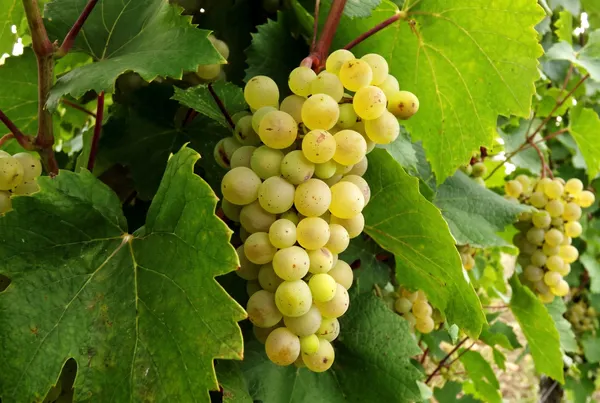
Sauvignon Blanc is a high-acid white with an instantly recognizable smell: fresh-cut grass, gooseberry, and a green, herbal snap. It's aromatic and almost always dry, made to be drunk young and cold, and it covers about 299,000 acres (121,000 hectares) as of 2016. Two regions define it: the Loire Valley in France and Marlborough in New Zealand, and they make it in noticeably different keys.
Color: White
Also known as: Fumé Blanc, Blanc Fumé, Muskat-Silvaner (Germany)
Origin: Loire Valley / Bordeaux, France
Where it grows best: Loire (Sancerre, Pouilly-Fumé), Marlborough (NZ), Bordeaux, California
Signature flavors: Gooseberry, lime, green bell pepper, grass, passionfruit; flinty smoke in Sancerre
Body & style: Lean and grassy to riper and tropical
What It Tastes Like
Sauvignon Blanc is loud. Its aromas jump out of the glass: gooseberry, lime, green apple, cut grass, and a distinct green, vegetal edge that people describe as bell pepper, boxwood, or bluntly as cat's pee. Those green notes come from the same pyrazine compounds found in underripe Cabernet. Acidity is high, the body is light, and oak is usually absent. The wine is crisp and refreshing.
Climate splits the styles. Cool Loire vineyards give a leaner, minerally, grassy wine with citrus and a smoky, flinty note. Sunny New Zealand pushes it toward riper, louder tropical fruit like passionfruit and guava, while keeping the zippy acidity. Warm California can turn it soft and melony, which is often when producers reach for oak barrels and the “Fumé Blanc” name.
How to tell it apart: Sauvignon Blanc is sometimes mixed up with other zippy, unoaked whites, but its tell is that pungent green-herbal-tropical combination over searing acidity. Nothing else smells quite so aggressively of gooseberry and grass at once. If a white leaps out of the glass green and sharp, it's Sauvignon Blanc.
Where It Grows
Homeland: the Loire Valley and Bordeaux. In the Loire's Sancerre and Pouilly-Fumé, Sauvignon Blanc is lean and mineral, with a smoky, flinty edge and citrus over the green notes; the chalk and flint soils leave a mark you can taste. This is the grape's classic, restrained expression, and to my taste the more rewarding one.
Marlborough, at the top of New Zealand's South Island, reinvented the grape in the 1980s: explosively aromatic and tropical, with tangy acidity. It became a global phenomenon and remains the reference point for New World Sauvignon, for better and worse.
In Bordeaux, Sauvignon Blanc is often blended with Sémillon, both for crisp dry whites and for the great sweet wines of Sauternes, where noble rot concentrates the fruit.
California makes it in two directions: bright and grassy, or richer and softer under the oaked “Fumé Blanc” style.
In the Vineyard and Cellar
Sauvignon Blanc is vigorous, meaning it grows abundant leaves and shoots, which can shade the fruit and exaggerate those green, herbaceous flavors if growers don't manage the canopy. It ripens fairly early and holds acidity well, which is central to its fresh style. Pick early and the wine is greener and sharper; pick later and it turns riper and more tropical, so harvest timing is a major stylistic lever. Most Sauvignon Blanc is fermented cool in steel to lock in aromatics and bottled quickly. A minority sees oak barrels and time on the lees (spent yeast), which softens the edges and adds a smoky, savory richness, the traditional Bordeaux approach. One long-running mix-up: in Chile, plantings labeled Sauvignon were for decades partly a lookalike grape called Sauvignonasse.
Reading the Label
In the Loire, look for the place names “Sancerre” and “Pouilly-Fumé”; both are Sauvignon Blanc, not grape names. Don't confuse Pouilly-Fumé (Loire Sauvignon) with Pouilly-Fuissé (Burgundy Chardonnay); one letter, different grape. “Fumé Blanc” on a California label is Sauvignon Blanc; Robert Mondavi coined the term in the 1960s. New Zealand and most New World bottles say “Sauvignon Blanc.” White Bordeaux and Sauternes usually blend it with Sémillon without naming either grape.
A Short History
Sauvignon Blanc comes from the Loire and Bordeaux; its name likely derives from “sauvage,” meaning wild. Its own parentage is unsettled, though it belongs to the Traminer and Savagnin family. Its biggest genetic claim to fame is as a parent: crossed with Cabernet Franc, it produced Cabernet Sauvignon. New Zealand's success from the 1980s onward turned a regional French white into a global bestseller.
Did You Know? Sauvignon Blanc is a parent of Cabernet Sauvignon. A chance cross between this white grape and red Cabernet Franc, in Bordeaux centuries ago, produced the world's most planted red wine grape. The name “Cabernet Sauvignon” carries the fingerprint of both parents.
At the Table
Sauvignon Blanc's high acidity makes it a natural with tangy, herbal, and green foods. It's the classic partner for goat cheese; the pairing of Sancerre and Loire chèvre is close to foolproof. It also loves the green vegetables that defeat most wines, such as asparagus and green beans, plus fresh herbs, oysters and other raw shellfish, ceviche, and citrusy, herb-driven dishes. The acidity cuts cleanly through fried food and creamy sauces. It's also a friend to grassy, zippy pairings like a Greek salad with feta. Serve it cold, around 45–50°F (7–10°C), to keep it crisp. Drink it young; the whole point is fresh, vivid aromatics, and all but a few oaked or Bordeaux-blended examples fade rather than improve with age.
SOURCING & METHOD
Sourcing: origins,
parentage, and synonyms drawn from Robinson, Harding &
Vouillamoz, Wine Grapes (2012), the Vitis International Variety
Catalogue, and peer-reviewed parentage studies; planting figures from OIV, the
University of Adelaide winegrape database, national bodies, and Wine-Searcher,
each anchored to a stated year; regional detail from the relevant consortia and
D'Agata's Native Wine Grapes of Italy. Every fact was corroborated by at
least two independent sources.