
The grape behind Sauternes and Australia’s longest-lived dry whites, hiding in plain sight.
At a Glance
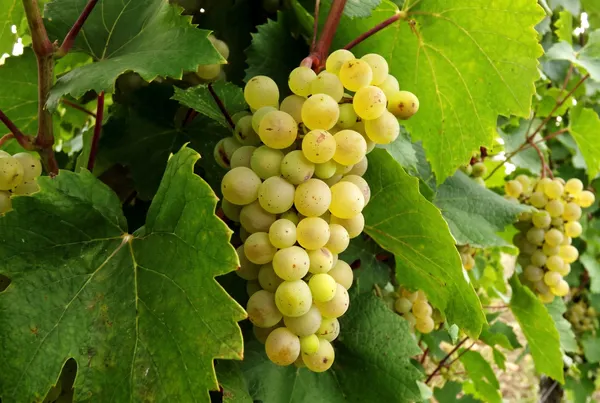
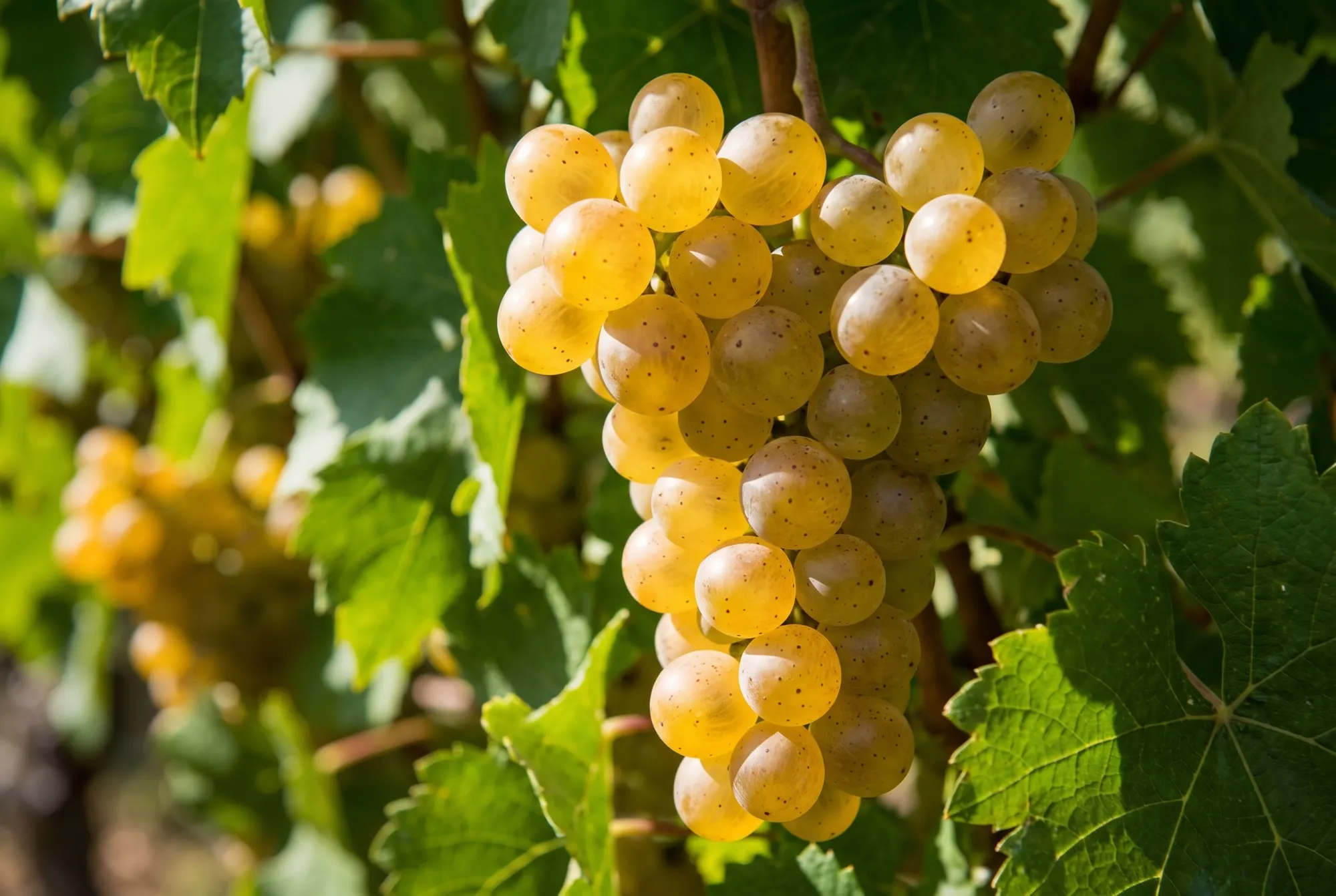
Semillon (SEM-ee-yon, or say-mee-YON in French) is a golden-skinned white grape from Bordeaux with two very different careers. Blended with Sauvignon Blanc, it makes both crisp dry whites and the great sweet wines of Sauternes. On its own in Australia’s Hunter Valley, it makes a lean, tart dry white that ages for decades. Semillon was once one of the most planted white grapes anywhere. It has faded a lot since, but it still anchors some of the most distinctive whites in the world.
Color: White (golden-skinned)
Also known as: Sémillon; historically “Hunter River Riesling” in Australia (a misnomer)
Origin: Bordeaux and southwest France
Where it grows best: Sauternes and Graves (Bordeaux); the Hunter Valley (Australia)
Signature flavors: Lemon, green apple, beeswax, lanolin, honey (with age)
Body & style spectrum: Lean and tart to rich and waxy
What It Tastes Like
Young Semillon can taste shy: lemon, green apple, a little grassiness, not much aroma. That is deceptive, because it transforms with age, developing toast, honey, beeswax, and a distinctive lanolin note, the soft, waxy smell of raw wool. The texture turns rich and rounded even when the wine stays bone-dry.
Climate splits the styles. Hot regions give soft, low-acid, full-bodied wine. Cooler Bordeaux and the early-picked Hunter Valley keep sharp acidity and stay lean. The thin skin also makes Semillon a magnet for noble rot, meaning Botrytis cinerea, a beneficial mold that shrivels grapes and concentrates their sugar. That is the engine of Sauternes: intensely sweet, honeyed, apricot-and-marmalade wine with enough acidity to stay balanced.
How to tell it apart: the usual confusion is with Sauvignon Blanc, its blending partner. Sauvignon Blanc is louder and greener, all cut grass, gooseberry, and zip. Semillon is quieter and waxier, with lemon and lanolin rather than herbs. Aged Semillon’s honeyed, toasty character is unlike anything young Sauvignon Blanc does.
Where It Grows
Homeland: Bordeaux, where Semillon is the leading white grape, making up roughly half the region’s white plantings. In dry Graves and Pessac-Léognan it is blended with Sauvignon Blanc into age-worthy, often oaked whites. In Sauternes and Barsac it makes the legendary sweet wines, with Château d’Yquem as the benchmark.
Australia is the other heartland. The Hunter Valley, north of Sydney, picks Semillon early and unoaked to make a tart, low-alcohol white that ages into something rich and toasty over ten to twenty years. It is a wine style with no real imitators. Semillon once dominated South Africa and Chile, and still turns up in Washington and small pockets elsewhere, usually in a supporting role.
In the Vineyard and Cellar
Semillon’s thin skin and tight bunches drive everything. In the damp autumn mists of Sauternes, that thin skin lets noble rot take hold, which is exactly what the sweet wines need. In a wet year without it, the same thinness invites grey rot, a destructive mold that ruins fruit. The vine is vigorous and ripens mid-season. Winemakers chasing a dry style pick early for acidity, as in the Hunter; those chasing sweetness wait for botrytis. Oak aging is common in Bordeaux and builds structure for the long haul.
Reading the Label
In Australia and the US, Semillon is labeled by name, and a US varietal needs at least 75% of the grape. In Bordeaux it usually hides in a blend behind a place name: any white Graves, Pessac-Léognan, Sauternes, or Barsac is Semillon-based, though the grape is not printed. Watch for the old Australian term “Hunter River Riesling,” which you may still see referenced; it is Semillon, not Riesling at all. On a “White Bordeaux” blend, Semillon is the fleshy backbone.
A Short History
Semillon’s parentage is unknown; DNA has not pinned down its parents, though it clearly originated in Bordeaux or nearby southwest France. In the 1800s it was among the most widely planted whites on earth, dominating early South African and Chilean vineyards. Fashion moved to Chardonnay and Sauvignon Blanc, and Semillon’s acreage collapsed. Australia’s Hunter Valley kept its dry-wine reputation alive.
Did you know? In the 1820s, Semillon reportedly covered more than 90% of South Africa’s vineyards, where it went by the name Wyndruif, simply “wine grape.” Today it is a bit part there. Few grapes have fallen so far from the top.
At the Table
Match Semillon to its style. Young, lean Hunter Semillon is a natural with oysters, sushi, and simply grilled fish, its sharp acidity cutting the salt and oil. Richer, oaked Bordeaux-style Semillon suits roast chicken, pork, and creamy sauces. Aged Semillon, with its honey and toast, is lovely with hard cheeses and smoked fish. Sweet Sauternes is the showpiece: pair it with foie gras, a blue cheese like Roquefort, or a not-too-sweet fruit tart, since sweetness needs matching sweetness. Serve dry versions at 45–50°F (7–10°C), Sauternes a touch cooler. Dry Hunter Semillon is one of the best-value age-worthy whites going.
SOURCING & METHOD
Sourcing: origins, parentage, and synonyms drawn from Robinson, Harding & Vouillamoz, Wine Grapes (2012), the Vitis International Variety Catalogue, and peer-reviewed parentage studies; planting figures from OIV, the University of Adelaide winegrape database, national bodies, and Wine-Searcher, each anchored to a stated year; regional detail from the relevant consortia and D'Agata's Native Wine Grapes of Italy. Every fact was corroborated by at
least two independent sources.