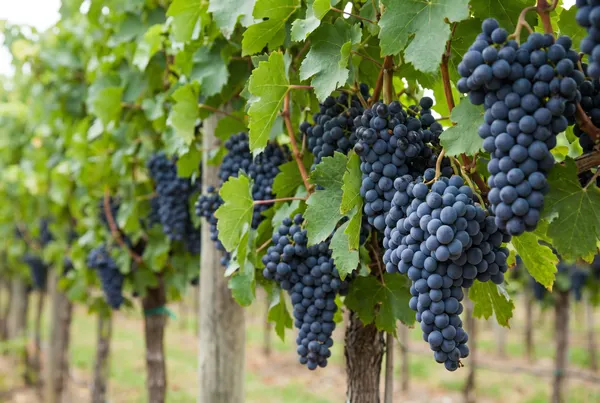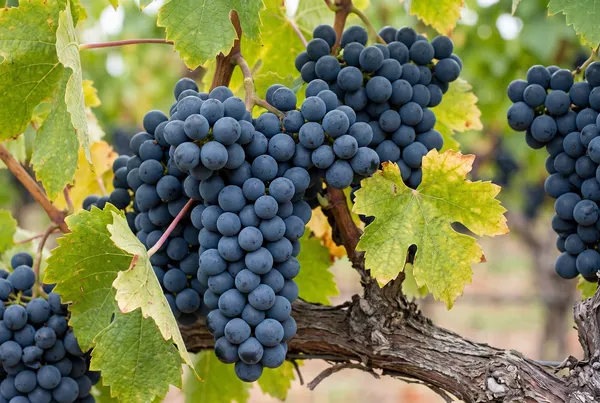


The pepper-scented red of the northern Rhône that becomes plush, jammy Shiraz in Australia.
At a Glance
Syrah makes deeply colored, full-bodied red wine with a distinctive savory, peppery streak. In France's northern Rhône it's structured and spicy; in Australia, where it's called Shiraz, it turns riper and plusher, with more upfront fruit. Same grape, two names, two philosophies. It's a warm-climate red that keeps a savory edge even when ripe, which is what separates it from softer, fruit-only reds. It covers about 470,000 acres (190,000 hectares) as of 2016.
Color: Black (red wine)
Also known as: Shiraz (Australia, South Africa), Hermitage (historical Australian usage)
Origin: Northern Rhône, France
Where it grows best: Northern Rhône (Hermitage, Côte-Rôtie), Barossa & McLaren Vale (Australia), Washington State
Signature flavors: Blackberry, black plum, black pepper, smoked meat, violet, licorice
Body & style: Structured and peppery to rich and jammy
What It Tastes Like
Syrah is dark and full-bodied, with black fruit at its core: blackberry, black plum, sometimes blueberry. What sets it apart is the savory side — cracked black pepper (a genuine varietal signature, tied to a natural compound called rotundone), plus smoked meat, bacon fat, olive, and violet. Tannin, the drying compound from skins, is firm to high, and acidity is medium. The wine has weight and grip.
The cool-versus-warm split is dramatic. Northern Rhône Syrah is more restrained and peppery, with savory, meaty, olive notes and firm structure. Australian Shiraz from warm regions is riper and sweeter-fruited, jammy and full, with chocolate and spice; oak barrels add vanilla and smoke.
How to tell it apart: Syrah is confused with Cabernet Sauvignon, since both are dark and full. Cabernet shows cassis and cedar with a firmer, more angular tannin; Syrah shows blacker fruit, that peppery-meaty savor, and a slightly rounder shape. If a big red smells of black pepper and smoked meat rather than blackcurrant and pencil, it's Syrah.
Where It Grows
Homeland: the northern Rhône. On the steep granite hill of Hermitage and the terraces of Côte-Rôtie, Syrah makes some of the world's longest-lived reds, savory and firmly structured, with black pepper, olive, and cured meat. In Côte-Rôtie a little white Viognier is sometimes co-fermented in with the red, which lifts the aroma and softens the texture.
Australia is Syrah's second homeland, under the name Shiraz. The Barossa Valley makes big, rich Shiraz high in alcohol, sometimes from vines well over a century old; cooler areas like the Grampians make peppery styles closer to the Rhône.
Washington State produces balanced Syrah, split between fruit-forward and savory, from its warm days and cool nights. It's some of the most serious Syrah outside France and Australia, and it stays weirdly under the radar.
In the Vineyard and Cellar
Syrah has thick skins and ripens mid-to-late, which suits warm climates and produces the deep color and firm tannin the wine is known for. In climates that are too cool it won't ripen; too hot and it loses its peppery character and turns jammy and flat, so site selection is everything. The vine is vigorous (it grows abundant leaves and shoots) and can overcrop, diluting quality, so growers keep yields down. In the cellar, Syrah is usually aged in oak; the northern Rhône trick of co-fermenting a dash of white Viognier with the red is a traditional way to stabilize color and add perfume.
Reading the Label
The name tells you the intended style. “Syrah” signals a French-inspired, savory, peppery wine; “Shiraz” signals a riper, bolder Australian style, though the grape is identical. In the northern Rhône the label names the place: “Hermitage,” “Côte-Rôtie,” and “Crozes-Hermitage” are all Syrah. It's also a key grape in southern Rhône blends like Châteauneuf-du-Pape and in the “GSM” blend (Grenache, Syrah, Mourvèdre). One warning: Petite Sirah is not Syrah; it's a different grape called Durif.
A Short History
For years, romantic tales traced Syrah to the Persian city of Shiraz or to ancient Syracuse. DNA testing around 1998 demolished those stories: Syrah is the offspring of two obscure French grapes, Dureza and Mondeuse Blanche, both from the Rhône-Alpes region of southeastern France. It is thoroughly, provably French. Australia adopted it early and made “Shiraz” a household word.
Did You Know? The story that Syrah came from Shiraz in Persia is a myth. DNA testing proved the grape was born in southeastern France, the natural child of two little-known local varieties. The exotic-sounding name is a coincidence, not a passport stamp.
At the Table
Syrah's firm tannin and full body call for hearty, savory food. Its peppery, smoky character makes it a natural with grilled and roasted red meat, lamb, sausages, game like venison, and anything off a barbecue. Tannin binds to protein and fat, so a fatty steak or braised short ribs softens the wine, and vice versa. The black-pepper note loves a peppercorn crust or a peppery stew. Rich Australian Shiraz can even handle barbecue sauce and bolder spice. Serve it around 60–65°F (16–18°C), and decant young, tannic bottles. Everyday Syrah and Shiraz drink well young; top northern Rhône from Hermitage and Côte-Rôtie can age for two decades, gaining leather, tapenade, and savory depth.
SOURCING & METHOD
Sourcing: origins, parentage, and synonyms drawn from Robinson,
Harding & Vouillamoz, Wine Grapes (2012), the Vitis International Variety Catalogue, and peer-reviewed parentage studies; planting figures from OIV, the University of Adelaide winegrape database, national bodies, and Wine-Searcher,
each anchored to a stated year; regional detail from the relevant consortia and D'Agata's Native Wine Grapes of Italy. Every fact was corroborated by at least two independent sources.