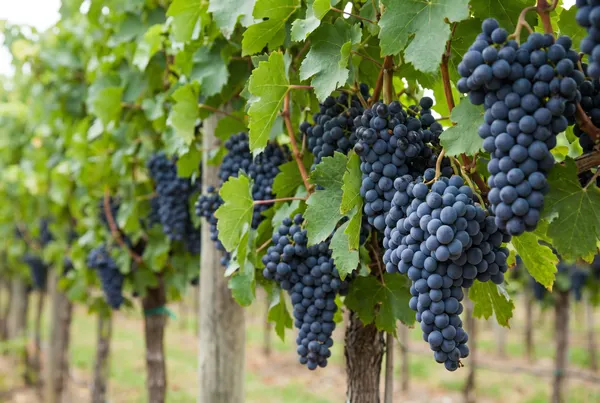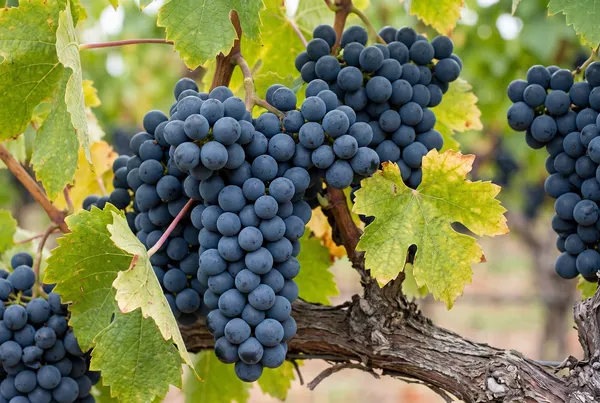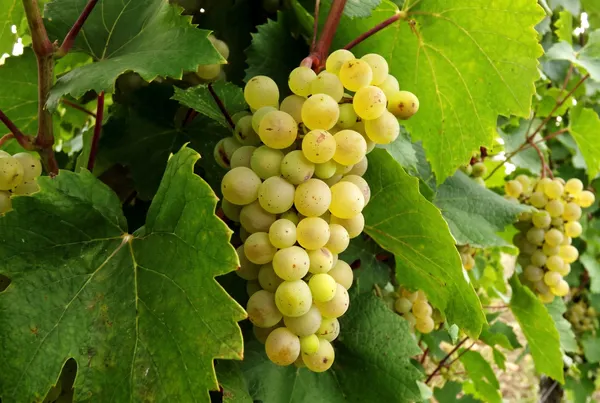


A Madeira grape reborn as an Australian dry white, snarled in a knot of soundalike names.
At a Glance
Verdelho is a Portuguese grape best known for one of the four classic styles of Madeira, the fortified wine of that Atlantic island. It also has a thriving second life as a dry table wine in Australia. Its real challenge is its name: several unrelated grapes sound almost identical, and DNA has had to sort them out. True Verdelho is its own distinct variety.
Color: White
Also known as: Verdelho da Madeira; (in Australia, simply Verdelho)
Origin: Portugal; likely brought to Madeira in the 15th century, exact roots unclear
Grows best in: Madeira; the Hunter Valley and Swan Valley, Australia
Signature flavors: Lime, green pear, white wax and lanolin; toasty caramel as Madeira
Body & styl: Bracing fortified Madeira, through to full-bodied, lime-driven dry whites
What It Tastes Like
There are two Verdelhos to know. As a dry table wine it gives lime and green pear, moderate acidity, a light phenolic grip (a faint textural firmness from the skins), and sometimes a waxy lanolin note. Australian versions are riper and fuller, with lime and honeysuckle and an oily texture that builds with a few years in bottle.
As Madeira, Verdelho names a medium-dry style, drier than the sweet Bual and Malmsey, richer than the bone-dry Sercial. Expect the classic Madeira signature: toasty caramel, roasted nuts, dried fruit, and a searing acidity that keeps the sweetness in check.
How to tell it apart: this is the grape's whole problem. Do not confuse it with Verdejo (Spain's Rueda grape), the Italian Verdello or Verdicchio, or Gouveio (Godello). DNA confirms all are separate varieties. The worst trap is mainland Portugal, where Gouveio was long labeled “Verdelho do Dão”; that is not this grape. If a dry “Verdelho” is Australian, or a fortified one is from Madeira, it is the real thing. The Australians take it more seriously as a table wine than the Portuguese mainland does.
Where It Grows
Verdelho's spiritual home is Madeira, where it was a leading white grape before phylloxera (a vine-killing root louse) and mildew gutted the vineyards in the 19th century, and where it still names a core Madeira style. Plantings there are small, on steep terraces, best on cooler north-facing slopes.
Australia is now arguably its largest, most dynamic home for dry wine, especially the Hunter Valley in New South Wales and the Swan Valley in Western Australia, where it arrived in the 1820s. Small amounts grow on the Portuguese mainland and in the Azores, and a producer or two in Argentina makes it. But the living story is Madeira and Australia.
In the Vineyard and Cellar
Verdelho is a moderately vigorous, early-ripening vine with small, thick-skinned, oval berries and a high skin-to-juice ratio, which feeds both its acidity and its grip. For Madeira, the grapes are picked to keep bright acidity, fermented, fortified with grape spirit, then heated slowly for months or years, the estufagem process that gives Madeira its cooked, caramelized character and near-indestructible shelf life. For dry table wine, Australian producers ferment cool in stainless steel and bottle it to drink over a few years, sometimes with a little oak.
Reading the Label
On a Madeira, “Verdelho” signals the medium-dry style and, by the rules in force since the 1990s, a wine made overwhelmingly from the grape. On a dry white, “Verdelho” most reliably means Australia. Be skeptical of “Verdelho” on a mainland Portuguese white: it is often Gouveio wearing the old “Verdelho do Dão” alias. When in doubt, the country of origin tells you which grape, and which style, you are actually buying.
A Short History
Verdelho was documented on Madeira in the 15th century, soon after the island was settled, and became one of its noble grapes. Its parentage is unknown; genetic studies have not found its parents. The 19th-century phylloxera and mildew crises devastated it, and much of the island replanted with other varieties. Settlers carried it to Australia in the 1820s, where it quietly built its modern reputation as a dry wine.
Did You Know? The dry Verdelho most wine drinkers meet today is not Portuguese at all. It is Australian, grown since the 1820s and now a specialty of the Hunter Valley. On its home island of Madeira, the grape survives mainly as a fortified wine.
At the Table
It depends which Verdelho. Serve the dry white cold, 46 to 50°F (8 to 10°C); its lime and light grip suit grilled fish, seafood, roast chicken, and Asian dishes with a little heat. Serve Verdelho Madeira cool, around 54 to 57°F (12 to 14°C): its medium-dry, high-acid profile is a classic match for soup, cured meats and cheeses, or an aperitif. Drink dry Verdelho within a few years, though Australian bottles can gain an oily richness with age. Madeira, by contrast, is nearly immortal; an open bottle keeps for months, a sealed one for decades.
SOURCING & METHOD
Sourcing: origins,
parentage, and synonyms drawn from Robinson, Harding &
Vouillamoz, Wine Grapes (2012), the Vitis International Variety
Catalogue, and peer-reviewed parentage studies; planting figures from OIV, the
University of Adelaide winegrape database, national bodies, and Wine-Searcher,
each anchored to a stated year; regional detail from the relevant consortia and
D'Agata's Native Wine Grapes of Italy. Every fact was corroborated by at
least two independent sources.