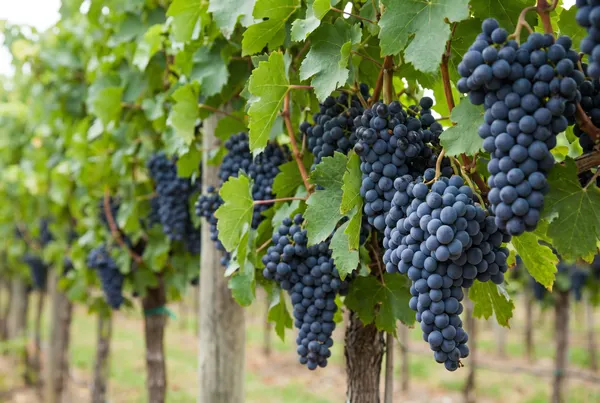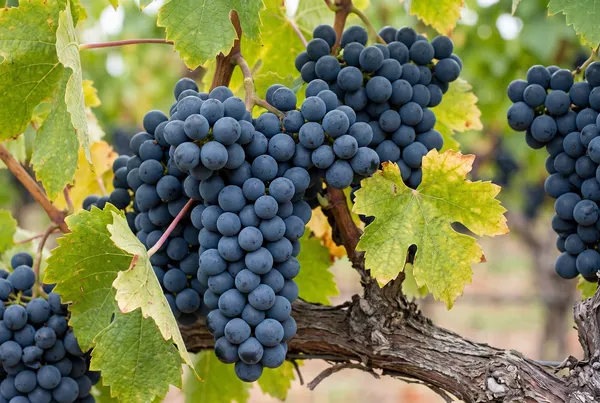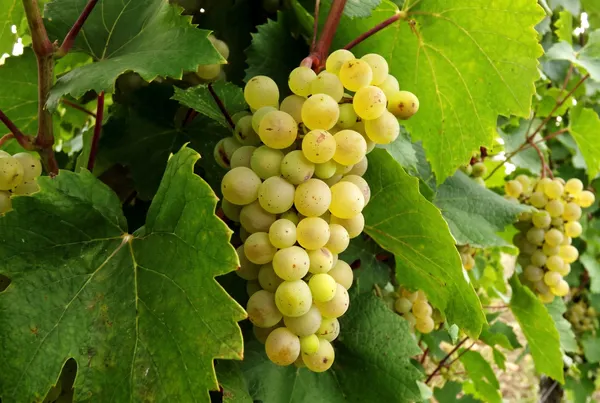


A grape that nearly went extinct in the 1960s now perfumes wines around the world.
At a Glance
Viognier (say vee-oh-NYAY) is an aromatic white grape from France’s northern Rhône. It makes rich, low-acid whites that smell intensely of apricot and flowers. In the 1960s it almost vanished: by various accounts only about 20 to 35 acres (8 to 14 hectares) survived, all in the northern Rhône. Today it covers roughly 40,000 acres (16,000 hectares) worldwide as of 2016 (OIV), with France and Australia leading and California close behind.
Color: White
Also known as: No widely used label synonym (historically Viogne)
Origin: Northern Rhône, France (Condrieu)
Where it grows best: Condrieu (Rhône); Eden Valley (Australia); Central Coast (California); Languedoc
Signature flavors: Apricot, peach, honeysuckle, jasmine, ginger
Body & style spectrum: Fresh and floral to rich and oily
What It Tastes Like
Viognier is about aroma. Ripe apricot and peach lead, wrapped in honeysuckle, jasmine, and often a dab of ginger or musk. The texture is round and almost oily, meaning it coats your mouth with a soft weight rather than feeling crisp.
Acidity is naturally low. That is why Viognier feels plush and broad instead of zippy, and why it turns flabby, meaning dull and heavy with no freshness, if picked too late or grown somewhere too hot. Alcohol runs high, often 13.5 to 14.5% or more, because the grape must hang until fully ripe for its perfume to develop. Winemaking shifts the style: stainless steel keeps it fresh and floral, while oak and lees contact, meaning resting the wine on spent yeast cells, add a creamy, nutty richness closer to Chardonnay.
How to tell it apart: Viognier is most often confused with oaked Chardonnay and with Gewürztraminer. Against Chardonnay, it is far more floral and apricot-scented, and Chardonnay rarely smells of honeysuckle. Against Gewürztraminer, which leans to lychee and rose, Viognier stays with stone fruit and is less exotic. Stone fruit plus flowers at low acidity is the tell.
Where It Grows
Homeland: Condrieu, a small appellation, meaning a legally defined wine zone, on steep granite slopes of the northern Rhône. Condrieu is 100% Viognier and sets the benchmark: powerful and perfumed, and expensive because the terraces are brutal to farm. Inside it sits Château-Grillet, a single-estate appellation of under 10 acres.
Australia made Viognier a New World signature, above all in the cool Eden Valley, which gives a more restrained, refined style. California grows it up and down the Central Coast, usually riper and rounder. The Languedoc, in southern France, turns out large volumes of inexpensive, easy Viognier.
In the Vineyard and Cellar
Viognier is fussy. It is a low-yielder that must reach full ripeness for its aromatics to emerge, but the window is narrow: pick too early and the wine is neutral, pick too late and it goes heavy and loses acidity. It is prone to powdery mildew, a fungal disease, and it needs warmth, which is why it failed on cold slopes and revived on sunnier sites worldwide. One trick from its homeland: in Côte-Rôtie, growers co-ferment up to 20% Viognier with the red grape Syrah (Shiraz), meaning the two are fermented together, where it lifts the aroma and stabilizes color.
Reading the Label
Viognier is almost always labeled by name, whether it comes from California, Australia, or southern France. The exception is its French heartland, where the place name does the talking. A bottle marked Condrieu or Château-Grillet is pure Viognier, even though the grape is not printed. A US varietal Viognier must be at least 75% of the grape. You will also find small amounts blended into some Rhône-style reds for perfume.
A Short History
Legend tied Viognier to ancient Rome or Dalmatia, but DNA has undercut that tale. Modern analysis places it in a family of southeastern French grapes alongside Syrah, most likely descending from the old variety Mondeuse Blanche, though its exact parents remain unsettled. The near-death and revival is the real story. Georges Vernay, a Condrieu grower, is widely credited with saving the variety through the lean years.
Did you know? The perfume of Condrieu once hung by a thread. By the late 1960s, Viognier had shrunk to only a few dozen acres in the entire world. Almost every bottle you can buy today descends from that tiny surviving population.
At the Table
Viognier’s low acidity changes the pairing math. It will not cut through fat the way a sharp white does, so match its weight and perfume instead. Roast chicken, pork, and rich shellfish like lobster or scallops all work. It is one of the few wines that stands up to mildly spiced Indian, Moroccan, or Thai food, where its stone-fruit scent plays off the spice. Skip anything sharp or delicate, which the wine will flatten. Serve it cool but not ice-cold, around 50–55°F (10–13°C), so the aromas open. Most New World Viognier is best drunk young, and too much of it is picked overripe and clumsy; only fine Condrieu truly rewards keeping.
SOURCING & METHOD
Sourcing: origins, parentage, and synonyms drawn from Robinson, Harding & Vouillamoz, Wine Grapes (2012), the Vitis International Variety Catalogue, and peer-reviewed parentage studies; planting figures from OIV, the University of Adelaide winegrape database, national bodies, and Wine-Searcher, each anchored to a stated year; regional detail from the relevant consortia and D'Agata's Native Wine Grapes of Italy. Every fact was corroborated by at least two independent sources.