

One red grape carries four out of five bottles this mountainous coast produces.
1. At a Glance
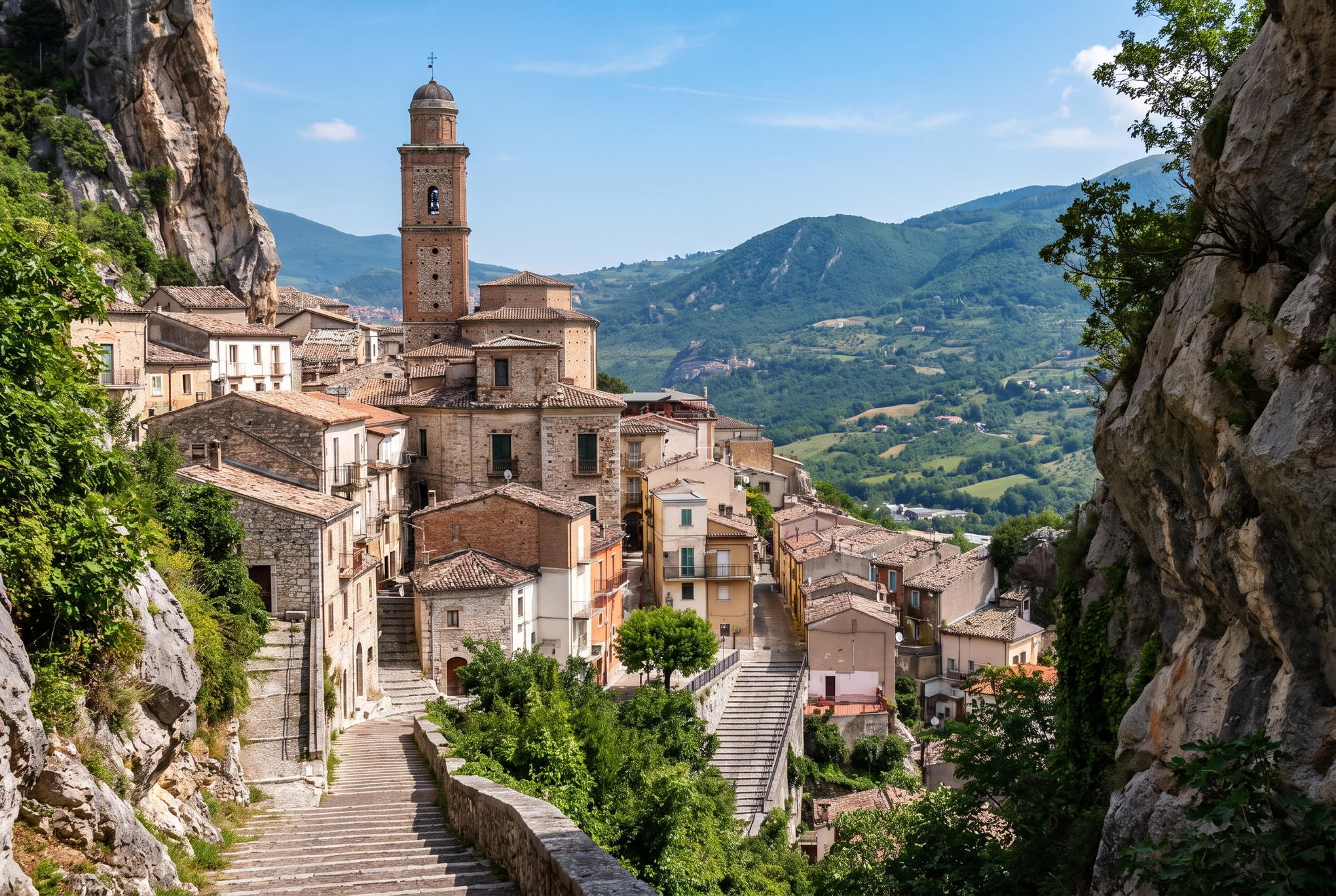
Abruzzo sits on Italy's central Adriatic side, its vineyards pinned between the Apennine mountains and the sea. The identity here is simple and strong: Montepulciano, a dark red grape (not to be confused with the Tuscan town of the same name), does most of the work.
Country: Italy
Main grapes: Montepulciano, Trebbiano Abruzzese, Pecorino, Passerina
Signature styles: Dry red, dry white, cherry-pink Cerasuolo rosé
Climate: Mediterranean on the coast, cooler and continental inland
Key appellations: Montepulciano d'Abruzzo DOC, Trebbiano d'Abruzzo DOC, Cerasuolo d'Abruzzo DOC
Vineyard area About 32,000 hectares registered (Istat, 2024 harvest)
2. Why It Matters
Montepulciano d'Abruzzo is one of Italy's most poured red wines and a benchmark for value. The grape ripens to deep color and soft tannins (the compounds that make a wine feel grippy), so even inexpensive bottles taste generous. For many drinkers worldwide, this is the first Italian red they buy twice.
3. Land and Climate
The region drops from some of the highest peaks in the Apennines straight to the Adriatic in under 30 miles (50 kilometers). That short distance packs in real variety. Coastal vineyards get warm sun and sea breezes, which give ripe, rounded reds. Inland, in the hills below the Gran Sasso massif, nights turn cold. That day-to-night temperature swing (growers call it diurnal range) locks in acidity and aroma, which is why the freshest whites and the more structured reds come from higher ground. Soils are mostly clay and limestone. Clay holds water through hot summers and feeds the vigorous Montepulciano vine; limestone lends the whites their mineral snap. The result in the glass: coastal bottles taste plush and fruit-forward, hillside bottles taste tighter and last longer.
4. Grapes and Styles
Reds. Montepulciano dominates. Expect a deep purple wine with black cherry and plum, low acidity, and gentle tannins. Everyday versions drink young and easy; hillside and Riserva bottles gain structure and can age a decade.
Rosé. Cerasuolo d'Abruzzo is Montepulciano made as a rosé. The name comes from cerasa, meaning cherry, and that is exactly the color and flavor: bright, red-fruited, and fuller-bodied than most pink wines.
Whites. Trebbiano d'Abruzzo can be a neutral bulk wine or, from serious growers, a surprisingly deep and long-lived white. The bigger story is the revival of Pecorino and Passerina, two local white grapes: Pecorino gives a firm, savory wine with real grip, Passerina a softer, citrusy one.
5. Reading the Label
Abruzzo's labels are refreshingly readable. DOC (Denominazione di Origine Controllata) is the quality tier that guarantees a wine comes from a defined zone and follows its rules. The grape name usually sits right on the front: Montepulciano d'Abruzzo means the wine is that grape from that region. "Cerasuolo" tells you it is the rosé, not the red. "Riserva" means longer aging before release, so a more serious bottle. One newer term to watch is "Colline Teramane," a hillier sub-zone around Teramo promoted to DOCG (the top tier, the G stands for Guaranteed) in 2003. Bottles from single hillside communes now sometimes carry those place names too, part of a slow move toward showing exactly where the grapes grew.
6. A Short History
Vines have grown here since antiquity, but modern Abruzzo was built on volume. For decades cooperatives turned out oceans of cheap Montepulciano and Trebbiano. The shift came in the late 20th century, when a handful of quality-focused producers proved the region could make serious, age-worthy wine. The recent rediscovery of Pecorino, a grape nearly abandoned by the 1980s, shows the same instinct at work: reaching back into local tradition to find the future.
Did You Know? The white grape Pecorino shares its name with the sheep's-milk cheese, and for the same reason: both trace to sheep. The grape's name likely comes from sheep grazing on the sweet berries along transhumance routes through the Apennines.
7. At the Table
Montepulciano d'Abruzzo is a natural match for the region's bold food: lamb (arrosticini, the local grilled skewers), tomato-rich pasta, and aged cheeses. Its soft tannins mean it works even with lighter fare. Serve reds at about 64°F (18°C); a young, tannic Riserva benefits from an hour of decanting to soften. Cerasuolo is the clever pick for antipasti and grilled fish, chilled to around 54°F (12°C). Everyday Montepulciano needs no aging; hillside Riserva and Colline Teramane bottles reward five to ten years.
Links
Regulatory body (Consorzio Tutela Vini d'Abruzzo): https://www.vinidabruzzo.it
Official tourism board: https://www.abruzzoturismo.it