

Wine still ferments in clay jars here, much as the Romans left it.
1. At a Glance
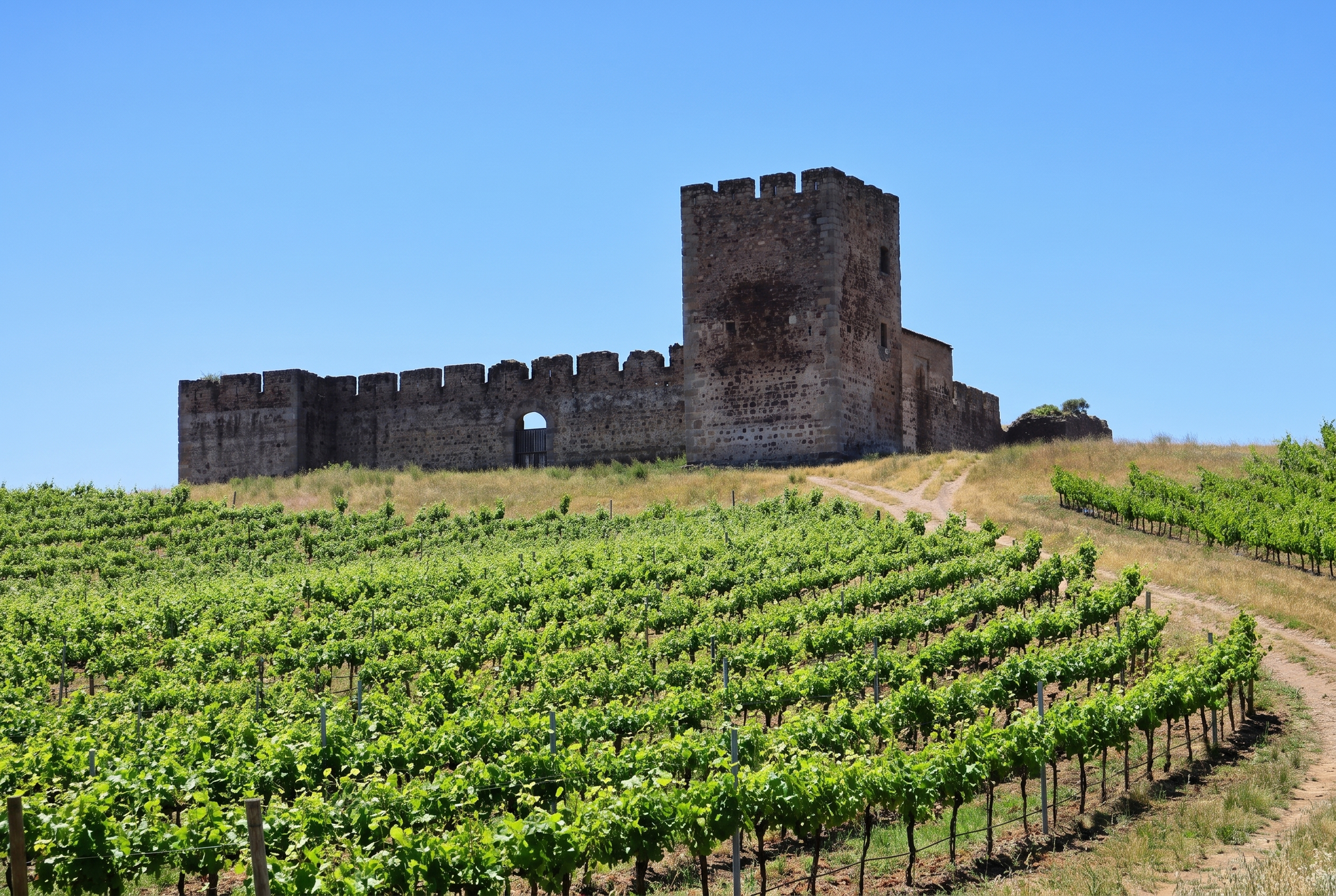
The Alentejo covers about a third of mainland Portugal, a rolling landscape of wheat, cork oak, and vines south of the Tagus River. It is hot, dry, and generous, and the wines match the land: ripe, smooth reds and full whites that powered Portugal's modern wine boom. Once known mostly for cork and grain, the region now sells more wine inside Portugal than any other, and it did so by trading cooperative bulk for ambitious estates in a single generation.
Country: Portugal
Main grapes: Aragonez, Trincadeira, Alicante Bouschet, Touriga Nacional (red); Antão Vaz, Arinto, Roupeiro (white)
Signature styles: Ripe red blends; full-bodied whites; talha (clay-jar) wines
Climate: Mediterranean with a continental edge; hot, dry summers
Key appellations: DOC Alentejo with eight subregions; Vinho Regional Alentejano
Vineyard area: About 22,000 hectares (54,000 acres) as of 2024
2. Why It Matters
The Alentejo led Portugal's shift from cooperative bulk wine to estate bottling. Its reds are the country's default crowd-pleasers, sold in more than a hundred markets, and its clay-jar tradition gives it something no other region on earth can claim: an appellation reserved for wine fermented in amphorae. If you have had exactly one Portuguese red, the odds are good it came from here.
3. Land and Climate
Picture plains, not peaks. The Alentejo is mostly flat or gently rolling, and that flatness matters: with no mountain wall to trap Atlantic moisture, the ocean's cooling influence barely reaches the vineyards. Summers regularly pass 104°F (40°C), rain falls mainly in winter, and grapes ripen with ease. That is why the standard Alentejo red is plush rather than austere.
The exceptions prove the rule. In the northeast, the Serra de São Mamede rises to about 3,360 feet (1,025 meters), and the Portalegre subregion in its foothills stays markedly cooler, giving fresher, more nervous wines. Smaller hill ranges, the Serra da Ossa above Redondo and the Serra de Portel near Vidigueira, do the same on a modest scale for their villages.
Soils are unusually varied for one region: schist, granite, clay, limestone, even marble around Borba and Estremoz, which is one reason neighboring villages can taste different in the glass. Because rain is scarce in the growing season, irrigation is permitted, and in the hottest southern zones picking can begin as early as mid-August, weeks ahead of northern Portugal.
4. Grapes and Styles
Reds dominate, at roughly four bottles in five. The workhorses are Aragonez (Spain's Tempranillo), spicy Trincadeira, and Castelão, increasingly joined by Touriga Nacional and Syrah. The regional trump card is Alicante Bouschet, a French grape with red flesh as well as red skin; it thrives here and gives blends their deep color and dark, meaty core. Expect ripe plum and blackberry fruit, soft tannins (the drying grip you feel on your gums), and easy drinkability young.
Whites are the growing story. Antão Vaz brings body and tropical fruit, Arinto brings acidity, Roupeiro brings perfume, and modern cellars keep them fresher than the climate would suggest. Geography adds a second layer: the central band around Borba, Évora, Redondo, and Reguengos gives the balanced, textbook Alentejo style, while the southern zones of Vidigueira, Moura, and Granja-Amareleja, on poorer and drier ground, produce softer, warmer wines.
Then there is vinho de talha: wine fermented on its skins in man-high clay jars, often served straight from the jar's spigot in village taverns around Vidigueira. It tastes savory and textured, closer to what a Roman drank than anything else in Europe. To my mind, Portalegre's old mountain vineyards make the region's most interesting reds, though rarely its most famous.
5. Reading the Label
Two designations cover nearly everything. "DOC Alentejo" is the controlled appellation (DOC stands for Denominação de Origem Controlada, Portugal's strictest origin category); it requires classic grapes and comes from eight delimited subregions, whose names can appear on the label, as in "Alentejo-Borba" or "Alentejo-Vidigueira."
"Vinho Regional Alentejano" is the looser regional tier. It covers a wider area, permits international grapes like Cabernet Sauvignon, and includes many of the biggest brands; the category signals flexibility, not low quality. "Vinho de Talha DOC" marks clay-jar wine made by the traditional method. "Reserva" generally signals riper fruit and longer aging, though house styles vary more than the word implies.
6. A Short History
Romans worked these vineyards on a grand scale; archaeologists keep finding their giant clay fermenting vessels. For much of the 20th century, the state pointed the Alentejo at wheat, and cooperatives handled what wine remained. The turn came in the 1980s: the first subregion appellations arrived in 1988, the regional wine commission (CVRA) followed in 1989, and in 2003 the separate zones were folded into a single Alentejo DOC. Independent estates have set the pace ever since.
Did You Know? In villages such as Vila de Frades, wine still ferments in talhas, clay jars that can stand taller than a person, essentially unchanged since Roman times. Portugal is the only country in the world with a wine appellation dedicated exclusively to amphora-made wine.
7. At the Table
Alentejo reds were built for the local table: black-pork dishes (porco preto), lamb stewed as ensopado de borrego, and bread-heavy migas. Serve them at 61 to 64°F (16 to 18°C), a touch cooler than most rooms; thirty minutes in a decanter helps a dense Alicante Bouschet blend unwind. Most reds drink best within five to eight years, though top Reservas go further. Pour Antão Vaz-based whites, chilled to about 50°F (10°C), with açorda (garlicky bread stew) or grilled fish. Vinho de talha loves fried green beans and anything with olive oil.
Links
Regulatory body (CVRA, Wines of Alentejo): https://www.vinhosdoalentejo.pt/en/
National promotion (Wines of Portugal): https://winesofportugal.com/en/discover/wine-regions/alentejo/
Official tourism board: https://www.visitportugal.com