

White-wine country in a rain shadow, where the grape name rules the label.
1. At a Glance
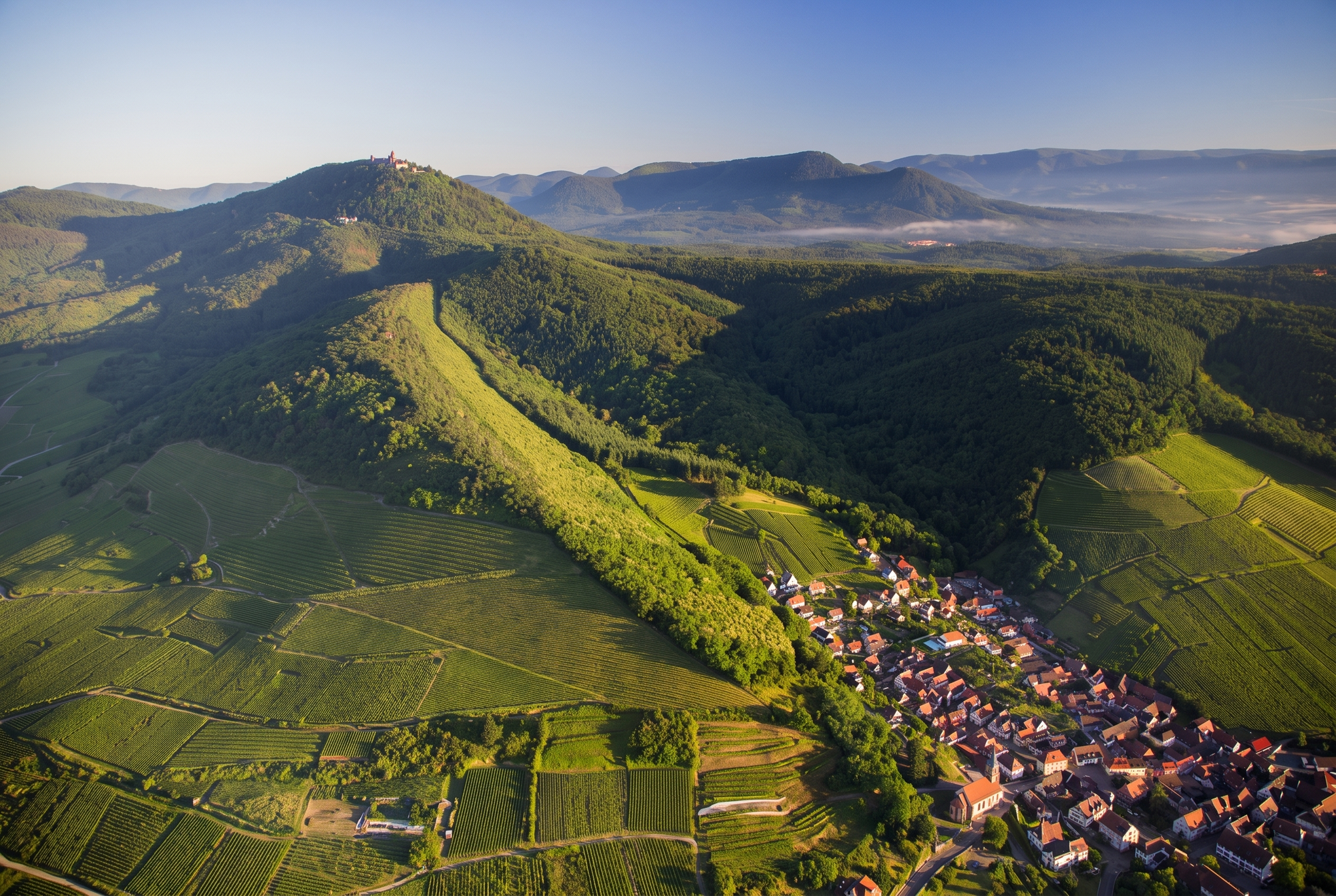
Alsace runs in a narrow ribbon along the eastern foothills of the Vosges mountains, facing Germany across the Rhine plain. It is France's great white-wine specialist. Around 90 percent of production is white, and almost every bottle is labeled by grape rather than by village, a habit no other classic French region shares. The range runs from bone-dry Riesling to honeyed late-harvest Gewurztraminer, plus a river of sparkling Crémant d'Alsace.
Country: France
Main grapes: Riesling, Pinot Gris, Gewurztraminer, Pinot Blanc, Sylvaner, Muscat, Pinot Noir
Signature styles: Dry aromatic whites, sparkling Crémant d'Alsace, late-harvest sweet wines
Climate: Semi-continental; among the driest in France
Key appellations: Alsace, Alsace Grand Cru (51 sites), Crémant d'Alsace
Vineyard area About 38,300 acres (15,500 hectares) as of 2024
2. Why It Matters
Alsace is the easiest French region for a newcomer to shop, because the grape is right there on the label. It is also a serious one: its dry Rieslings and Pinot Gris rank with the world's best, and its growers embraced organic and biodynamic farming decades before the rest of France caught on. If you want to learn what a single grape can do across different soils, this is the classroom.
3. Land and Climate
The Vosges do the heavy lifting. Atlantic rain clouds empty themselves on the mountains' western slopes, leaving the vineyards on the eastern side in a rain shadow; Colmar is one of the driest cities in France. Long, dry, sunny falls let grapes hang late on the vine, which is why the region has a late-harvest tradition at all.
Most vines sit between 650 and 1,300 feet (200 and 400 meters). The geology is a jumble of granite, schist, limestone, marl (a lime-rich clay), and sandstone, often within one village. Geologists count at least 13 major soil types in this one thin strip, the debris of a collapsed rift valley. That mosaic is why one grape shows so many faces here. Riesling on granite tends to be lean and citric; on marl it comes out broader and slower to open. Flat, fertile plain sites give simple, early-drinking wine. The slopes give the tension and the length.
4. Grapes and Styles
Whites dominate. Riesling is the flagship: dry in most hands, with lime, stone-fruit, and a streak of acidity that lets it age for decades. Pinot Gris is richer and smokier, with pear and honey tones. Gewurztraminer smells of lychee and rose, feels oily on the palate, and often carries some sweetness. Muscat is the rare grape that tastes exactly like the fruit it came from, yet finishes dry. Pinot Blanc and Sylvaner cover the everyday end.
Crémant d'Alsace, a bottle-fermented sparkling wine mostly from Pinot Blanc, accounts for about a third of all bottles produced (2023, a record year). Pinot Noir, the only red grape allowed, has improved sharply as the climate warms; since July 2024 it has even been admitted to three grand cru sites (Kirchberg de Barr, Hengst, and Vorbourg), a promotion unthinkable a generation ago. At the sweet end sit Vendanges Tardives (late harvest) and Sélection de Grains Nobles, made from shriveled, botrytis-affected berries. Dry Alsace Riesling remains, to my mind, the most underrated serious white in France.
5. Reading the Label
AOC stands for appellation d'origine contrôlée, the French system that ties a wine to a defined place and set of rules. Alsace AOC covers most bottles, nearly always with a grape name. Alsace Grand Cru is a separate appellation for 51 named hillside sites, 3 to 4 percent of production (2023), and is generally limited to Riesling, Pinot Gris, Gewurztraminer, and Muscat.
Since 2011, certain village and single-plot names, such as Côte de Rouffach or Klevener de Heiligenstein, may also appear after the word Alsace, marking wines made under stricter rules than the regional norm. Vendanges Tardives means late harvest: riper, often sweet. Sélection de Grains Nobles means individually selected botrytized berries: rare and dessert-sweet. Edelzwicker and Gentil are blends. One practical warning: sweetness levels vary by producer, and many now print a dryness scale on the back label. When in doubt, Riesling is usually dry; Gewurztraminer often is not.
6. A Short History
Rhine trade made Alsace rich in the Middle Ages; the Thirty Years' War (1618 to 1648) wrecked it. The region then changed hands between France and Germany four times from 1871 to 1945, which delayed its AOC until 1962, decades after most of France. Grand Cru status arrived in 1975 and Crémant in 1976. The German chapters explain the grape-first labels, the tall bottle, and the aromatic grape mix you see today.
7. Did You Know?
The wine cellar beneath the Strasbourg hospital, in use since 1395, still holds a barrel of white wine from the 1472 vintage, believed to be the oldest barrel-stored wine in the world. It has been served only three times in five centuries, most recently to General Leclerc when Strasbourg was liberated in 1944.
8. At the Table
The local table was built for these wines. Choucroute garnie, the Alsatian sauerkraut piled with sausages and pork, wants Riesling or Sylvaner; the acidity cuts straight through the fat. Tarte flambée pairs with Pinot Blanc or Crémant. Pungent Munster cheese with Gewurztraminer is the region's classic odd couple, funk meeting perfume. Off-dry Pinot Gris handles spicy Asian dishes better than most reds ever will.
Serve the whites at 46 to 50°F (8 to 10°C) and Pinot Noir slightly cool, around 57°F (14°C). No decanting needed. Most whites drink well young; grand cru Riesling and Pinot Gris improve for ten years or more, and the late-harvest wines can go for decades.
Links
Conseil Interprofessionnel des Vins d'Alsace (regulatory body): https://www.vinsalsace.com/en/
Visit Alsace (official tourism board): https://www.visit.alsace/en/