

Germany's warmest vineyards answer to Pinot in three colors.
At a Glance
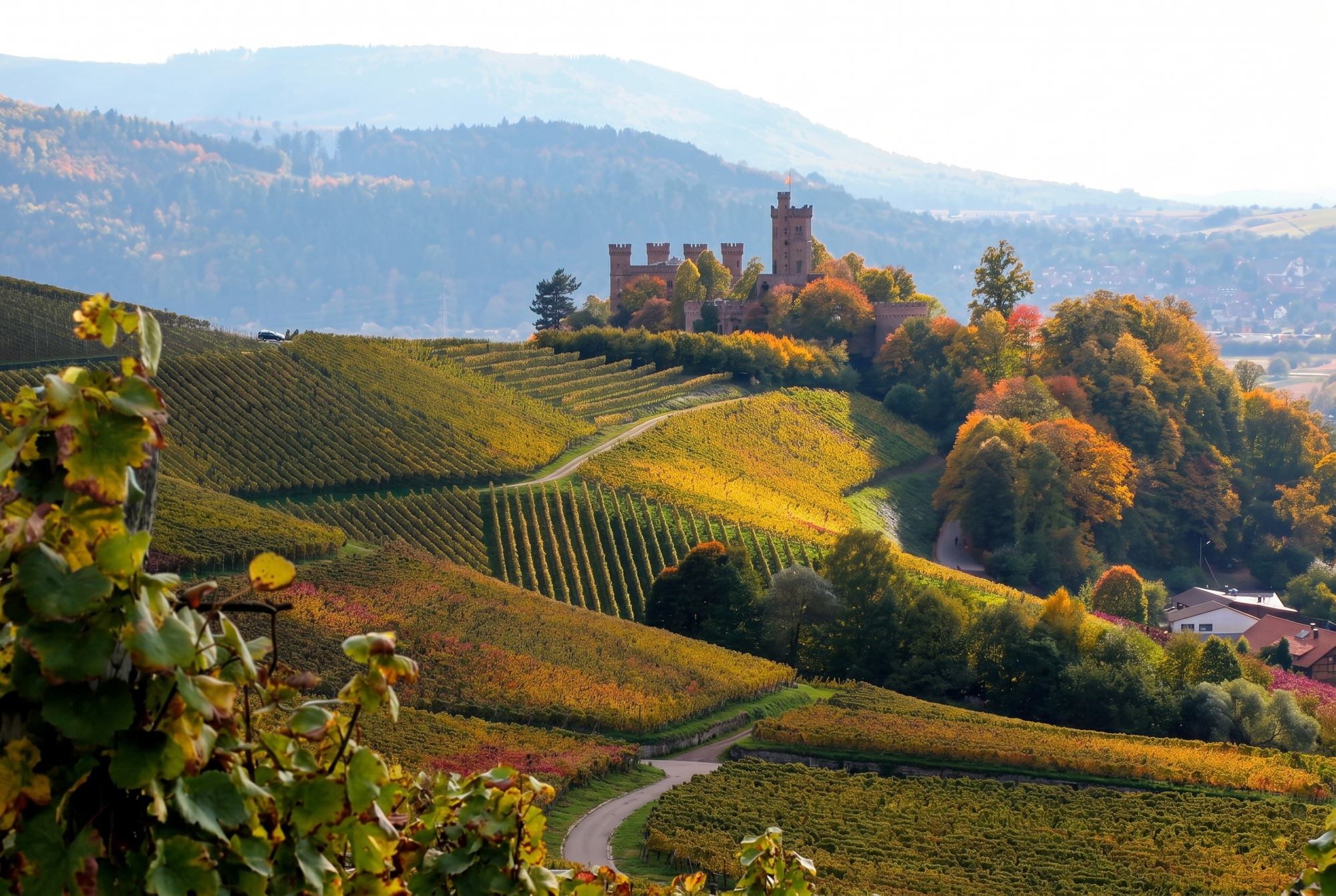
Baden is less one region than a chain of them, stretching roughly 250 miles (400 kilometers) down Germany's southwestern edge from Heidelberg past Freiburg to Lake Constance. It is the country's warmest wine zone and its Pinot capital: Noir, Gris, and Blanc together cover more than half the vineyard.
Country: Germany
Main grapes: Spätburgunder (Pinot Noir), Grauburgunder (Pinot Gris), Müller-Thurgau, Weißburgunder (Pinot Blanc), Gutedel (Chasselas)
Signature styles: Serious Pinot Noir; dry, full Pinot Gris and Blanc; featherweight Gutedel; the rosé specialty Badisch Rotgold
Climate: Germany's warmest and sunniest, in the Rhine rift between the Black Forest and the Vosges
Key appellations: One protected origin, Baden, with nine districts including Kaiserstuhl, Tuniberg, Markgräflerland, Ortenau, Kraichgau, and Bodensee (Lake Constance)
Vineyard area: About 38,900 acres (15,700 hectares) as of 2022
Why It Matters
Baden is where Germany answers Burgundy. Spätburgunder alone covers about a third of the region, roughly 12,600 acres (5,090 hectares) in 2022, and the volcanic Kaiserstuhl ripens it to a depth the rest of the country envies. The European Union agrees about the warmth: Baden is the only one of Germany's thirteen regions classified in winegrowing zone B, the same band as Alsace across the river. Cooperatives farm most of the vineyard, so quality here comes at scale.
Land and Climate
The Upper Rhine rift is a sunken valley between two mountain walls, the Vosges to the west and the Black Forest to the east. The Vosges wring out the Atlantic rain, so the valley floor and lower slopes bake; Germany's highest sunshine totals and warmest averages sit here, and the warmth translates directly into riper fruit, more alcohol, and more red wine.
The Kaiserstuhl, the stump of an extinct volcano near Freiburg draped in wind-blown loess, is the flagship: volcanic rock gives smoky, structured Spätburgunder and powerful Grauburgunder, while pure loess sites yield softer wine. Markgräflerland, in the far south, is Gutedel country, light and springlike. The Ortenau around Baden-Baden grows Riesling on granite, locally known by the old name Klingelberger. Bodensee vineyards sit high, near 1,300 feet (400 meters), where the lake tempers frost and the wines turn brisk. It is one region with many climates, so read the district on the label.
Grapes and Styles
Reds are 39 percent of plantings (2022), and Spätburgunder is the spine. Styles run from light, chillable reds to bottlings aged in barrique, the small new-oak barrel, with cherry, smoke, and firm structure; the best age ten to twenty years. To my palate, good Kaiserstuhl Spätburgunder now competes directly with village-level Burgundy and usually costs less. Weißherbst, rosé from a single red grape, is a warm-weather standard, and Badisch Rotgold is a local rosé made by pressing Grauburgunder and Spätburgunder together.
Whites are led by the Pinots. Grauburgunder here is dry and substantial, closer to Alsace than to Italian Pinot Grigio, while Weißburgunder is fresher and stonier. Müller-Thurgau (14 percent) covers the easy everyday tier. Gutedel, the grape the Swiss call Chasselas, makes featherweight, faintly nutty whites in Markgräflerland that locals drink by the quarter liter. Riesling plays a smaller role than elsewhere, best in the Ortenau, and Chardonnay is climbing.
Reading the Label
The basics match the rest of Germany: Qualitätswein is officially tested regional wine, Prädikatswein carries ripeness ranks (Kabinett, Spätlese, Auslese, and up), trocken means dry, feinherb off-dry. Because Baden sits in the EU's warmer zone B, its wines must reach slightly higher minimum ripeness than other German regions, a technicality that mostly confirms the fruit gets ripe.
Look next for the district, or Bereich: Kaiserstuhl on a label means something different from Bodensee. Many bottles carry a cooperative's name, Winzergenossenschaft or simply WG; these range from ordinary to excellent, and the Kaiserstuhl co-ops in particular are reliable. Grosses Gewächs (GG) marks dry wine from top sites classified by the VDP, the association of leading estates. Badisch Rotgold and Weißherbst identify the rosé styles, Alte Reben means old vines, and Barrique signals oak.
A Short History
Baden's vineyards are old, monastic in origin, and were once far larger; nineteenth-century pests and politics cut them down, and growers responded by founding the cooperatives that still define the region. The modern outline dates to 1971, when German wine law stitched the scattered Badish areas into a single region. Sweeping vineyard consolidation on the Kaiserstuhl in the 1960s and 1970s carved today's broad loess terraces, and since the 1990s ambitious estates and the better co-ops have pushed Spätburgunder from local pour to international contender.
Did You Know? The European Union sorts its vineyards into climate zones, and Baden is the only German region placed in the warmer zone B, alongside Alsace, Champagne, and the Loire, rather than in cool zone A with the other twelve. In ripeness rules, Brussels effectively treats Baden as a piece of eastern France.
At the Table
Local classics do the matchmaking. Spätburgunder pairs with Schäufele (roast pork shoulder), duck, and Black Forest ham; Grauburgunder with Zwiebelkuchen, the autumn onion tart, and creamy pastas; Gutedel with white asparagus, lake fish, and the cheese fondue that drifts over from Switzerland. Weißherbst covers the grill.
Serve Gutedel and Weißburgunder at 46 to 50°F (8 to 10°C), Grauburgunder slightly warmer, and Spätburgunder at 57 to 61°F (14 to 16°C). Oak-aged Spätburgunder benefits from thirty minutes in a decanter and keeps a decade or more; nearly everything else is at its best inside five years.
Links
Official regional wine organization (Badischer Wein GmbH): https://www.badischerwein.de
National wine institute (Wines of Germany / DWI): https://www.winesofgermany.com