

One stubborn grape and most of Portugal's sparkling wine come from these clay soils.
1. At a Glance
Bairrada sits on Portugal's central Atlantic coast between Aveiro and Coimbra, a low, damp strip of clay and limestone whose very name comes from barro, Portuguese for clay. It is the country's sparkling-wine engine and the home of Baga, a late-ripening red grape that makes some of Iberia's most age-worthy, and most demanding, red wines. Small in area, it punches far above its size in Portuguese cellars and at Portuguese celebrations.
Country: Portugal
Main grapes: Baga (red); Fernão Pires/Maria Gomes, Bical, Arinto (white)
Signature styles: Traditional-method sparkling wine; structured, long-lived Baga reds; fresh whites
Climate: Maritime Atlantic; cool, humid, rainy
Key appellations: DOC Bairrada; IG Beira Atlântico
Vineyard area: No consistent recent official figure is published
2. Why It Matters
Two claims to fame. First, bubbles: Bairrada pioneered Portuguese sparkling wine in the late 19th century and still produces roughly two-thirds of the national total, which is why the town of Anadia is nicknamed the sparkling-wine capital. Second, Baga: a grape once dismissed as rustic that, in the right hands, delivers reds with the acidity, tannin, and longevity to stand beside Europe's classics. Few regions anywhere offer serious age-worthy red and serious traditional-method sparkling from the same villages, let alone at Bairrada's prices.
3. Land and Climate
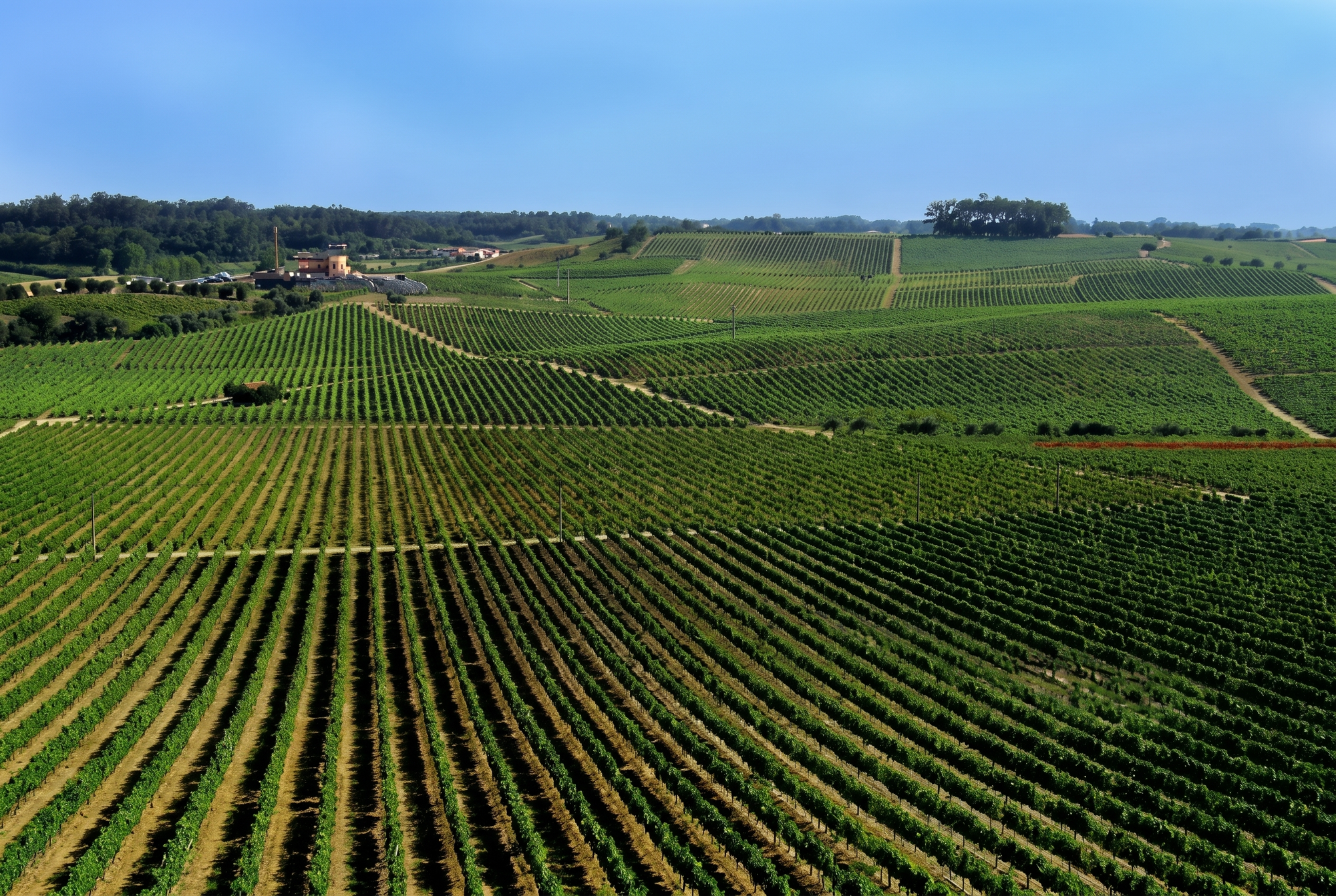
The region is nearly flat; vineyards rarely climb above 400 feet (120 meters), and the Atlantic sits just beyond a strip of pine forest that shields the vines from the worst of the sea wind. The Vouga River frames it to the north and the Mondego to the south. Ocean air keeps summers temperate and delivers 35 to 47 inches (900 to 1,200 millimeters) of rain a year. Grapes here hold their acidity and stay moderate in alcohol, exactly what a sparkling-wine base needs, and exactly why harvest-time rain terrorizes growers of late-ripening Baga.
Soils split the region in two styles. Heavy clay-limestone gives Baga its structure and staying power; the best long-lived reds come from these chalky patches, which some winemakers compare to Burgundy's. Sandy strips nearer the coast give lighter, more aromatic wines. Because the land is divided into thousands of small family plots, often shared with other crops, neighboring wines can differ sharply.
4. Grapes and Styles
Baga covers roughly three-quarters of red plantings. Its small, thick-skinned berries produce deeply colored wine with high acidity and firm tannins (the mouth-drying grip in red wine). Made carelessly it is harsh; made well it starts taut and earthy, then unfolds over ten, twenty, even thirty years into something perfumed and complex, trading fruit for notes of dried cherry, tobacco, and forest floor. Growers like Luís Pato and his daughter Filipa proved the point and dragged the grape's reputation upward. Aged Baga is the closest thing Portugal has to Barolo, at a fraction of the price.
Sparkling wines, called espumante, are mostly made by the traditional method (the second fermentation happens inside the bottle, as in Champagne). They range from crisp whites off Fernão Pires, known locally as Maria Gomes, and Bical, which pick up bready, brioche-like notes from time resting on their spent yeast, to salmon-pink Baga rosés built for the table.
Still whites from Bical and Arinto, with Cercial and Rabo de Ovelha in supporting roles, are fresh, citrusy, and often underpriced. The appellation also admits international grapes, so you will meet Chardonnay in the sparkling wines and Merlot, Cabernet Sauvignon, or Pinot Noir softening some modern reds; the classicists stick to Baga and argue, loudly, that they are right.
5. Reading the Label
"DOC Bairrada" is the controlled appellation (Denominação de Origem Controlada), granted in 1979 for still wines and extended to sparkling wine in 1991. A red labeled "Clássico" must be at least half Baga.
"Espumante" means sparkling; "Bruto" is dry, "Meio Seco" is off-dry. Yields are capped, at 55 hectoliters per hectare for reds, to keep quality up. Many ambitious producers bottle instead under "IG Beira Atlântico," the broader regional category, or even as simple Portuguese wine, to escape appellation rules; with Bairrada, the producer's name on the label tells you more than the legal category does. "Garrafeira" indicates extended aging before release.
6. A Short History
Monasteries tended these vines in the Middle Ages, and Bairrada wines earned official quality recognition in diplomas of 1907 and 1908. The modern identity formed at the end of the 19th century, when local producers began making sparkling wine and the cool climate proved ideal for it. DOC status arrived in 1979. The last four decades have been a tug-of-war between the old, tough style of Baga and a gentler modern school, and the wines have never been better.
Did You Know? This one modest region produces about two-thirds of all Portuguese sparkling wine. When Portuguese families toast a holiday with home-grown bubbles, the odds are strong the bottle came from the clay soils around Anadia, a town whose economy has run on espumante for more than a century.
7. At the Table
The canonical pairing is leitão da Bairrada, spit-roasted suckling pig with crackling skin and peppery fat, washed down with local sparkling wine, red or rosé; the bubbles and acidity scrub the palate clean, which is exactly why the tradition took hold. Serve espumante at 43 to 46°F (6 to 8°C). Young Baga reds want food, an hour in a decanter, and service at 61°F (16°C); mature bottles need only careful pouring off their sediment. Whites and sparkling suit the coast's fish stews, fried fish, and anything battered. If you cellar one Portuguese red for a decade, make it a good Baga.
Links
Regulatory body (Comissão Vitivinícola da Bairrada): https://www.cvbairrada.pt
National promotion (Wines of Portugal): https://winesofportugal.com/en/discover/wine-regions/bairrada/
Official tourism board: https://www.visitportugal.com