

One grape, ten crus, and a comeback built on pink granite.
1. At a Glance
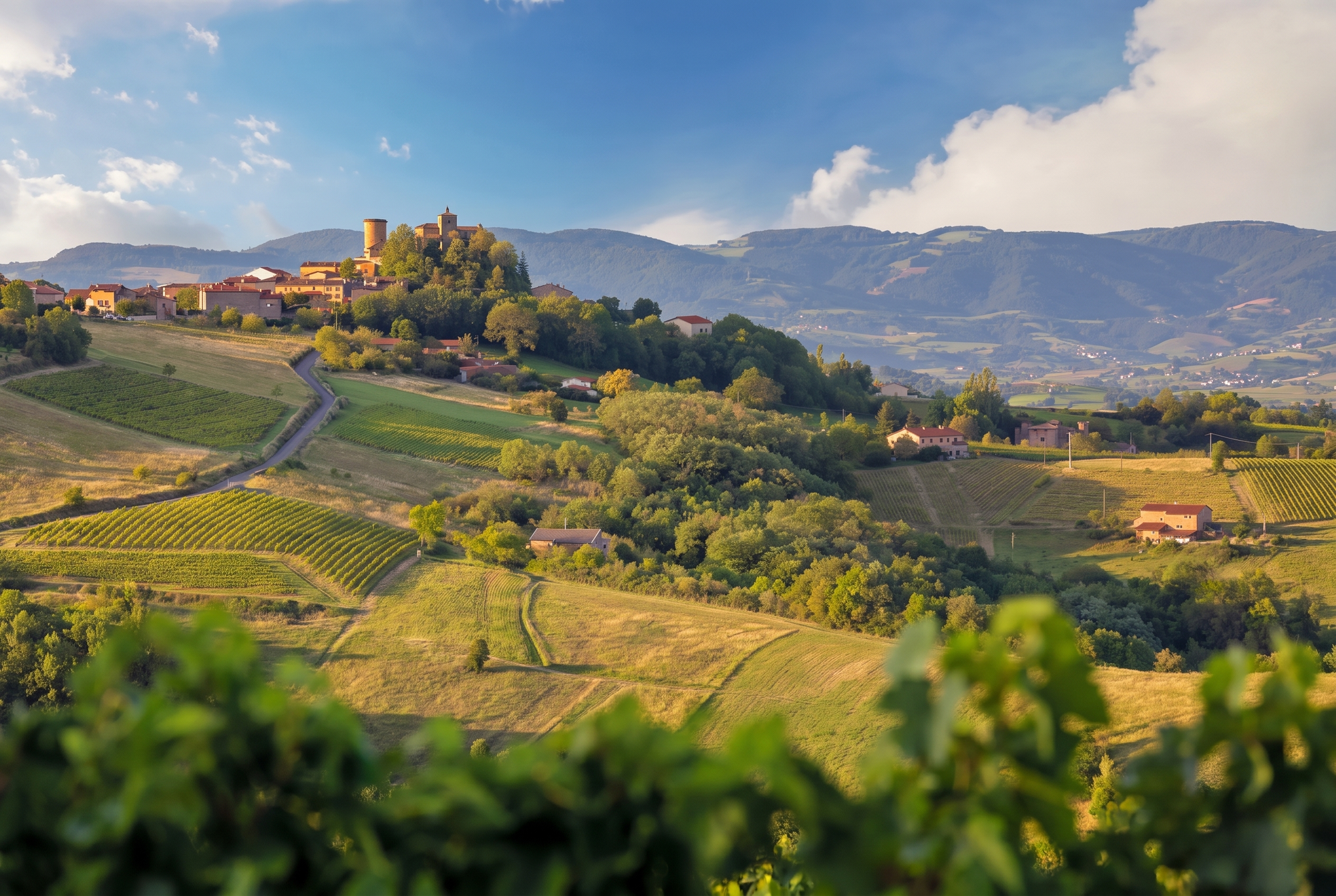
Beaujolais stretches about 34 miles (55 kilometers) between Mâcon and Lyon, on the hills west of the Saône river. One grape, Gamay, covers 97 percent of its vines. For decades the region was shorthand for Beaujolais Nouveau, the just-fermented wine released every November. Today its reputation rests on the ten crus of the granite north, which produce some of France's most drinkable serious reds.
Country: France
Main grapes: Gamay (97 percent), Chardonnay
Signature styles: Light to structured reds, Beaujolais Nouveau, a little white and rosé
Climate: Semi-continental, warming
Key appellations: Beaujolais, Beaujolais-Villages, and 10 crus from Saint-Amour to Brouilly
Vineyard area: About 33,400 acres (13,500 hectares) in the 12 Beaujolais AOCs as of 2024
2. Why It Matters
This is Gamay's world headquarters: close to half the planet's plantings of the grape grow here (2020s estimates). Beaujolais is also the cradle of the natural wine movement, born in the 1980s around the biochemist Jules Chauvet and growers like Marcel Lapierre in Morgon. The scale surprises people: in some vintages this small region produces more wine than Chablis and the whole Côte d'Or combined. And after the Nouveau hangover of the 1990s, its revival is one of the great quality turnarounds in French wine.
3. Land and Climate
The region splits in two. The north is a run of steep hills built of pink granite and schist. Gamay on these thin, acidic, sandy soils gives wines with perfume and real backbone, and all ten crus sit here. The south is flatter, with clay and limestone, and produces lighter, simpler wine, including most Nouveau.
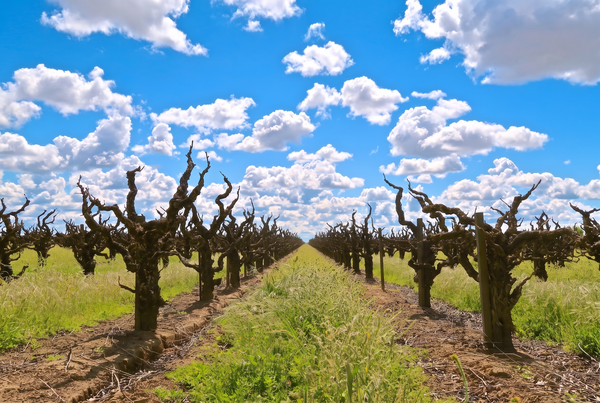
The geology is so varied that UNESCO named Beaujolais a Global Geopark in 2018, and a decade-long soil survey commissioned by the region's trade body mapped more than 300 distinct soil profiles across the twelve appellations. The climate is semi-continental with a Mediterranean tinge, and it is getting warmer. Altitude has become an asset: Chiroubles, the highest cru, has vines up to roughly 1,500 feet (450 meters), which keeps its wines fresh in hot years. Many cru slopes are too steep for machines, so grapes are picked by hand from low, free-standing bush vines, a training style called gobelet.
4. Grapes and Styles
Gamay gives bright cherry and raspberry fruit, gentle tannin, and dangerous drinkability. Many cellars use carbonic or semi-carbonic maceration: whole grape bunches go into a vat filled with carbon dioxide, and fermentation begins inside each intact berry, which pumps up the fruit aromas and softens the tannin. It is the technique behind the region's juicy signature.
The styles form a ladder. Nouveau is bottled weeks after harvest and released on the third Thursday of November, an occasion the village of Beaujeu celebrates with the five-day Sarmentelles festival; drink the wine by spring. Beaujolais and Beaujolais-Villages are honest bistro reds for the year ahead. The crus are another matter: Chiroubles and Fleurie are floral and silky, while Morgon (especially its Côte du Py hill) and Moulin-à-Vent are dense wines that age 5 to 15 years and start tasting like good Burgundy as they go. There is also a small, growing trickle of Beaujolais Blanc from Chardonnay, grown on the limestone pockets; only about 2 percent of the vineyard (2020s figures), and much of it has historically been sold under Burgundy labels instead. Cru Beaujolais is, for my money, the best value in French red wine right now.
5. Reading the Label
AOC stands for appellation d'origine contrôlée, France's system of place-based wine rules. The Beaujolais pyramid has three steps: Beaujolais AOC at the base, Beaujolais-Villages from 38 better-placed communes, and the ten crus at the top. Here is the trap for buyers: cru labels usually do not say "Beaujolais" at all. A bottle marked simply Morgon, Fleurie, or Brouilly is cru Beaujolais.
"Nouveau" or "Primeur" means new wine for immediate drinking. A named plot, or lieu-dit, such as Côte du Py, signals a top site. There are no premier crus yet, though Moulin-à-Vent, Fleurie, and Brouilly had applications before INAO, the national appellation authority, as of 2024. "Vieilles vignes" (old vines) is unregulated but usually meant sincerely here.
6. A Short History
In 1395 Duke Philip the Bold banned Gamay from Burgundy proper, so the grape settled on the granite to the south, where it performs better anyway. The AOCs arrived from 1936 to 1938 (Régnié was added in 1988). Nouveau became a global marketing phenomenon in the 1970s and 1980s, then dragged the region's image down with it. The natural-wine pioneers of the 1980s and the cru producers who followed rebuilt Beaujolais from the top.
Did You Know? The 1395 ordinance in which Philip the Bold, Duke of Burgundy, banished Gamay called it a "very bad and disloyal plant." The eviction turned out to be a favor: Gamay found its ideal home on Beaujolais granite, where it has stayed for six centuries.
7. At the Table
This is Lyon's house red, and it drinks best the way the city's bouchons serve it: with charcuterie, saucisson, roast chicken, or a cheese plate. The low tannin and bright acidity make it one of the most food-flexible reds anywhere, and it even survives lightly spicy dishes. Andouillette and other unapologetic Lyonnais fare are its natural habitat.
Serve it cool, around 55 to 57°F (13 to 14°C); warm Gamay turns soupy. Nouveau and basic Beaujolais are for the year of purchase. Villages wines keep two or three years. The structured crus reward 5 to 10 years of patience, and a young Moulin-à-Vent or Morgon is the only Beaujolais worth decanting.
Links
Inter Beaujolais (regulatory body): https://www.beaujolais.com/en/
Destination Beaujolais (official tourist office): https://www.beaujolais-tourisme.com/en/