

France's biggest fine-wine region is shrinking itself on purpose.
1. At a Glance
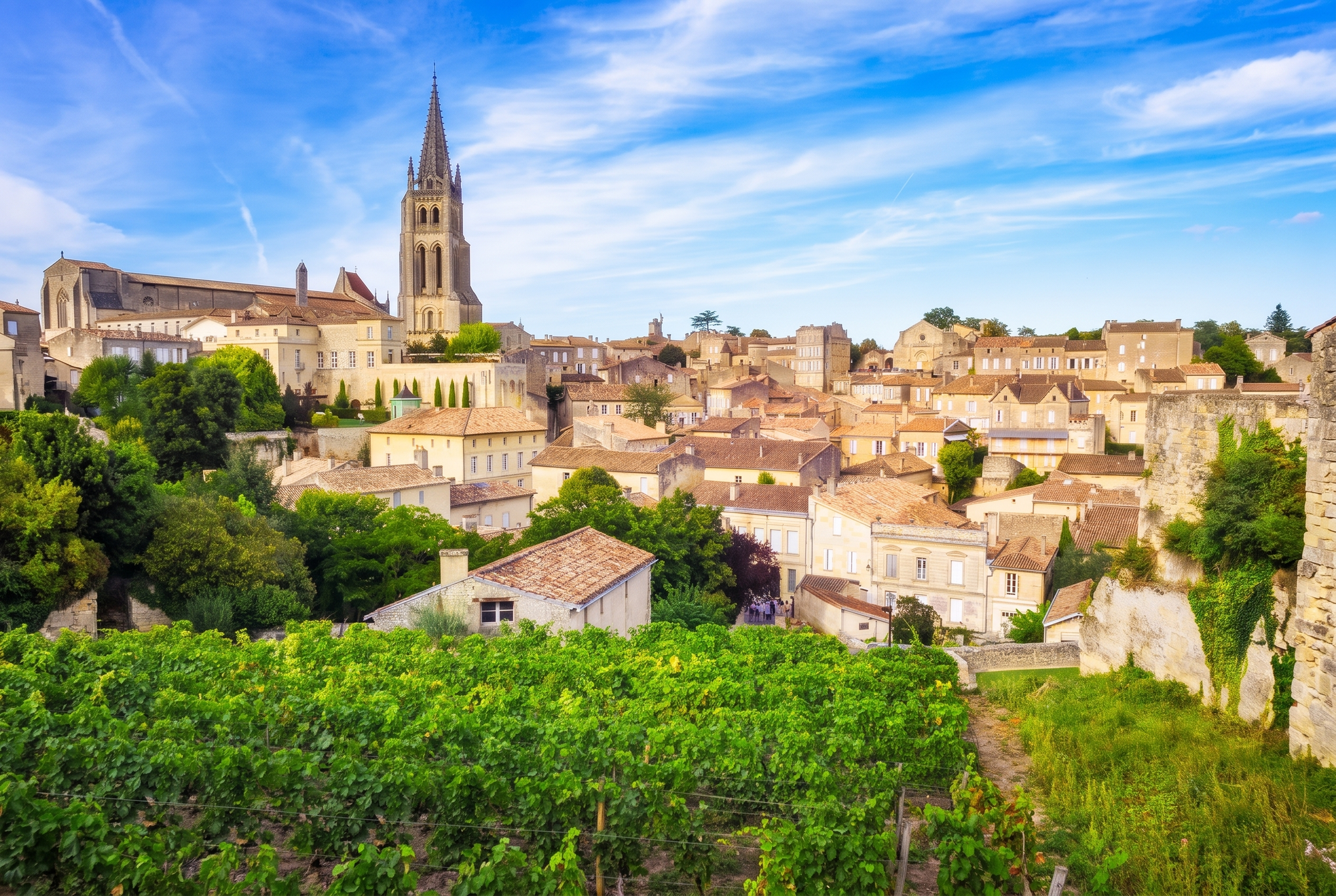
Bordeaux sits in southwest France where the Garonne and Dordogne rivers merge into the Gironde estuary. It is the country's largest appellation vineyard and the world's most traded fine-wine region, built on blended reds of Merlot and Cabernet Sauvignon. It is also in the middle of a historic contraction: faced with falling demand, growers have been paid to uproot thousands of hectares since 2023.
Country: France
Main grapes: Merlot, Cabernet Sauvignon, Cabernet Franc; Sémillon and Sauvignon Blanc for whites
Signature styles: Structured red blends, dry whites, sweet Sauternes
Climate: Maritime, moderated by the Gironde estuary
Key appellations: Bordeaux and Bordeaux Supérieur, Médoc communes (Pauillac, Margaux), Saint-Émilion, Pomerol, Pessac-Léognan, Sauternes
Vineyard area: About 212,000 acres (86,000 hectares) as of the 2025 vintage, the smallest since 1986, down from roughly 115,000 hectares in 2019
2. Why It Matters
The "Bordeaux blend" of Cabernet Sauvignon and Merlot is the most copied red-wine recipe on earth, from Napa to Tuscany. The 1855 classification invented the idea of officially ranked estates, and the futures system called en primeur still sets the rhythm of the global fine-wine trade. Roughly 85 percent of production is red (2020s figures), from everyday bottles to some of the most expensive wine made. Even shrunken, the region turned out 2.9 million hectoliters, nearly 390 million bottles, in 2025.
3. Land and Climate
The Gironde estuary and the Atlantic keep temperatures mild, but the ocean also brings humidity, so mildew and rot are constant threats and vintages genuinely differ. The vast Landes pine forest screens the vineyards from the worst Atlantic storms. Geography sorts the grapes. On the left bank of the estuary, deep gravel banks drain rain away and store daytime heat, exactly what late-ripening Cabernet Sauvignon needs; the result is firm, long-lived wine.
On the right bank, cooler clay and limestone soils suit earlier-ripening Merlot, giving plusher, rounder wines from Saint-Émilion and Pomerol. Between the two rivers, Entre-Deux-Mers grows most of the dry whites. In Sauternes, morning mists off the little Ciron river encourage noble rot (botrytis), a fungus that shrivels grapes and concentrates their sugar for sweet wine.
4. Grapes and Styles
Reds are nearly always blends, insurance against a fickle climate. Left-bank wines lead with Cabernet Sauvignon: blackcurrant, cedar, grippy tannin in youth, decades of life in good vintages. Right-bank wines lead with Merlot and Cabernet Franc: plum, softer texture, earlier charm. Petit Verdot and Malbec appear as seasoning.
Dry whites blend zesty Sauvignon Blanc with waxy Sémillon, from simple and crisp in Entre-Deux-Mers to barrel-aged and profound in Pessac-Léognan; they remain chronically underrated and are often the best value in the region. Sauternes and Barsac make golden sweet wines tasting of apricot, honey, and marmalade that can outlive everyone at the table. Two side bets are growing fast: production of sparkling Crémant de Bordeaux quadrupled in the ten years to 2025, and the trade has revived Claret, the pale, chillable historical style of Bordeaux red, as an appellation wine aimed at younger drinkers.
5. Reading the Label
"Château" means an estate brand, not necessarily a building. AOC (appellation d'origine contrôlée) is France's system tying a wine to a defined place and rulebook. The ladder runs from regional (Bordeaux, Bordeaux Supérieur) through districts (Médoc, Graves) to communes (Pauillac, Saint-Julien, Pomerol); smaller area generally means stricter rules.
Classifications sit on top of that. The 1855 Grand Cru Classé list ranks Médoc and Sauternes estates from first to fifth growth and has barely changed since. Saint-Émilion runs its own classification, revised roughly every decade. Beware one trap: plain "Saint-Émilion Grand Cru" is a modest appellation step, not membership of the classified elite. "Cru Bourgeois" marks reliable mid-tier Médoc estates. A "second wine" is a lighter, cheaper bottling from a top estate, often a smart buy. "Grand Vin" has no legal meaning at all. In total the region runs to about 65 appellations, but a dozen names cover most of what you will actually meet on a shelf.
6. A Short History
English rule from 1152 built the export trade in "claret," and Dutch engineers drained the Médoc marshes in the 1600s, creating its gravel vineyards. The 1855 Paris Exposition classification fixed the hierarchy. After the booms of the late 20th century and the Chinese surge of the 2000s, demand slid, and from 2023 the state and the trade began funding permanent removal of vines, more than 24,700 acres (10,000 hectares) of them by the end of 2024.
7. Did You Know?
In 170 years, the 1855 classification has seen essentially one promotion: Château Mouton Rothschild moved from second to first growth in 1973, after four decades of lobbying by Baron Philippe de Rothschild. His motto changed overnight from "First I cannot be, second I do not deign to be, Mouton I am" to "First I am, second I was, Mouton does not change."
8. At the Table
Left-bank Cabernet with lamb is the local axiom, ideally milk-fed Pauillac lamb; the tannins and the fat were made for each other. Entrecôte à la bordelaise, steak in a red-wine shallot sauce, works with almost any red from the region, and duck suits supple Saint-Émilion. Arcachon oysters call for a cold Entre-Deux-Mers white, and a barrel-aged Pessac-Léognan blanc handles richer fish in sauce. Sauternes with Roquefort or foie gras is the classic sweet-meets-salt finale.
Serve reds at 61 to 64°F (16 to 18°C) and decant young classed growths for one to two hours. Generic Bordeaux is ready on release; serious wines want 10 to 30 years.
Links
Conseil Interprofessionnel du Vin de Bordeaux (regulatory body): https://www.bordeaux.com/en/
Bordeaux Tourism and Conventions (official tourist office): https://www.bordeaux-tourism.co.uk/