

Winemaking was outlawed here for six decades. It came back within sight of the Atlantic.
1. At a Glance
Buenos Aires is Argentina's newest old wine region. The province (not the capital city) made wine in quantity a century ago, lost the industry to a federal ban, and has spent the past two decades rebuilding on entirely new terms. Its vineyards now cluster in the south, from the sandy plains of Médanos to the hills of Sierra de la Ventana and the coastal fields of Chapadmalal, a few miles from Atlantic surf. The INV, Argentina's national wine regulator, recorded just under 200 hectares (about 470 acres) of wine-grape vines in 2024, spread across dozens of small projects in more than thirty towns.
Country: Argentina
Main grapes: Chardonnay, Sauvignon Blanc, Albariño, Pinot Noir, Malbec, Tannat
Signature styles: Crisp maritime whites, sparkling wine, mid-weight southern reds
Climate: Temperate; humid and windy on the coast, semi-arid in the southwest
Key appellations: Chapadmalal (IG), Médanos, Villa Ventana (IG)
Vineyard area: Just under 200 hectares / about 470 acres (2024, INV)
2. Why It Matters
Every classic Argentine region depends on the Andes, altitude, and irrigation. Buenos Aires breaks the model. Chapadmalal, near Mar del Plata, is the country's first true ocean-influenced wine zone: cool and humid, watered by rain rather than canals, and harvested months after Mendoza. That makes the province Argentina's testing ground for Atlantic-style whites, Albariño included, and a preview of what the national wine map might look like beyond the mountains.
3. Land and Climate
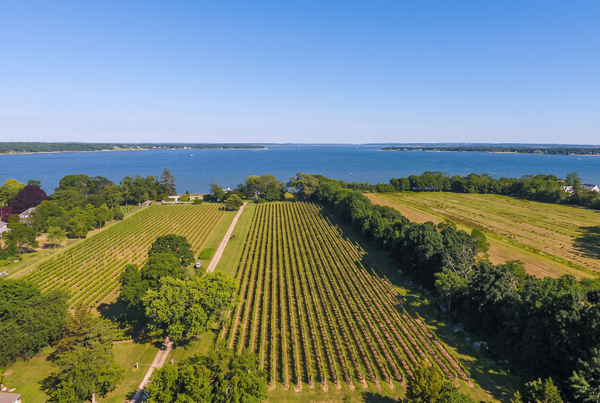
The province splits into two winegrowing worlds. On the coast at Chapadmalal, vineyards sit about 4 miles (6 km) from the sea. Ocean air keeps summers mild and the day-night temperature gap small, so grapes ripen slowly and evenly; rainfall is sufficient for vines to grow without irrigation, almost unheard of in Argentina, and harvest can run into May, roughly two months after Mendoza's. The result is wine that is low in alcohol and high in acid, with a salty freshness, and with humidity, and therefore disease pressure, as the price of admission.
The southwest is the opposite. Médanos, inland near Bahía Blanca, is sandy and semi-arid, swept by constant wind, on land that once grew garlic and onions. Wind-thickened grape skins give the local reds surprising color and grip. Between the two, the Sierra de la Ventana hills contribute rocky slopes and cooler nights. The provincial government now promotes a wine route linking all three zones, a sentence no one could have written twenty years ago.
4. Grapes and Styles
The coast belongs to whites. Sauvignon Blanc and Chardonnay come out bright and saline; Riesling and Gewürztraminer add perfume; and Albariño, the coastal white grape of Spain's Rías Baixas region, has adapted so convincingly that producers compare the two with a straight face. To my taste, the Albariños are already far better than novelty status suggests, and they are the bottles to chase. The same acidity feeds crisp traditional-method sparkling wine (its bubbles created by a second fermentation inside the bottle) and pale, fresh Pinot Noir.
Around Médanos and the sierras, reds take over: Malbec and Cabernet Sauvignon in a fresher, firmer register than Mendoza's, plus Merlot and Tannat, a dark, thick-skinned grape that shrugs off the wind. Styles run mid-weight rather than massive. Nearly everything is made in small batches, and much of it never leaves the province. The names to know map onto the geography: Trapiche's Costa & Pampa estate anchors the coast at Chapadmalal, Al Este pioneered modern Médanos, and Saldungaray works the Sierra de la Ventana hills.
5. Reading the Label
Two IGs, short for Indicación Geográfica, the protected geographic indications in Argentine law, apply here: Chapadmalal on the coast and Villa Ventana in the hills, with Médanos widely used as a place name on bottles from the southwest. “Buenos Aires” on a wine label means the province, hundreds of miles of pampas away from the capital's cafés. National rules apply as everywhere: a named grape must make up at least 85 percent of the wine, “Reserva” guarantees 12 months of aging for reds and 6 for whites, and “Gran Reserva” doubles both. Given how young most projects are, the vintage and the producer matter more than any term.
6. A Short History
European immigrants planted vineyards across the province in the late 1800s, and by the early 1900s Buenos Aires ranked among Argentina's larger wine producers. Then politics intervened: a 1934 federal law reserved winemaking for the Andean provinces, and the local industry disappeared. The restriction lapsed in the 1990s. Replanting began around Médanos in the early 2000s, the coastal experiment at Chapadmalal followed in the 2010s, and by the mid-2020s more than thirty towns in the province had wine projects underway.
Did You Know? Law 12.137 of 1934 banned viticulture in Buenos Aires and Entre Ríos to protect the Andean wine provinces during the Depression. More than 300 producers were shut down; vineyards were pulled up and barrels drilled open so the wine ran out. The ban held, in practice, for about six decades.
7. At the Table
Match the coast with the coast. Mar del Plata, next door to Chapadmalal, is Argentina's fishing capital, and its shrimp, anchovies, and grilled fish are built for these Sauvignon Blancs and Albariños; serve the whites at 46 to 50°F (8 to 10°C) and drink them within two or three years. Sparkling bottles handle fried food, rabas (fried squid rings) above all. The southwestern reds want beef from the surrounding pampas; a Médanos Tannat or Malbec at about 60°F (16°C) suits an asado, the Argentine barbecue, without overwhelming it. Little here needs decanting or long cellaring.
Links
National wine regulator (INV): https://www.argentina.gob.ar/inv
Official tourism board (Visit Argentina): https://www.argentina.travel
Wines of Argentina, Buenos Aires profile: https://winesofargentina.org/en/provinces/buenos-aires