

Two grapes, a thousand walled plots, and the world's priciest farmland.
1. At a Glance
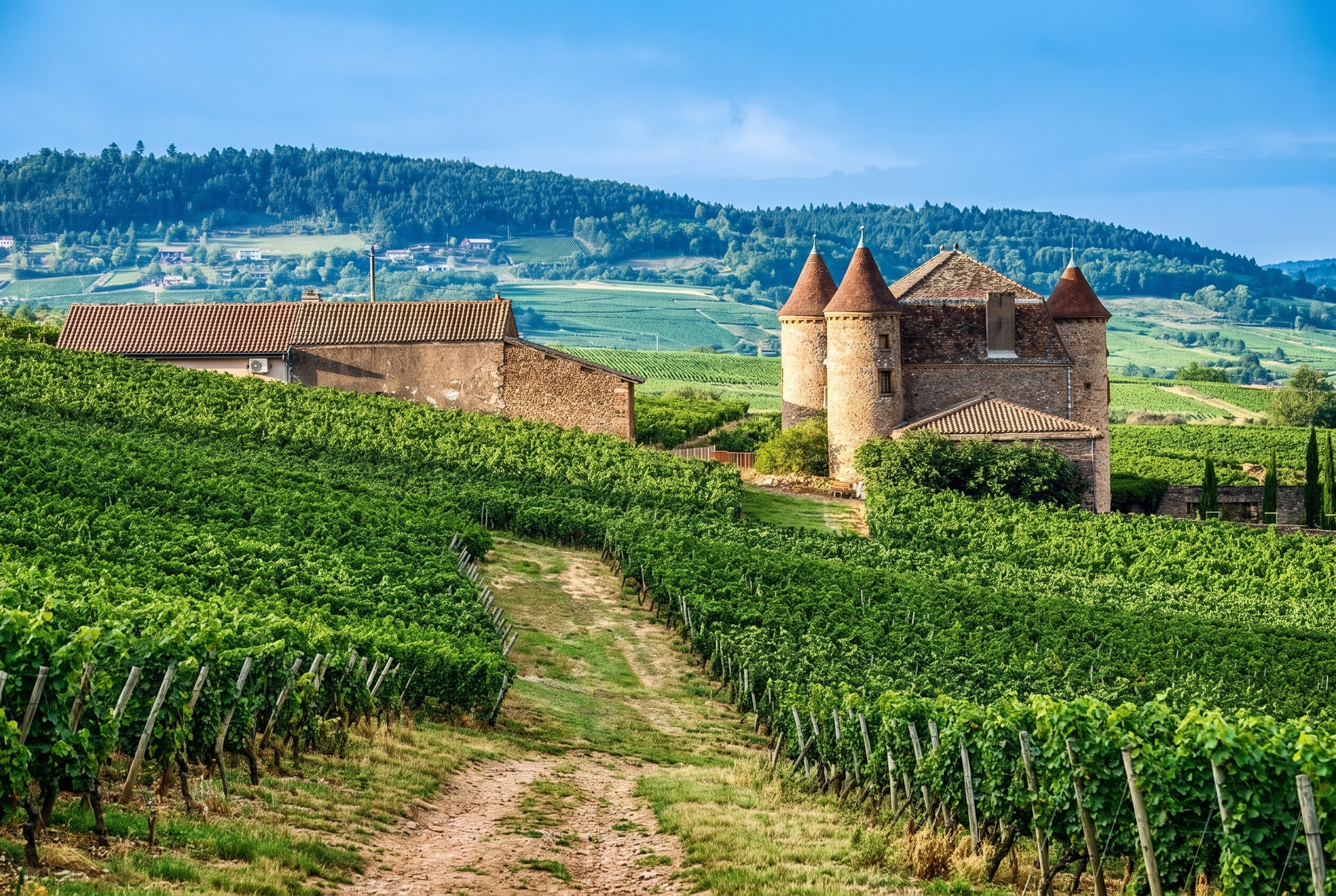
Burgundy (Bourgogne) is a narrow chain of vineyards in eastern France running from Chablis in the north to the Mâconnais in the south. It works with just two main grapes, Pinot Noir and Chardonnay, and slices its land into hundreds of named plots, each with its own rank and price. Roughly 3,600 estates, most of them small family domaines, farm this patchwork. No region takes the idea that place shapes taste further, and none charges more for the proof.
Country: France
Main grapes: Pinot Noir, Chardonnay (plus Aligoté and a little Gamay)
Signature styles: Single-vineyard reds and whites, Crémant de Bourgogne sparkling
Climate: Continental; frost and hail are recurring hazards
Key appellations: Chablis, Côte de Nuits, Côte de Beaune, Côte Chalonnaise, Mâconnais
Vineyard area: About 79,000 acres (32,000 hectares) in production, excluding Beaujolais, as of 2025
2. Why It Matters
Burgundy is the world's model for classifying land rather than estates: the vineyard, not the producer, holds the rank. Its Pinot Noir and Chardonnay are the reference points every other producer of those grapes measures against, and its charity wine auction at the Hospices de Beaune, a hospital endowed with vineyards since 1443, is the most famous wine sale on earth. The economics are lopsided by design: from about 4 percent of France's vineyard area, Burgundy produced around 200 million bottles a year in the mid-2020s, and its grands crus rank among the most expensive agricultural land on earth.
3. Land and Climate
The heart is the Côte d'Or, a roughly 30-mile (50-kilometer) limestone escarpment facing east and southeast. Mid-slope sites get the best drainage and morning sun, and that is where the grands crus sit; the flat land below yields regional wine. A hundred feet of elevation can change the wine, and the whole system exists to track that.
The continental climate delivers real winters and risky springs. Frost and hail decide the size of many vintages; in May 2024, a single hailstorm tore through the Chablis vineyards. Chablis itself grows on Kimmeridgian limestone packed with fossil oyster shells, one reason its Chardonnay tastes so saline and taut. The Mâconnais, farther south and warmer, ripens rounder, friendlier whites, while the Côte Chalonnaise between them offers a quieter version of the Côte d'Or's slopes.
4. Grapes and Styles
Pinot Noir makes all the famous reds: cherry and raspberry fruit, an undergrowth savor the French call sous-bois, and silky tannin. Côte de Nuits versions (Gevrey-Chambertin, Vosne-Romanée) are the most structured; Côte de Beaune reds (Volnay, Beaune) are more supple. Chardonnay makes everything from steely, usually unoaked Chablis to layered, barrel-fermented Meursault and Puligny-Montrachet, down to easy Mâcon-Villages, with Pouilly-Fuissé, promoted to premier cru status for its best sites in 2020, as the Mâconnais flagship.
Aligoté gives a sharp, refreshing white, the traditional base for a kir. Crémant de Bourgogne is bottle-fermented sparkling wine and often excellent value. If you want my advice on where sane people should buy Burgundy today, it is the Côte Chalonnaise: Mercurey, Rully, and Givry deliver the regional style at a fraction of Côte d'Or prices.
5. Reading the Label
Burgundy's AOC system (appellation d'origine contrôlée, France's place-based rulebook) has four tiers, from broad to tiny. Régionale wines (labeled Bourgogne) make up about half of production. Village wines carry a commune name, such as Pommard. Premier cru adds a vineyard name to the village, about 10 percent of output. Premier cru vineyards number more than 600 across the region. Grand cru, roughly 1 to 2 percent of production from 33 vineyards, uses the vineyard name alone: Montrachet, Musigny, Corton. A climat is one of these named, historically delimited plots.
Two more words matter. Domaine means the producer grew the grapes; maison or négociant means a merchant bought grapes or wine. Because one vineyard can have dozens of owners, the producer's name matters as much as the plot. Memorize a few good ones before memorizing crus.
6. A Short History
Cistercian and Cluniac monks spent the Middle Ages observing which plots made better wine, walling the best ones; Clos de Vougeot is their monument. The dukes championed Pinot Noir and banned Gamay in 1395. The Revolution seized church vineyards, and the Napoleonic inheritance code then split holdings equally among heirs, generation after generation, which is why parcels are minuscule and labels baffling. The climats joined the UNESCO World Heritage list in 2015.
Did You Know? Clos de Vougeot, a single walled vineyard of about 125 acres (50 hectares), is divided among more than 80 owners. Some farm just a few rows of vines, and each makes a different wine from the same enclosure, which is Burgundy's entire logic in one field.
7. At the Table
The regional dishes were designed around the wine. Boeuf bourguignon and coq au vin want a village-level red; oeufs en meurette, eggs poached in red-wine sauce, work the same way. Gougères, warm cheese puffs, are the standard cellar snack with anything, and jambon persillé, the parsleyed ham terrine, wants a cold Aligoté. Chablis with oysters is one of wine's perfect matches. A warning about the famous local Epoisses: the cheese flattens most red Burgundy, so pour a rich white instead.
Serve reds at 57 to 61°F (14 to 16°C) and whites at 50 to 54°F (10 to 12°C). Village wines peak at roughly 3 to 8 years, premiers and grands crus at 8 to 20 or more. Young top reds open up with an hour of air; a gentle decant does no harm.
Links
Bureau Interprofessionnel des Vins de Bourgogne (regulatory body): https://www.bourgogne-wines.com/
Burgundy Tourism (official tourism board): https://www.burgundy-tourism.com/