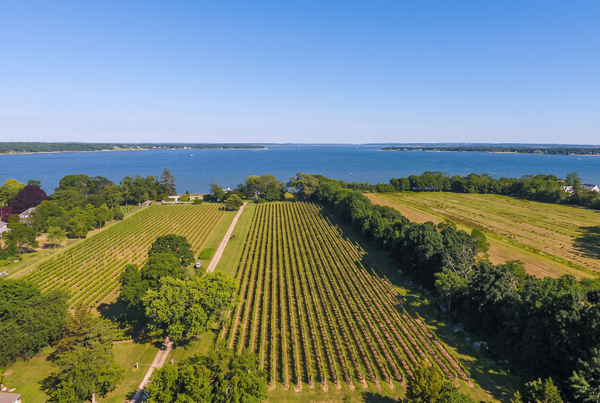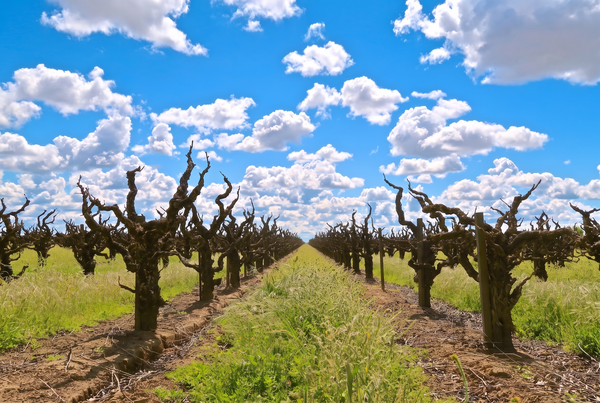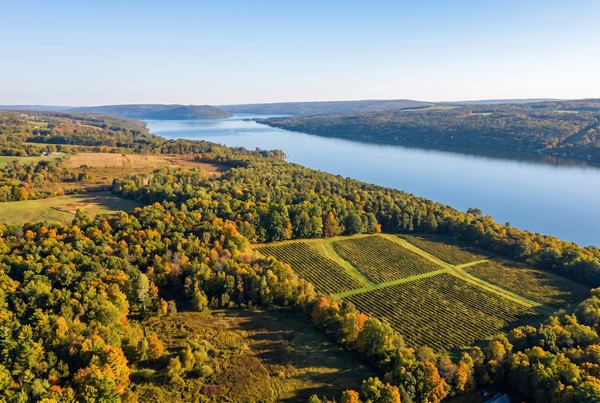


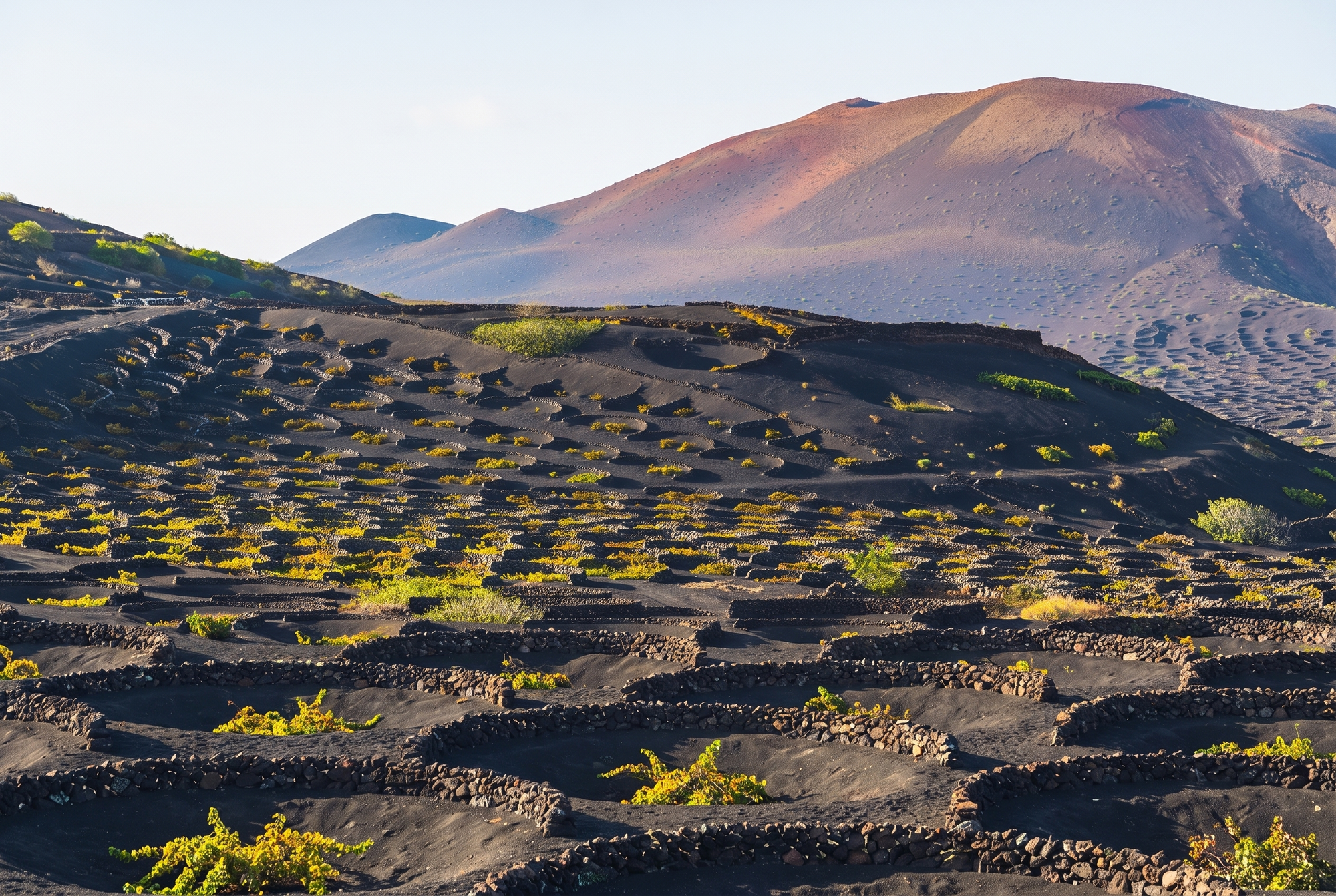
Vines grow in black ash pits on islands the vine plague never conquered.
1. At a Glance
Seven volcanic islands sit in the Atlantic, closer to Morocco than to Madrid. Their vineyards look like nothing else in wine: vines planted in pits dug into black ash, or braided into ropes ten feet long. Because the phylloxera louse, the root-eating insect that destroyed Europe's vineyards in the late 1800s, never established itself here, most vines still grow on their own roots, and grape varieties extinct elsewhere survive.
Country: Spain (autonomous community in the Atlantic)
Main grapes: Listán Blanco, Listán Negro, Malvasía Volcánica, Negramoll
Signature styles: Saline dry whites; light, peppery reds; sweet Malvasía
Climate: Subtropical, moderated by Atlantic trade winds; very dry on the eastern islands
Key appellations: DO Islas Canarias (region-wide) plus ten island DOs, including Lanzarote and Tacoronte-Acentejo
Vineyard area: About 6,750 hectares (16,700 acres) as of 2024
2. Why It Matters
The Canaries are one of the few wine regions on Earth where nearly all vines are ungrafted, meaning they grow on their own roots rather than on pest-resistant American rootstock. That preserved roughly 20 grape varieties found nowhere else, some on vines 100 to 200 years old. In the 1500s and 1600s, sweet "Canary sack" was among the most celebrated wines in Europe. Today the islands are famous again, this time for taut, smoky dry wines that sommeliers pour when they want to surprise someone.
3. Land and Climate
Everything here traces back to volcanoes. Soils range from young black ash to basalt and volcanic clay, and they give the wines a savory, saline edge rather than plush fruit. Vineyards climb from sea level to about 5,500 feet (1,700 meters), so a single small island can harvest over many weeks.
Rain is scarce, especially on Lanzarote, where growers dig pits called hoyos into the ash layer (locally, picón) laid down by eruptions in the 1730s. Each pit holds one vine, shielded by a low crescent of lava stone. The porous ash traps overnight moisture from the trade winds, which is often the only water the vine gets. Yields are tiny, and the wines taste concentrated because of it. Tenerife, the biggest island, holds about 65% of all Canary vines (2020s figures), spread across slopes so varied that one valley can be harvesting while a neighboring one is still weeks from ripeness.
4. Grapes and Styles
Whites dominate. Listán Blanco is genetically the same grape as Palomino, the neutral sherry variety, but on volcanic soils at altitude it turns sharp, citrusy, and stony. In my view it deserves far more respect here than its mainland twin has ever earned. Malvasía Volcánica, a Lanzarote specialty, makes everything from bone-dry whites with apricot and floral notes to lush sweet wines, the modern heirs of old Canary sack.
The main red, Listán Negro, gives pale, medium-bodied wines with red berries, black pepper, and a smoky mineral streak; producers often serve them lightly chilled. Negramoll (the Tinta Negra of Madeira) is softer, while Baboso Negro and Vijariego Negro add darker, grippier options. Alcohol tends to be moderate and acidity bright, which suits current tastes.
Expect the whites young and fresh, some with extra texture from lees aging, which means resting the wine on its spent yeast cells. Field blends of several varieties, a survival of old planting habits, are common and often labeled by island rather than by grape. Sweet wines still matter too: late-harvested Malvasía from Lanzarote and La Palma carries honey and dried apricot over a backbone of acidity that keeps it from feeling heavy.
5. Reading the Label
Spanish quality wine is organized into DOs (Denominación de Origen), protected regions that each set rules on grapes, yields, and origin. The Canaries have ten island-based DOs, and Tenerife alone holds five of them, including Tacoronte-Acentejo and Valle de la Orotava. A separate label, DO Islas Canarias, created in 2012, can be used across the archipelago.
So a bottle may say "Lanzarote" (one island's DO) or "Islas Canarias" (the regional umbrella). The grape variety usually appears on the front label. "Malvasía dulce" signals a sweet wine; "seco" means dry. Vines here are almost all hand-harvested, so prices above mainland-Spain levels are normal, not a markup.
6. A Short History
Spanish colonists planted vines in the 1400s, and by the 1500s sweet Canary Malvasía was exported across Europe and the Americas. Demand collapsed in the 1700s as Portugal's wines took over the English market. The islands' isolation then became their asset: phylloxera bypassed them in the 1800s, preserving old vines and varieties. A quality revival, led from Tenerife and Lanzarote, took hold in the 2010s.
Did You Know? Shakespeare knew these wines. In Henry IV, Part 1, Falstaff jokes about his love of "sack," the sweet Canary wine that England imported by the shipload; in 1630, about half of all Canary Malvasía sold went to London.
7. At the Table
Canary whites are built for the local table: papas arrugadas (salt-wrinkled potatoes) with green or red mojo sauce, grilled octopus, and fresh Atlantic fish. Serve Listán Blanco and dry Malvasía cold, around 45 to 50°F (7 to 10°C). Listán Negro works with tuna, roast chicken, and semi-cured goat cheese; give it a light chill, about 55°F (13°C).
Most bottles are made to drink within a few years, so decanting is rarely needed. Sweet Malvasía, poured at cellar temperature, is a natural partner for almond desserts and blue cheese and can age for a decade or more. If you visit, order by island rather than by grape: a Lanzarote white and a Tenerife red on the same table make the clearest possible lesson in how much volcanic soil can vary.
Links
DO Islas Canarias (Canary Wine, official appellation site): https://www.canarywine.com/en/home/
Canary Islands official tourism board: https://www.hellocanaryislands.com/