

Nobody planted wine grapes here until 1982. Now it defines Chilean white wine.
1. At a Glance
Casablanca sits about 60 miles (100 kilometers) northwest of Santiago, on the road to the port of Valparaíso. Forty-five years ago it grew wheat and raised dairy cattle; today it is Chile's benchmark cool-climate region, built almost entirely on Sauvignon Blanc, Chardonnay and Pinot Noir.
Country: Chile
Main grapes: Sauvignon Blanc, Chardonnay, Pinot Noir
Signature styles: Crisp, citrusy Sauvignon Blanc; taut Chardonnay; light, fresh Pinot Noir
Climate: Cool Mediterranean, moderated by ocean fog and afternoon sea breezes
Key appellations: Casablanca Valley DO, often carrying the coastal “Costa” mention
Vineyard area: Roughly 5,000 hectares (12,400 acres) among the main varieties (Wines of Chile data published 2023; other industry estimates run somewhat higher)
2. Why It Matters
Casablanca proved that Chile could make serious white wine, full stop. Until the 1980s the country's exports were overwhelmingly red or cheap. This valley's success with vibrant, cool-grown Sauvignon Blanc and Chardonnay changed buyers' expectations and triggered a coastal planting rush that produced San Antonio, Leyda and other now-famous cool zones. Every crisp Chilean white on a supermarket shelf owes something to what happened here after 1982. The valley now also anchors one of Chile's busiest wine-tourism corridors, an easy hour from both Santiago and Valparaíso.
3. Land and Climate
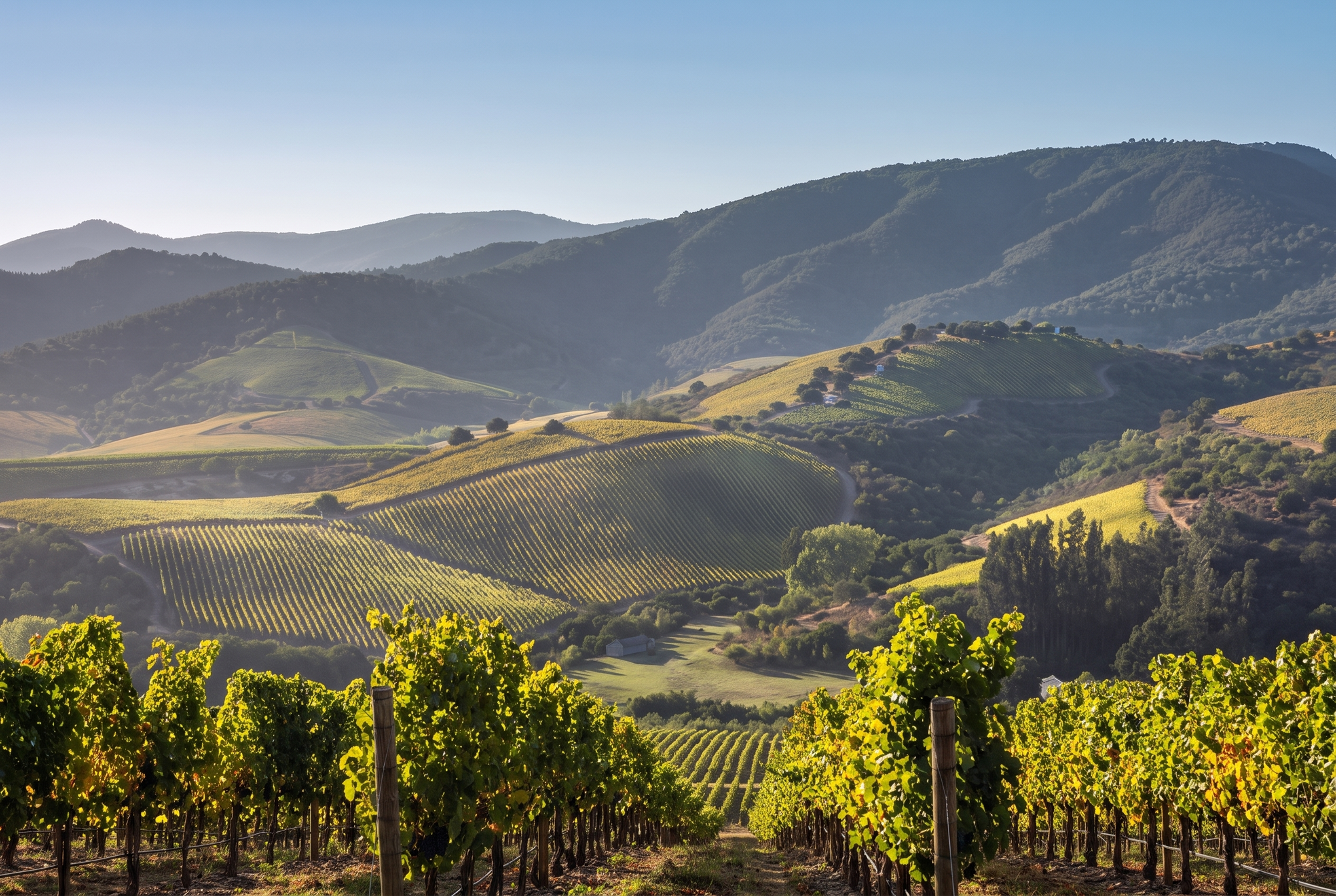
The valley points east to west, an unusual orientation in Chile, and its far end lies only about 20 miles (30 kilometers) from the Pacific. That ocean is cold. The Humboldt Current carries near-Antarctic water up Chile's coast, chilling the air above it. Every morning that air slides inland as fog, locally called camanchaca, and blankets the vines until midday; every afternoon a sea breeze follows. The result is a short, cool solar day inside a sunny latitude.
Consequences follow directly. Grapes ripen slowly, sugars stay moderate, and acidity, the mouth-watering freshness in wine, remains high at harvest. Soils are mostly clay and sand over decomposed granite, which drains well and keeps yields modest. Lower, cooler ground goes to whites; higher slopes that escape frost carry Syrah and Merlot.
4. Grapes and Styles
Sauvignon Blanc leads the plantings, about 2,200 hectares (5,400 acres) in Wines of Chile's data published in 2023. Expect grapefruit, lime and fresh herbs with a saline edge, sharper than most warm-climate versions and less pungent than New Zealand's. The grape ripens early, so it is usually picked before summer's hottest weeks, another reason the wines stay tense. Many consider it Chile's reference bottling of the grape.
Chardonnay comes in two registers: lean and citrus-driven with little oak, or barrel-fermented with a creamy texture and a mineral finish. Both keep the region's signature acidity. Pinot Noir, the valley's main red, is pale and crunchy, all red fruit, at its best with a light chill and a plate of food.
Around the edges you will find aromatic whites like Riesling and Gewürztraminer, plus Syrah from warmer slopes with a peppery, cool-climate profile. The mild opinion: Casablanca Pinot Noir remains underrated next to the whites, and the best examples now compete with far pricier bottles from Oregon or New Zealand.
5. Reading the Label
“DO Casablanca Valley” (Denominación de Origen, or denomination of origin) guarantees geography, not quality. At least 75 percent of the grapes must come from the valley, and the same floor applies to a stated variety and vintage; exporters usually work to 85 percent for European compliance.
Many bottles add “Costa,” one of three coastal-to-mountain mentions created in 2011. Here it is nearly redundant, since the whole valley qualifies as coastal, but it reinforces the cool-climate message. “Reserva” and “Gran Reserva” require modestly higher alcohol and, for Gran Reserva, oak treatment; on whites they usually just signal a richer style. A named single vineyard or a specific sector on the back label is a better clue to ambition than any Reserva term. Vintages matter less than in Europe, but cooler years make sharper, longer-lived whites. Remember that harvest happens in the southern fall, so the vintage on the label closes a growing season that began the previous calendar year.
6. A Short History
Casablanca had no wine history at all until 1982, when Pablo Morandé, then a winemaker at Concha y Toro, planted the valley's first commercial vineyard against prevailing wisdom that it was too cold and frost-prone. The first Sauvignon Blancs and Chardonnays of the mid-1980s drew immediate attention for their freshness. Investment poured in through the 1990s, the valley was written into Chile's 1994 appellation decree, and within a generation Casablanca went from pasture to the country's flagship white-wine region.
Did You Know? Casablanca lies at 33 degrees south, closer to the equator than any vineyard in Europe. On latitude alone it should be far too hot for crisp whites. The cold Humboldt Current and its morning fog override geography, which is why a valley level with North Africa makes wines that taste as if they grew somewhere cool and gray.
7. At the Table
This is seafood wine country an hour from the source. Sauvignon Blanc is the natural partner for ceviche, oysters and machas a la parmesana, the Chilean dish of razor clams baked with cheese; the wine's acidity slices through citrus and richness alike. Barrel-aged Chardonnay suits caldillo de congrio, the local conger eel chowder, or a simple roast chicken. Chill whites hard, 45 to 50°F (7 to 10°C), and serve Pinot Noir cool at about 55°F (13°C). Drink most bottles within three years; only top single-vineyard Chardonnays gain much from five or more. Nothing here needs decanting.
Links
Producers' association: Casablanca Valley winegrowers — https://casablancavalley.cl/en/
Official tourism board: Chile Travel, Casablanca Valley — https://www.chile.travel/en/where-to-go/destination/casablanca-valley/
Official industry body: Wines of Chile — https://www.winesofchile.org/