

Don Quixote's dry plateau holds nearly half of all Spanish vines.
1. At a Glance
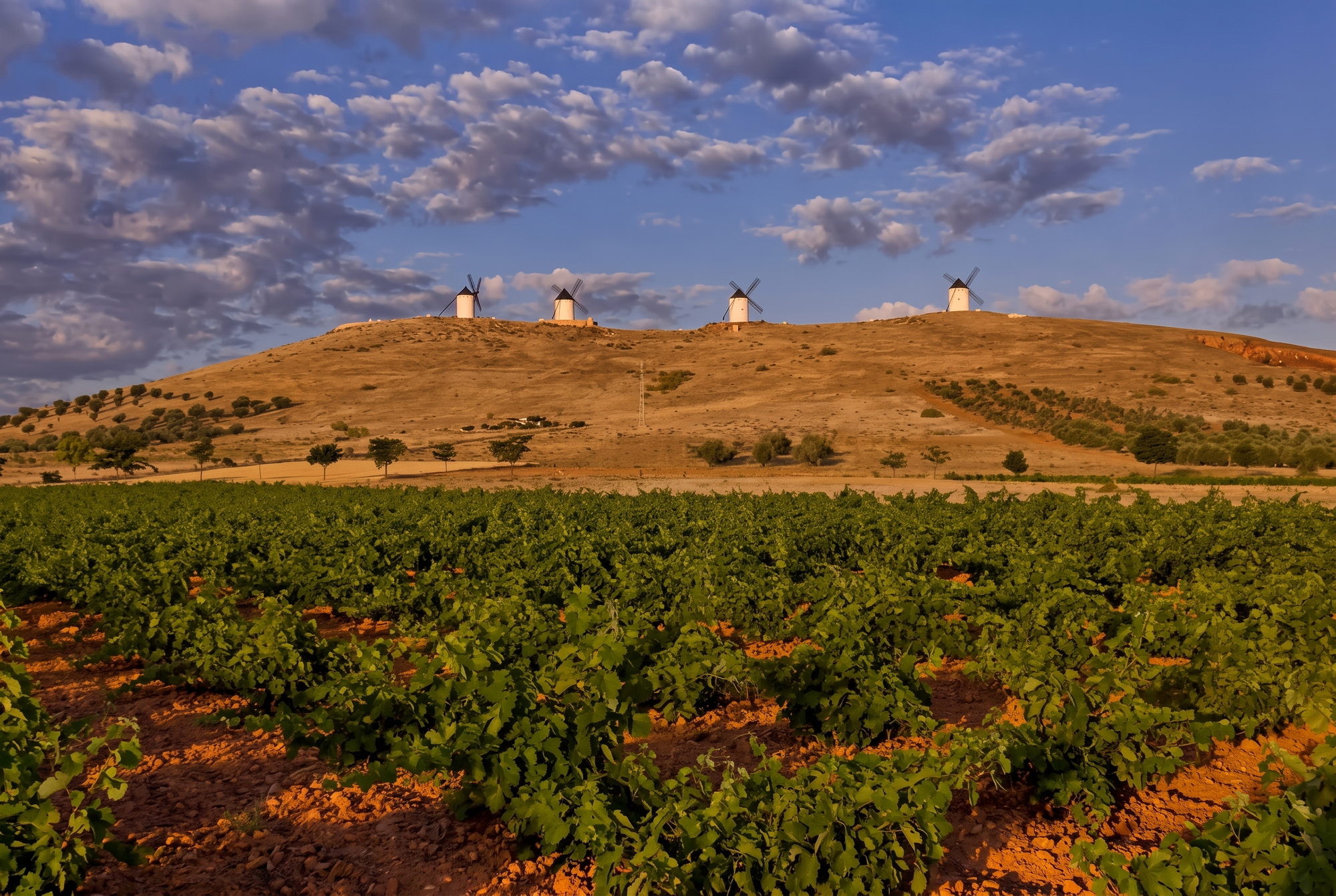
South of Madrid, an immense plateau of windmills and vineyards stretches to the horizon. This is the largest wine-growing region on the planet: one Spanish autonomous community with more vines than most entire countries. Long a source of cheap bulk wine, it now produces some of Spain's best-value bottles, plus a growing number of serious estate wines.
Country: Spain (central plateau, south of Madrid)
Main grapes: Airén, Cencibel (Tempranillo), Garnacha, Bobal, plus international varieties
Signature styles: Easy, affordable reds and whites; increasingly ambitious old-vine reds
Climate: Extreme continental: hot summers, cold winters, very little rain
Key appellations: DO La Mancha, DO Valdepeñas, several Vino de Pago estates
Vineyard area: About 459,000 hectares (1.13 million acres), 49% of Spain's total, as of 2022
2. Why It Matters
Scale is the headline. Castilla-La Mancha held about 459,000 hectares of vines in 2022, roughly half of Spain's vineyard. Within it, DO La Mancha alone covers around 160,000 registered hectares (2020s figures), the largest single appellation anywhere. The region also invented the Vino de Pago category, Spain's designation for outstanding single estates, starting with Dominio de Valdepusa in 2003, and it remains the category's stronghold. If you have ever bought a surprisingly good $8 Spanish red, it probably came from here.
3. Land and Climate
The vineyards sit on the southern Meseta, Spain's central plateau, at roughly 2,000 to 2,300 feet (610 to 700 meters). The climate is brutally continental: summer days above 104°F (40°C), winter lows near 5°F (-15°C), and only 12 to 16 inches (300 to 400 millimeters) of rain a year. About 3,000 hours of annual sunshine ripen grapes reliably, which is why the region rarely has a bad vintage.
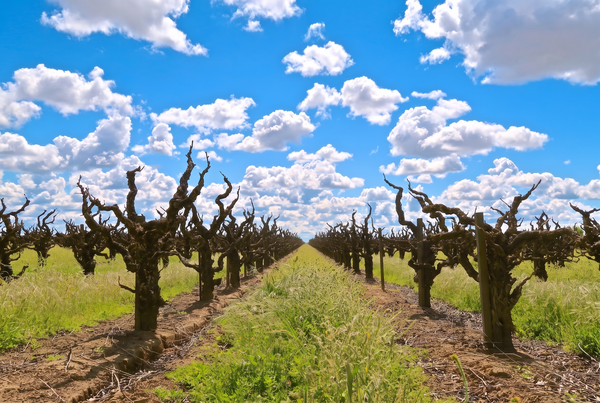
Drought shapes everything. Vines are traditionally trained as low, free-standing bushes and planted far apart so each one can find water. Soils of reddish clay over limestone drain well but hold just enough moisture at depth. The dryness also keeps fungal disease away, one reason the region had more than 60,000 hectares of certified organic vines by 2022, the most in Spain.
4. Grapes and Styles
The workhorse white is Airén, a drought-proof local grape that makes neutral, gently fruity wines and much of the base for Spanish brandy. Modern versions, picked early and fermented cold, are crisp, inexpensive, and better than their reputation.
Reds lead the quality push. Cencibel is the local name for Tempranillo, Spain's flagship red grape, and here it gives ripe plum and cherry flavors with soft tannins, the drying, grippy compounds from grape skins. Young unoaked versions are made for weeknights; oak-aged bottlings add vanilla and spice. Garnacha, Bobal, and internationals like Cabernet Sauvignon and Syrah round out the blends.
The most interesting wines come from old bush vines and from the Vino de Pago estates, single properties with their own appellation status. Some producers now ferment in tinajas, the region's traditional giant clay jars, which preserve fruit without the vanilla stamp of oak. A traditional curiosity survives in Valdepeñas: aloque, a pale red made by fermenting red and white grapes together. Frankly, this is the best region in Spain for drinkable wine per dollar; the trade knows it, even if the labels stay humble.
5. Reading the Label
A DO (Denominación de Origen) is a protected wine region with its own rulebook. "DO La Mancha" and "DO Valdepeñas" are the two big ones here; "Vino de Pago" marks a single estate granted its own appellation. Bottles labeled "Vino de la Tierra de Castilla" follow looser regional rules and are often excellent value.
Aging terms matter: Crianza reds spend at least two years maturing, part of it in oak barrels; Reserva means three years; Gran Reserva means five. A young wine with no aging term is called joven and should be drunk soon. Grape names usually appear on the front; remember that Cencibel equals Tempranillo. Numbered back labels from the regulatory council confirm the wine passed the appellation's checks.
6. A Short History
Vines have grown here since at least the Middle Ages; Cervantes has Don Quixote's contemporaries praising the local wine in 1605. Valdepeñas won appellation recognition in 1932, among Spain's first; the railroad had already opened export markets for its wines in the 1860s. When phylloxera, the vine-killing louse, finally struck in 1911, growers replanted largely with grafted Airén. For most of the 20th century the region sold bulk wine in enormous volume. From the 1990s, EU-funded modernization, cold fermentation technology, and estate bottling turned quantity toward quality.
Did You Know? Airén, a grape most drinkers have never heard of, was for decades the most widely planted wine grape on Earth by area. It still covers more Spanish ground than any other white variety, almost all of it in La Mancha.
7. At the Table
Local food is shepherd's food, and the wines match it. Young Cencibel suits pisto manchego (a ratatouille-like vegetable stew) and garlic soups; oak-aged reds stand up to roast lamb and game. The classic pairing is aged Manchego cheese with a Crianza red: the cheese's salt softens the wine's tannin.
Serve young reds slightly cool, about 57°F (14°C), and whites well chilled at 45°F (7°C). Almost everything is made to drink within five years; only top Reservas and Pago wines reward a decade of cellaring or an hour in a decanter. One practical tip: when a restaurant list offers a La Mancha Reserva next to a same-priced young wine from a famous region, the Reserva is usually the better glass.
Links
Consejo Regulador DO La Mancha (regulatory body): https://lamanchawines.com/
Wines from Spain (ICEX) La Mancha profile: https://www.foodswinesfromspain.com/en/wine/regions/the-meseta/la-mancha-do