

Summer days near 100°F and nights close to freezing forge Spain's densest reds.
1. At a Glance
Northwest of Madrid, the Duero River crosses a high plateau where winters are long, summers are short, and the temperature can swing 45°F between afternoon and dawn. Those extremes produce Spain's most concentrated Tempranillo reds in Ribera del Duero and Toro, its favorite crisp white in Rueda, and, in Bierzo, reds that feel almost Burgundian.
Country: Spain (northern plateau, along the Duero River)
Main grapes: Tempranillo (as Tinto Fino and Tinta de Toro), Verdejo, Mencía, Godello
Signature styles: Powerful oak-aged reds; aromatic dry whites; fresh mountain reds
Climate: Continental, high altitude, with extreme day-night temperature swings
Key appellations: Ribera del Duero, Rueda, Toro, Bierzo, Cigales
Vineyard are: More than 75,000 hectares (185,000 acres) across the region as of 2025
2. Why It Matters
Castilla y León is home to two of the three most famous names in Spanish red wine. Ribera del Duero, where Vega Sicilia has grown vines since 1864, rivals Rioja for prestige, and Toro supplies some of the country's boldest reds, many from very old vines. Rueda, meanwhile, made Verdejo the white Spaniards order by default in tapas bars. Few regions anywhere offer this range of benchmark styles within a two-hour drive of one another.
3. Land and Climate
The vineyards sit high: Ribera del Duero's vines grow at roughly 2,500 to 3,100 feet (750 to 945 meters). At that altitude, hot summer days push grapes to full ripeness while cold nights preserve acidity and deepen color. The result in the glass is a red that is both dense and fresh, rarely flabby.
Growing seasons are short and frost is a real risk in both spring and fall, so yields stay low and concentration high. Ribera del Duero alone holds more than 22,000 hectares (54,000 acres) of vines (2023). Soils vary from limestone and chalk along the Duero, which give structure and perfume, to the slate hillsides of Bierzo in the northwest, whose wet, Atlantic-tinged climate explains why its Mencía reds taste closer to Galicia than to the plateau. Rueda's gravelly, stony flats stress Verdejo just enough to intensify its herbal aromatics.
4. Grapes and Styles
Reds first. In Ribera del Duero, Tempranillo goes by Tinto Fino or Tinta del País and covers about 95% of the vineyard (2023 figures): expect black cherry, tobacco, and firm tannin (the mouth-drying grip from grape skins), usually polished by oak aging. Toro's version, Tinta de Toro, is riper and more muscular, often from very old ungrafted vines. Bierzo's Mencía is the counterpoint: floral, red-fruited, and mineral, medium-bodied rather than massive, and single-village bottlings there now express slate slopes with real precision. Cigales, north of Valladolid, adds traditional dry rosados with more color and grip than most modern pink wine.
Whites are led by Rueda Verdejo: fennel, lime, and white peach with a signature bitter-almond twist on the finish. Most is fresh and unoaked; barrel-fermented versions add weight, and a rare fortified survivor called Dorado shows the oxidative style the town made before freshness took over. Godello, grown in Bierzo, gives richer, stonier whites. Cigales and Toro also make solid rosados (rosés).
The barrel-aged Verdejos, in my opinion, deserve far more attention than they get; they age like good white Burgundy at a third of the price.
5. Reading the Label
Each zone here is its own DO (Denominación de Origen), Spain's protected-region system, so bottles say "Ribera del Duero" or "Rueda," not "Castilla y León", unless they use the looser region-wide "Vino de la Tierra de Castilla y León" category, a frequent home for maverick producers.
For reds, aging terms are your guide: Crianza means at least two years of maturing, including a year in oak barrels; Reserva means three years; Gran Reserva means five, for top vintages only. In Rueda, a wine labeled simply "Rueda Verdejo" must be mostly Verdejo, and "Gran Vino de Rueda" marks low-yield wines from vines over 30 years old.
6. A Short History
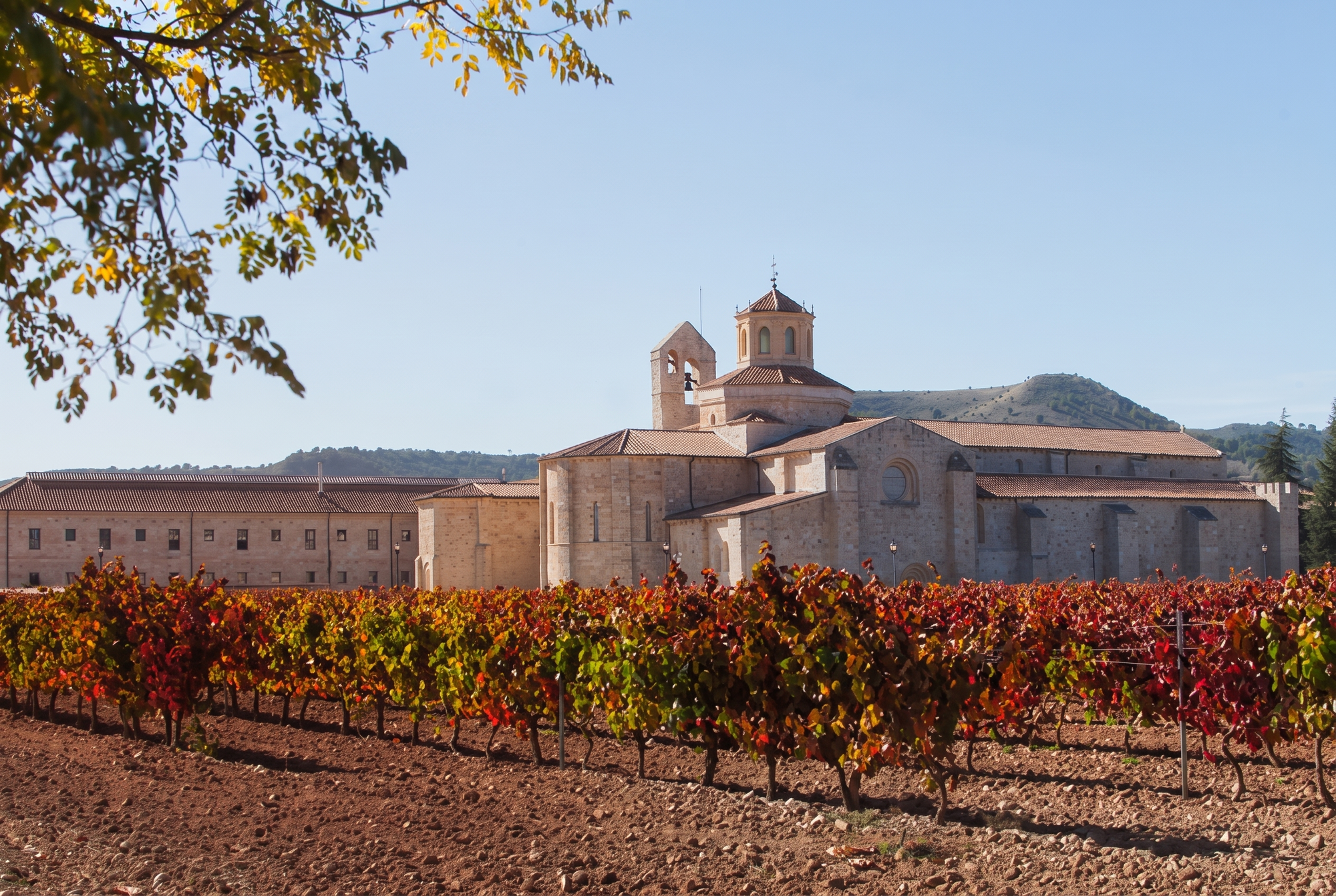
Monasteries spread viticulture along the Duero in the Middle Ages, and villages dug underground cellars that still honeycomb towns like Aranda de Duero. Vega Sicilia's founding in 1864 planted the flag for fine wine, but the 20th century was hard: Verdejo nearly vanished until grower Ángel Rodríguez Vidal championed it, and Rioja's Marqués de Riscal invested in Rueda in 1972 to relaunch the grape. Rueda became the region's first DO in 1980; Ribera del Duero followed in 1982. Investment has poured in since, and prices at the top now rival Rioja's.
Did You Know? Rueda's Verdejo is a medieval immigrant. It likely arrived from North Africa with Mozarab settlers around the 11th century, when King Alfonso VI repopulated the Duero basin, a thousand years before it became Spain's go-to white.
7. At the Table
The region's signature match is lechazo, milk-fed lamb roasted in wood ovens, with a Ribera del Duero Reserva; the wine's dark fruit and smoke mirror the meat. Toro reds want aged Zamorano sheep cheese or grilled steak. Bierzo's Mencía, served a touch cool, flatters botillo, the local paprika-spiced pork dish. Verdejo is the aperitif and the fish wine: try it with garlicky cod or simply with potato chips.
Serve big reds at 60 to 64°F (16 to 18°C) and decant young Ribera del Duero and Toro for a full hour before dinner; their tannins need the air. Good Reservas improve for 10 to 20 years. Drink standard Verdejo within two years, well chilled at about 45°F (7°C).
Links
Consejo Regulador DO Ribera del Duero (regulatory body): https://www.riberadelduero.es/en/node/2517
Consejo Regulador DO Rueda (regulatory body): https://dorueda.com/