

Black slate hills, a sparkling-wine empire, and Spain's other top-tier appellation.
1. At a Glance
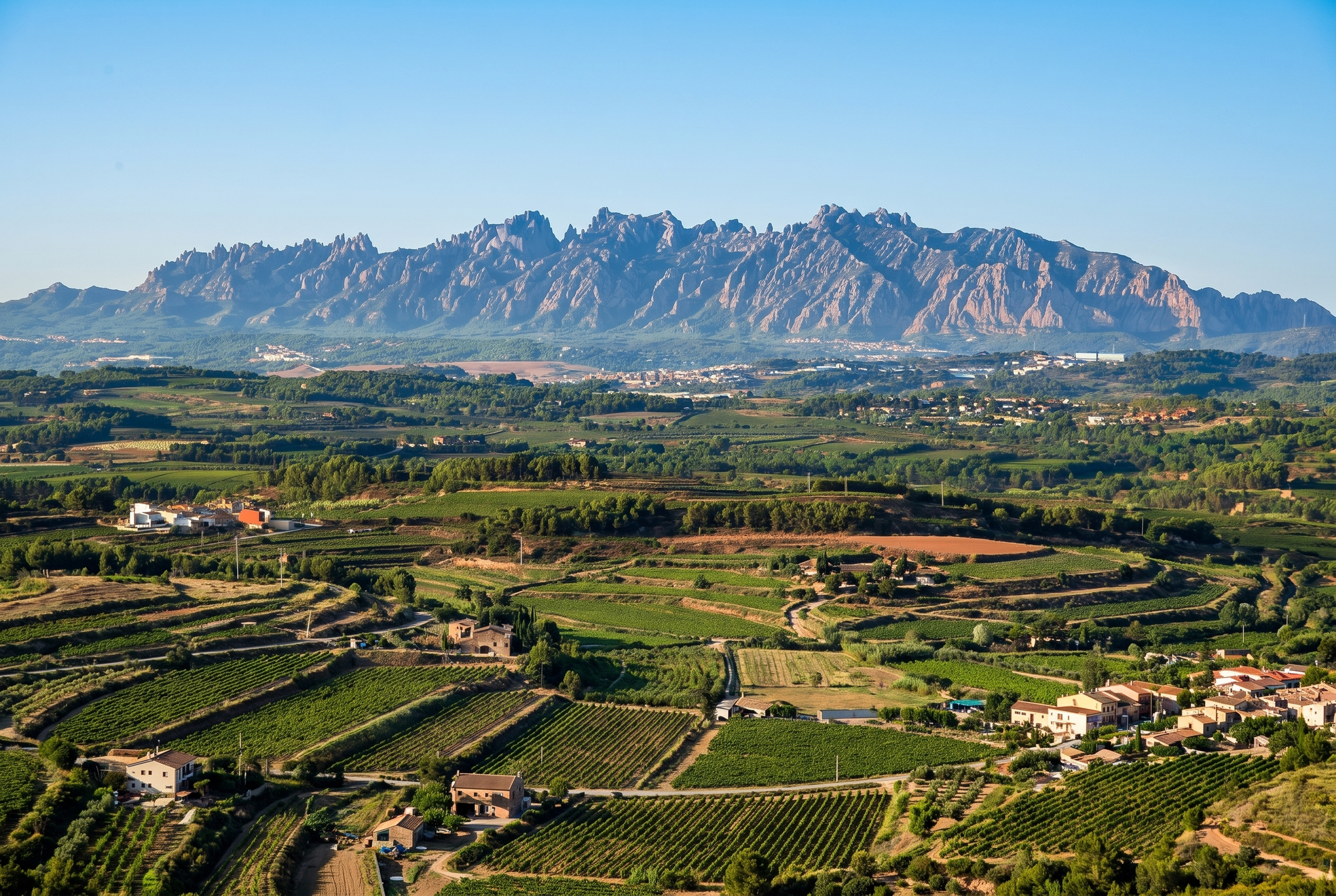
Catalonia, in Spain's northeast corner around Barcelona, packs remarkable range into one region: Cava, the country's traditional-method sparkling wine, was invented here; Priorat's slate hillsides produce some of Spain's most expensive reds; and a dozen appellations in between cover everything from seaside whites to mountain Garnacha. Most of it lies within a day trip of the city.
Country: Spain (northeast, on the Mediterranean)
Main grapes: Garnacha, Cariñena (Samsó), Xarel·lo, Macabeo, Parellada, Tempranillo (Ull de Llebre)
Signature styles: Cava sparkling wines; powerful mineral Priorat reds; Mediterranean whites
Climate: Mediterranean on the coast, more continental and extreme inland
Key appellations: DOQ Priorat, Cava, Penedès, Montsant, Empordà, DO Catalunya
Vineyard area: About 2,200 hectares (5,400 acres) planted in Priorat alone as of 2024; Penedès is far larger
2. Why It Matters
Two claims to fame. First, Cava: about 95% of it is made in Catalonia (2022 figures), centered on the Penedès town of Sant Sadurní d'Anoia, and roughly 250 million bottles a year get their bubbles the slow way, through a second fermentation inside each bottle. Second, Priorat: alongside Rioja, it is one of only two Spanish regions holding the country's highest wine rank, and its old-vine reds transformed Spain's fine-wine reputation in the 1990s, proving the country could sell wine at Bordeaux prices.
3. Land and Climate
Penedès, between Barcelona and Tarragona, enjoys a mild Mediterranean climate that ripens white grapes while keeping their acidity, exactly what sparkling wine needs. Vineyards climb from the coast to cooler inland hills, letting producers pick freshness or ripeness by altitude.
Priorat, an hour inland, is another world: an amphitheater of steep hills whose soil, called llicorella, is fractured black slate laced with quartz. The rock stores daytime heat, reflects light onto the grapes, and holds almost no water, so roots dig many feet down. Rainfall is a meager 16 to 24 inches (400 to 600 millimeters) a year and slopes are too steep for machines. Yields are among Europe's lowest, and the wines concentrate accordingly: dense fruit with a warm, stony edge.
4. Grapes and Styles
Sparkling: Cava is made by the traditional method, the Champagne technique in which a finished white wine referments in the bottle, trapping carbon dioxide, then rests on its lees (spent yeast), which adds bready, nutty depth. The classic blend is three local whites: Macabeo for freshness, Xarel·lo for body, Parellada for finesse. Styles run from bone-dry Brut Nature to sweet.
Reds: Priorat blends old-vine Garnacha and Cariñena (locally Samsó) into full-bodied wines with black fruit, licorice, and a smoky mineral streak; alcohol is generous, tannins (the grippy compounds from grape skins) firm. Yields from the old terraces are so low that a single vine may give less than a bottle. Neighboring Montsant makes a similar style for less money, and honestly it is the smarter buy for everyday drinking. Empordà, near the French border, offers juicy Garnacha reds and rosés.
Whites beyond Cava include still Xarel·lo and Garnacha Blanca, increasingly fashionable with sommeliers, plus saline coastal whites from Alella. Sweet fortified Garnacha survives in Empordà and Tarragona as a link to the region's past.
5. Reading the Label
Catalan bottles carry a DO (Denominación de Origen, a regulated region); "DO Catalunya" covers the whole territory, while Priorat's "DOQ" (Qualificada) marks Spain's top tier. On Priorat labels, "Vi de Vila" plus a village name means all grapes came from that village, a step up in specificity.
On Cava, aging defines quality tiers: plain Cava (labeled Cava de Guarda) rests at least 9 months on its lees; Reserva at least 18; Gran Reserva at least 30; and Cava de Paraje Calificado, from a single named site, at least 36. Sweetness terms run from Brut Nature (no added sugar) through Brut to Semi-Seco. Corpinnat and Clàssic Penedès are separate labels used by quality-minded producers who left the Cava appellation.
6. A Short History
Carthusian monks at Scala Dei brought viticulture to Priorat in the 12th century. Phylloxera, the root-eating vine louse, wrecked Catalonia in the late 1800s; Penedès replanted with white grapes, fueling the Cava boom that Josep Raventós had launched in 1872. The big Cava houses built vast cellars in the modernist style of the era, cathedrals of wine beneath Sant Sadurní. Priorat lay half-abandoned until 1989, when a band of newcomers led by René Barbier and Álvaro Palacios revived its old terraces; Palacios's 1993 L'Ermita, from very old vines, became one of Spain's most sought-after reds. DOQ status followed in 2000.
Did You Know? Priorat's modern founders were so short of resources that for the 1989 to 1991 vintages five wineries pooled their grapes in one shared cellar in Gratallops and made a single wine, sold under five different labels, including the now-famous Clos Mogador and Clos Erasmus.
7. At the Table
Cava is Spain's great food sparkler: jamón, fried croquetas, oysters, sushi, even paella all work, and a Gran Reserva can carry a whole roast-chicken dinner. Serve it cold, 43 to 47°F (6 to 8°C), in a white-wine glass rather than a narrow flute to let the aromas out.
Priorat and Montsant reds want food with weight: lamb stew, grilled botifarra sausage, game, or dishes with romesco sauce. Pour them at 62 to 64°F (17 to 18°C) and decant young bottles for an hour; top Priorats evolve well for 15 years or more. Gran Reserva Cava, by contrast, needs no waiting; it is released with its age already built in, and only wants a good glass.
Links
Consell Regulador DOQ Priorat (regulatory body): https://www.doqpriorat.org/en/
DO Cava regulatory council (quality control and aging rules): https://www.cava.wine/en/origin-cava/quality-control/