

Frost can strike in any month at the world's southernmost commercial vineyards.
1. At a Glance
Chubut is Argentina's, and the world's, southern frontier of wine. Its scattered vineyards sit in central Patagonia between roughly 42°S and 45.5°S, split between green Andean valleys in the west, such as Trevelin, and the open, wind-blasted steppe around Sarmiento. Volumes are tiny and the conditions are brutal, yet the wines, taut whites, delicate Pinot Noir, and sparkling bottlings, have earned national attention in barely two decades. The INV, Argentina's national wine regulator, recorded about 120 hectares (300 acres) of wine-grape vines in 2024, up from 87 hectares in 2020, which makes Chubut one of the few Argentine regions still growing.
Country: Argentina
Main grapes: Pinot Noir, Chardonnay, Gewürztraminer, Riesling, Sauvignon Blanc
Signature styles: High-acid whites, light Pinot Noir, traditional-method sparkling wine
Climate: Cold, dry, and ferociously windy, with frost risk in every month
Key appellations: Trevelin (IG), Sarmiento, El Hoyo, Paso del Sapo
Vineyard area: About 120 hectares / 300 acres (2024, INV)
2. Why It Matters
Chubut marks the limit of the vine. No commercial vineyards on Earth grow farther from the equator, and the province has become Argentina's laboratory for genuinely cold-climate wine: low alcohol, searing acidity, aromatic precision. As a warming climate pushes wine toward the poles, this is one of the places where the industry is finding out what comes next. The province's 120 hectares amount to less than a thousandth of Argentina's vineyard, yet critics already rank its top Pinot Noir and Chardonnay among the country's best.
3. Land and Climate
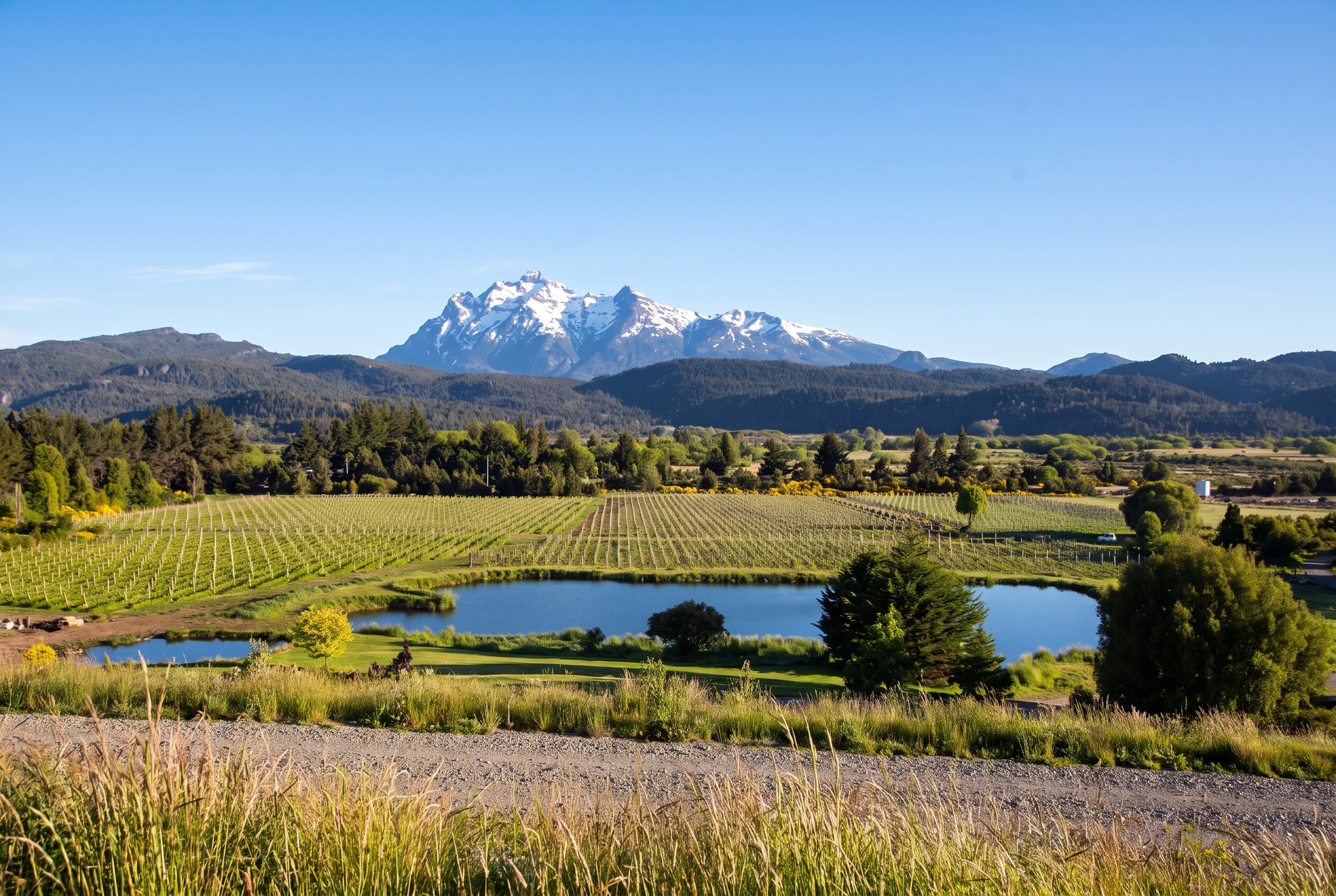
Two Chubuts make wine. Near the Andes, valleys such as Trevelin and El Hoyo, at about 43°S, receive real rainfall, up to roughly 31 inches (800 mm) a year close to the mountains, and grow vines on acidic soils formed from volcanic ash. Warmer inland pockets such as Paso del Sapo, on alluvial river soils, ripen fuller styles.
Out east on the steppe, Sarmiento sits beside Lake Musters at 45.5°S with about 8 inches (200 mm) of rain, an average annual temperature near 53°F (11.5°C), and wind that regularly tops 60 mph (100 km/h). Growers plant tree lines and wind screens and treat frost as a season-long companion rather than a spring event. The payoffs are the flip side of the punishment: wind and dry air keep vines nearly disease-free, small crops of thick-skinned grapes concentrate flavor, and the cold locks in acidity that winemakers elsewhere can only envy. Farming is correspondingly obsessive; the region's flagship estate divides its 50 hectares into micro-blocks and tends each one separately.
4. Grapes and Styles
Whites set the tone. Chardonnay is the standard-bearer, lean and chalky with citrus drive, closer to Chablis in spirit than to anything else made in Argentina. Gewürztraminer and Riesling turn the cold into perfume, floral yet bone dry, and Sauvignon Blanc comes out sharp and herbal. Pinot Noir leads the reds: pale and crunchy, full of red fruit, picked at modest ripeness, with small lots of Merlot, Malbec, and a few rows of Pinot Gris in the warmer pockets.
Then there is sparkling wine. The regional cold delivers exactly the high-acid, low-sugar base that the traditional method (a second, bubble-forming fermentation in the bottle) demands, and sparkling could well end up as Chubut's strongest suit.
Yields at the extreme sites can drop to about one pound (half a kilo) of grapes per vine, and producers tend to age in large neutral casks and concrete rather than new oak, keeping the focus on fruit and acid. Production is small everywhere; names to watch include Otronia in Sarmiento and Casa Yagüe, Contra Corriente, and Viñas del Nant y Fall around Trevelin. These are wines you hunt down, not stumble across.
5. Reading the Label
Labels here are simple because the rules are young. Trevelin holds an IG, short for Indicación Geográfica, a protected geographic indication guaranteeing grape origin; other bottles simply say Chubut or, more broadly, Patagonia. A named grape means at least 85 percent of that variety under national law. Aging terms such as “Reserva” (12 months for reds, 6 for whites) exist nationwide but rarely appear on these fresh, early-bottled wines. The vintage date tells you more than any term; in a region this marginal, years differ sharply.
6. A Short History
Welsh settlers colonized Chubut's valleys from 1865 and left the Welsh language on the map; the Trevelin winery Nant y Fall takes its name from the Welsh word for stream. They farmed wheat, though, not wine. Viticulture here is essentially a 21st-century project: scattered plantings began in the early 2000s, and the decisive push came in 2010, when the Otronia project planted some 50 hectares on the steppe at Sarmiento, harvesting its first vintage in 2017. Smaller estates followed in Trevelin's Valle 16 de Octubre, and plantings have grown steadily since (INV, 2020 to 2024).
Did You Know? The southernmost vineyard on the planet is in Chubut. Otronia's blocks near Sarmiento sit at 45.33°S, edging out the previous record holder, actor Sam Neill's Two Paddocks vineyard in New Zealand's Central Otago, which lies at 45.22°S.
7. At the Table
These wines were made for Patagonian food. Pour the Chardonnay or Riesling with lake trout, or with seafood from the province's Atlantic coast; serve them cold, at 46 to 50°F (8 to 10°C). Pinot Noir, lightly chilled to about 55°F (13°C), is the match for cordero al asador, whole lamb roasted beside the fire. The sparkling wines open a meal as well as anything on the table. Drink most bottles young, within three or four years, though the best Chardonnays can stretch to eight. Decanting is unnecessary across the range.
Links
National wine regulator (INV): https://www.argentina.gob.ar/inv
Official tourism board (Visit Argentina): https://www.argentina.travel
Wines of Argentina, Chubut profile: https://winesofargentina.org/en/provinces/chubut