

The valley that killed the cork and perfected bone-dry Riesling.
1. At a Glance
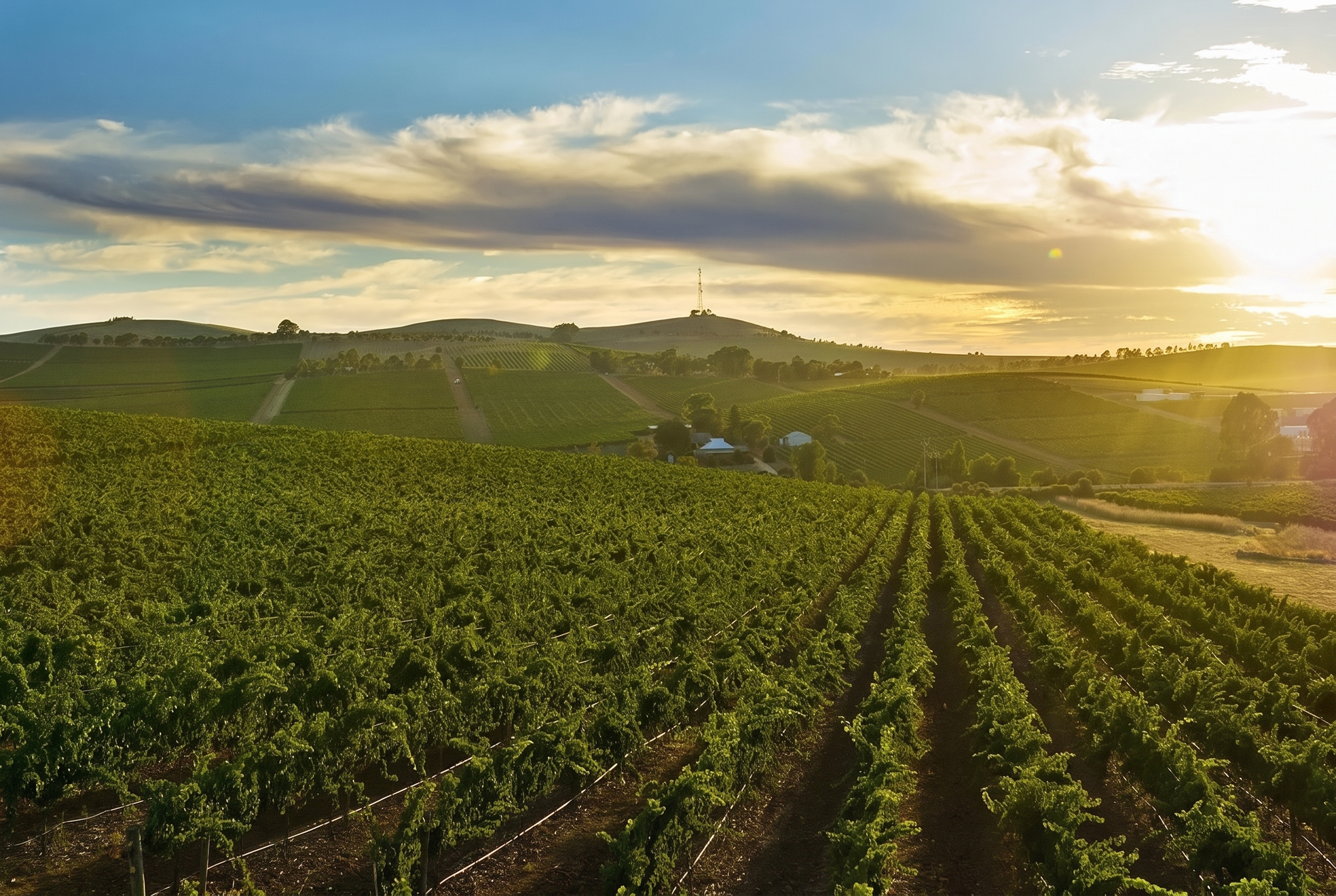
The Clare Valley is a string of high, rolling valleys about two hours' drive north of Adelaide, on the edge of South Australia's Mount Lofty Ranges. Its fame rests on dry Riesling of piercing lime and slate character, built to age 10 to 20 years, alongside sturdy Shiraz and Cabernet. In 2000 its winemakers launched the screwcap revolution that swept the wine world, one of several reasons this quiet farming district punches far above its weight.
Country: Australia
Main grapes: Shiraz, Cabernet Sauvignon, Riesling, with Grenache, Malbec, and Semillon
Signature styles: Bone-dry, long-lived Riesling; firm Shiraz; Cabernet and Cabernet-Malbec blends
Climate: Warm continental with cold nights; big day-night temperature swings
Key appellations: Clare Valley GI (registered 1999); informal districts include Watervale and Polish Hill River
Vineyard area: About 12,600 acres (5,100 hectares), 2025 industry estimates
2. Why It Matters
Clare is Australia's Riesling capital, holding roughly a third of the nation's plantings of the grape (about 2,600 acres / 1,056 hectares, mid-2020s figures), and its bone-dry style became the national benchmark: nothing like sweet German models, everything like squeezed lime over wet stone. The region also changed how the world seals wine, proving in 2000 that screwcaps preserve quality wine better than cork, a decision the rest of Australia and New Zealand adopted within a few years.
3. Land and Climate
Clare is warm by day, which surprises people who taste its nervy whites. The explanation is altitude and night air. Vineyards sit at roughly 1,300 to 1,600 feet (400 to 500 meters), and after hot afternoons, temperatures plunge, a day-night swing that can reach 27 to 36 degrees Fahrenheit (15 to 20 Celsius). Cold nights lock acidity into the grapes, so Riesling ripens fully yet stays razor-fresh. Low humidity keeps disease pressure minimal, and winter-dominant rainfall leaves the growing season largely dry.
Soils split the Riesling map in two. Around Watervale, red loam over limestone gives generous, floral, citrus-blossom wines that drink well early. In the Polish Hill River district, hard slate and shale yield something sterner and stonier that unwinds slowly over years; tasting the two side by side is the region's best geology lesson. The warmth, meanwhile, ripens Shiraz, Cabernet, and Malbec into firm, structured reds.
4. Grapes and Styles
Riesling is the calling card, though Shiraz actually covers more ground. Expect a pale, bone-dry white, meaning residual sugar so low you taste none, around 11 to 12.5 percent alcohol, with lime, lemon, and a mineral bite. Young, it is a whetstone; with 10 or more years it develops honeyed, toasty notes that critics compare to buttered toast and lime marmalade, all without a splinter of oak. Grosset, Jim Barry, and the Jesuit-founded Sevenhill are reference producers. For my money it is the best-value ageable white wine Australia makes.
Shiraz here is firmer and less opulent than Barossa's, with dark berries, dried herbs, and grippy structure that rewards a few years in bottle. Cabernet Sauvignon is statuesque, and the local specialty of blending it with Malbec, of which Clare has one of Australia's few meaningful plantings, produces plush, long-aging reds. Grenache, Semillon, and a little Pinot Gris fill out the picture. Almost everything, red and white, goes under screwcap, and has since the early 2000s.
5. Reading the Label
"Clare Valley" is a Geographical Indication, or GI, Australia's legally defined region system, registered in 1999; the name requires at least 85 percent Clare fruit, and the same 85 percent minimum applies to any stated variety or vintage. District names like Watervale and Polish Hill River are not official subregions, but producers use them on labels as meaningful style signals: Watervale for generosity, Polish Hill River for austerity and longevity.
Virtually all Clare Riesling is dry unless the label says otherwise; terms like "off-dry" or a stated sugar level flag the exceptions. A screwcap is the norm and no indicator of cheapness here. Museum or "aged release" Rieslings, sold at 5 to 10 years old, let you skip the cellaring wait.
6. A Short History
Settlement came in the 1840s, with John Horrocks planting vines near Penwortham in 1840 and Jesuit priests founding Sevenhill Cellars, still operating, in 1851 to make sacramental wine. Riesling rose to prominence in the mid-20th century as the region's white specialty. The defining modern moment came in 2000, when more than a dozen producers, led by Jeffrey Grosset, collectively bottled their Rieslings under screwcap to escape cork taint, a move that reshaped global packaging.
Did You Know? The screwcap revolution started here. In 2000, Clare's leading producers, tired of cork taint spoiling roughly one bottle in twenty, jointly commissioned new bottles and caps from French manufacturers and switched their premium Rieslings en masse, a world first that New Zealand, then much of the wine world, quickly copied.
7. At the Table
Young Clare Riesling with its lime-and-acid snap is tailor-made for Thai and Vietnamese food, fresh oysters, ceviche, and grilled whiting; serve well chilled, 46 to 50 degrees Fahrenheit (8 to 10 Celsius). Aged Riesling, toastier and rounder, suits roast chicken, pork belly, and washed-rind cheeses, a few degrees warmer, where its developed aromas open up. No decanting is ever needed for Riesling, and the screwcap means no anxious sniffing of corks either. The Shiraz and Cabernet-Malbec reds want lamb, beef, or game at 61 to 64 degrees Fahrenheit (16 to 18 Celsius), and young bottles do benefit from an hour in a decanter, the wide-bottomed carafe that softens firm tannin with air.
softens firm tannin with air.
Links
Official regional body (Clare Valley Wine & Grape Association): https://clarevalleywine.com.au/
Wine Australia regional story: https://www.wineaustralia.com/whats-happening/stories-of-australian-wine/september-2016/australias-clare-valley-brilliance-and-beauty