

Wine from a near-desert, watered by a giant river and built by Ice Age floods.
1. At a Glance
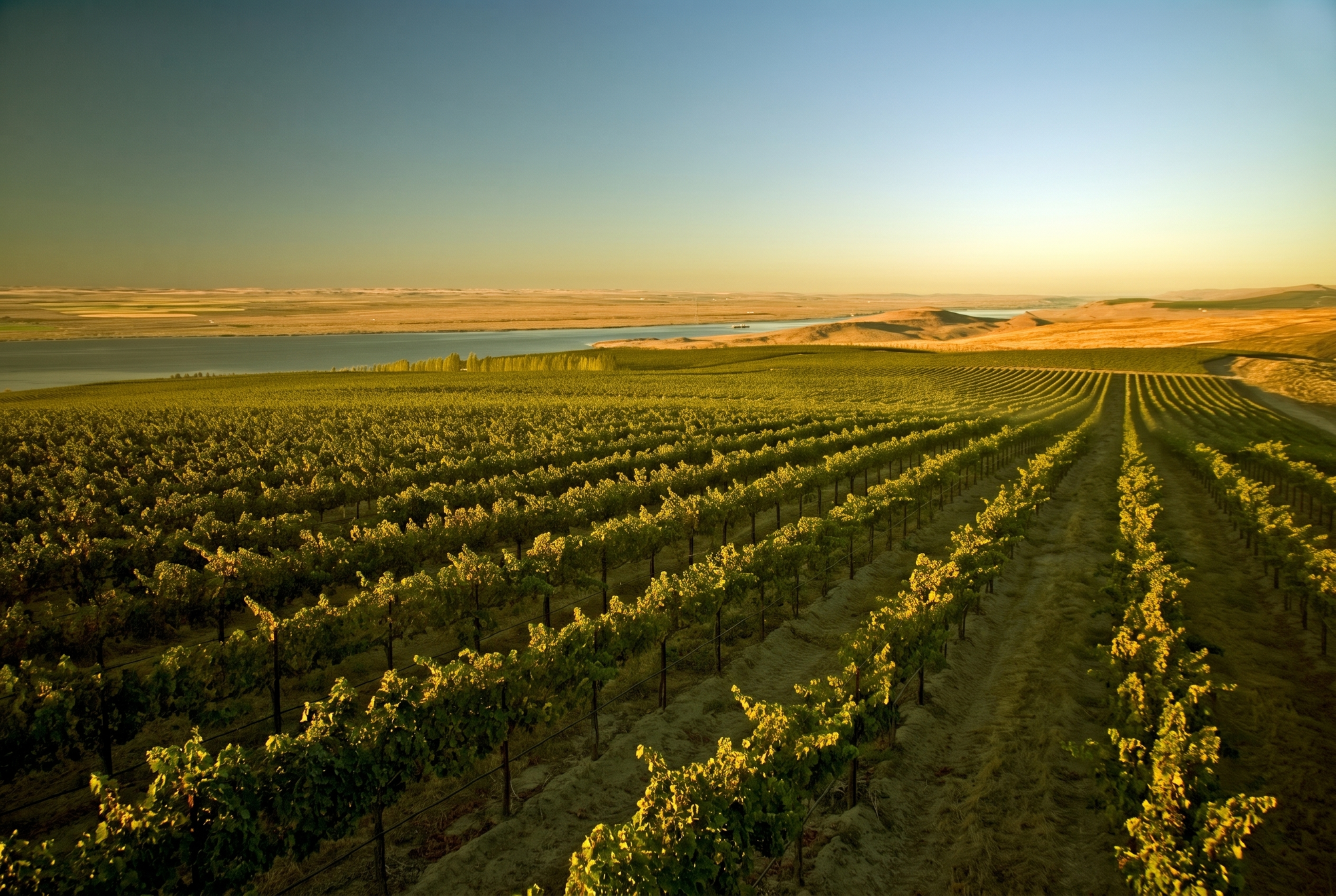
The Columbia Valley is an 11-million-acre (4.5-million-hectare) basin covering a quarter of Washington State, with a small extension across the Columbia River into northern Oregon. It holds over 99 percent of Washington’s wine grapes, yet parts of it get less rain than some deserts. Irrigation from the Columbia River turns that liability into control, and the result is consistently ripe, fresh, affordable wine.
Country: United States
Main grapes: Cabernet Sauvignon, Riesling, Chardonnay, Merlot, Syrah
Signature styles: Fruit-forward Cabernet and Merlot with firm acidity; dry and off-dry Riesling; Syrah
Climate: Continental high desert in the Cascade rain shadow; hot days, cold nights, 6 to 12 inches (15 to 30 cm) of rain
Key appellations: Columbia Valley AVA and its nested AVAs, including Yakima Valley, Red Mountain, Horse Heaven Hills, and Walla Walla Valley
Vineyard area: About 60,000 acres (24,300 hectares) statewide as of 2024, nearly all within the AVA
2. Why It Matters
The Columbia Valley made Washington the second-largest premium wine producer in the United States after California. Its trick is combining ripeness with freshness: wines here carry California-style fruit but keep the acidity and structure of cooler European regions. Because land and grapes cost far less than in Napa, the valley has also become America’s most reliable source of serious wine under 25 dollars. Nearly every bottle of Washington wine you have ever seen, from supermarket staples to cult Cabernets, starts with fruit grown somewhere in this basin.
3. Land and Climate
The Cascade Mountains wall off Pacific weather, leaving the valley with as little as 6 to 8 inches (15 to 20 centimeters) of rain a year. Vines cannot survive on that, so nearly every vineyard is irrigated from the Columbia, Snake, and Yakima rivers. Growers decide exactly when and how much the vines drink, which means small vintage variation and steady quality.
The soils are a gift from catastrophe. About 15,000 years ago, the Missoula Floods swept through and left layers of gravel and silt, later topped with wind-blown dust called loess. These deep, sandy, fast-draining soils are hostile to phylloxera, the root-eating insect that forces most of the world to graft vines onto resistant roots, so many Washington vines grow on their own roots.
Sitting near 46 degrees north, the valley also enjoys roughly two more hours of summer daylight than California wine country, while cold nights lock in acidity. Winter is the flip side of the bargain: occasional deep freezes can damage vines, which is one reason growers favor hardy varieties and careful site selection.
4. Grapes and Styles
Reds lead. Cabernet Sauvignon is the flagship: dark cherry and blackcurrant fruit, dusty tannin, and brighter acidity than Napa’s, at a fraction of the price. Merlot performs better here than almost anywhere in America, plummy but firm. Syrah is the insider’s pick, ranging from juicy to smoky and meaty, especially from warm sites like Red Mountain.
Whites are the quiet strength. Riesling grows superbly, in styles from bone dry to lightly sweet, always with racy acidity, and Washington Riesling remains one of the best values in American white wine. Chardonnay and Sauvignon Blanc are clean and fruit-driven. Because the valley is so large, its nested AVAs matter: Red Mountain means powerful reds, Yakima Valley leans cooler and more varied, and Horse Heaven Hills supplies some of the state’s top Cabernet. Expect clean, precise fruit across the board, because the dry air keeps vineyards nearly free of the rot and mildew that plague wetter regions.
5. Reading the Label
“Columbia Valley” on a label means at least 85 percent of the grapes came from this AVA, the federally defined growing region; because the AVA is enormous, that name signals reliable quality rather than a specific taste. Smaller nested names such as “Red Mountain” or “Horse Heaven Hills” follow the same 85 percent rule and tell you much more about style. There are 18 of these smaller appellations inside the Columbia Valley as of 2024, so expect the roster on labels to keep growing.
A grape name guarantees at least 75 percent of that variety under federal rules. Since the AVA crosses into Oregon, you may see the same appellation on wines from either state. “Reserve” carries no legal meaning in the United States.
6. A Short History
Scientist Walter Clore of Washington State University spent the mid-1900s proving that European wine grapes could thrive in this near-desert, and federal dam projects like Grand Coulee supplied the irrigation water. The Columbia Valley became an official AVA in 1984, when the region had barely 6,600 acres (2,700 hectares) of wine grapes. Plantings have grown roughly ninefold since, and the state now counts over 1,000 wineries (2024).
Did You Know? Most Columbia Valley vines grow on their own natural roots, something almost unheard of in the wine world. The valley’s sandy flood soils repel phylloxera, the root-eating pest that forces growers nearly everywhere else to graft their vines onto resistant American rootstocks.
7. At the Table
Columbia Valley Cabernet and Merlot are built for the grill: steak, lamb burgers, or Washington’s own Wagyu-style beef, where firm tannin meets fat. Serve reds at 60 to 65°F (16 to 18°C); most drink well on release, though top Cabernets from Red Mountain reward a decade in the cellar and an hour in a decanter when young.
Riesling is the food chameleon. Dry versions handle oysters and trout; off-dry ones are the best answer on the table to spicy Asian dishes. Serve whites well chilled, around 45 to 50°F (7 to 10°C).
Links
State wine institute (Washington State Wine Commission): https://www.washingtonwine.org
Oregon trade resource for the AVA (Oregon Wine Board): https://trade.oregonwine.org/resources/columbia-valley/
Federal AVA regulator (TTB): https://www.ttb.gov/regulated-commodities/beverage-alcohol/wine/american-viticultural-area-ava