

Napoleon's deathbed request was a sweet wine from these Cape Town slopes.
1. At a Glance
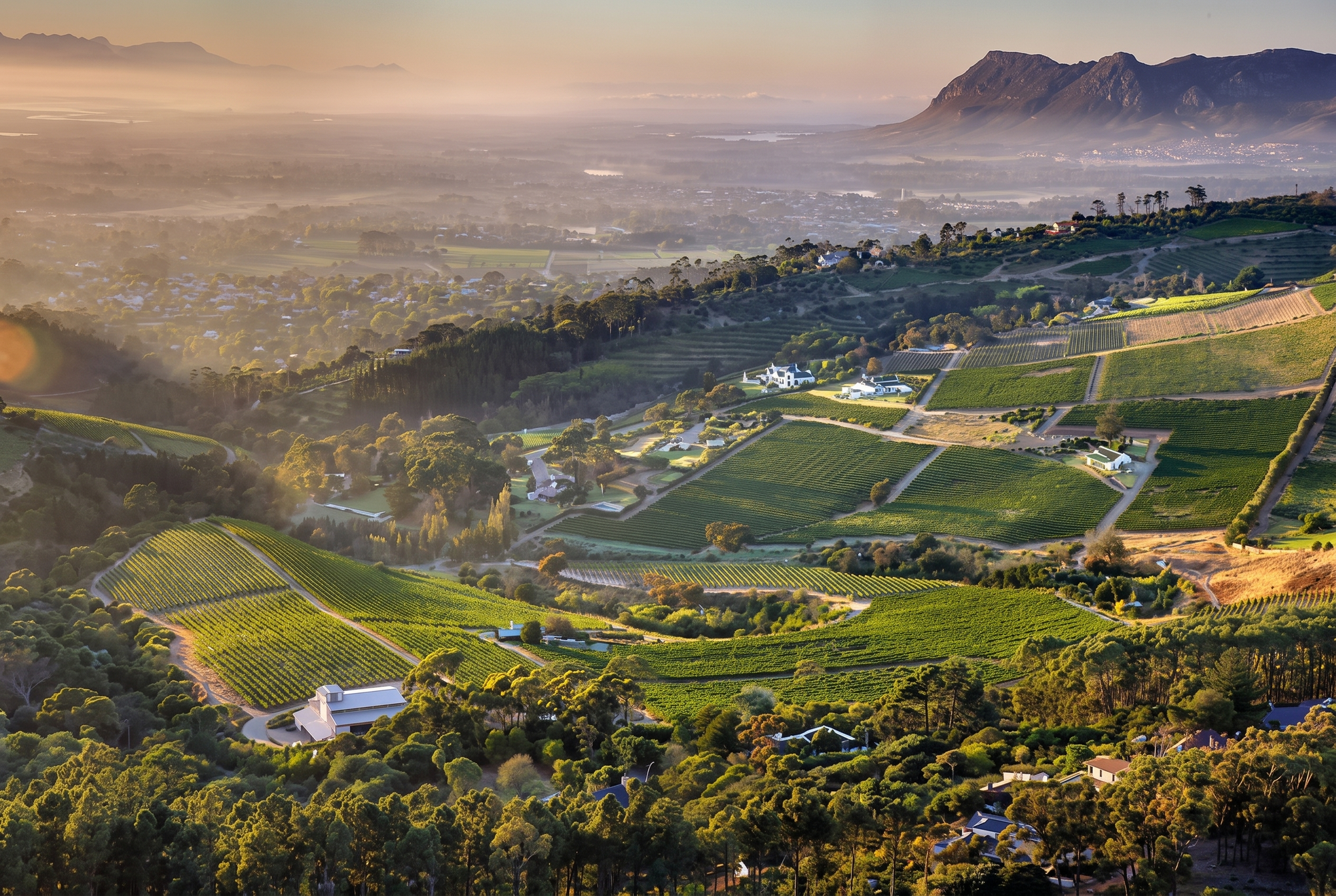
Constantia is a pocket of vineyards inside metropolitan Cape Town, draped over the eastern slopes of the Constantiaberg mountain about 20 minutes from the city center. It is where South African wine began in 1685, and where one of history's most coveted sweet wines was made. Today fewer than a dozen estates farm here, squeezed between forest, suburb, and mountain, and cool-climate Sauvignon Blanc pays the bills. Because the vineyards sit inside the city, this is one of the few places in the world where a serious wine region is a 20-minute drive from an international airport.
Country: South Africa
Main grapes: Sauvignon Blanc, Semillon, Chardonnay, Muscat de Frontignan, Cabernet Sauvignon, Merlot
Signature styles: Zesty Sauvignon Blanc, Bordeaux-style reds, naturally sweet Muscat in the Vin de Constance mold
Climate: Cool maritime; ocean influence on two sides
Key appellations: Wine of Origin Constantia, a ward within the Cape Town district
Vineyard area: No stand-alone figure is published; the whole Cape Town district, which contains the Constantia ward, held about 6,200 acres (2,500 hectares) in 2024 (SAWIS)
2. Why It Matters
Constantia gave South Africa its founding wine estate and its first international icon. In the 18th and 19th centuries the sweet Muscat known as Constantia, or Vin de Constance, was shipped to the courts of Europe and name-checked by Jane Austen and Charles Dickens; kings paid more for it than for the great sweet wines of France. The modern revival of that wine, alongside sharply made Sauvignon Blanc, keeps this tiny ward on the world map.
3. Land and Climate
Geography makes Constantia the coolest of the Cape's famous districts. The vineyards climb the Constantiaberg, a spur of the Table Mountain range, with some plantings reaching about 1,300 feet (400 meters) on slopes that rank among South Africa's steepest. False Bay sits a few miles east and the Atlantic lies over the mountain to the west, so sea breezes arrive from two directions. Add afternoon mountain shade and grapes ripen slowly, holding the tart acidity that defines the whites. The constant southeasterly wind also stresses the vines, pushing roots deeper into the decomposed granite soils, which drain freely and hold enough nutrients without excess vigor. Rainfall runs higher than in the inland districts, so irrigation matters little. Slow ripening, cool nights, granite: that recipe delivers pungent, mineral Sauvignon rather than tropical softness.
4. Grapes and Styles
Sauvignon Blanc dominates the plantings and sets the house style: grass, green fig, citrus, and a flinty edge, with more nerve than most warm-country versions. Semillon, sometimes blended with Sauvignon as in white Bordeaux, adds waxy weight, and Chardonnay does well on higher sites. The reds are elegant rather than massive; Cabernet Sauvignon and Merlot make fragrant, medium-to-full Bordeaux-style blends, and a defensible opinion is that they are the most underrated wines in the ward. The historic specialty is naturally sweet Muscat de Frontignan. "Naturally sweet" means the grapes shrivel on the vine until their sugar concentrates, and fermentation stops on its own; no brandy is added, unlike Port. The modern benchmark, Klein Constantia's Vin de Constance, revives the recipe that made the valley famous: apricot, orange peel, and spice held together by bright acidity. Several neighboring estates now make their own naturally sweet Muscats in the same spirit, so the style is a regional revival rather than a single producer's trick.
5. Reading the Label
Look for "Wine of Origin Constantia" or "W.O. Constantia." Under South Africa's Wine of Origin system, the 1973 government certification scheme for geographic origin, Constantia is a ward, the smallest type of demarcated area, sitting inside the Cape Town district. A ward name guarantees 100 percent of the grapes grew there. A named variety or vintage must account for at least 85 percent of the blend. "Estate Wine" means one registered property grew, made, and bottled the wine. The famous sweet wines carry brand names such as Vin de Constance rather than a legal category, so check the back label for the ward. The government certification seal over the capsule confirms the claims were audited. One caution: "Constantia" also appears in producer names and street addresses around Cape Town, so the Wine of Origin statement is the only part of the label that legally ties the grapes to these slopes.
6. A Short History
In 1685 Governor Simon van der Stel was granted the vast Constantia farm and planted vines. After his death in 1712 the property was split, creating the estates known today as Groot and Klein Constantia. Under the Cloete family from 1778, the sweet Muscat became a European sensation. Phylloxera, a root-eating vine louse, and mildew destroyed the vineyards in the late 1800s, and wine here nearly vanished beneath the growing city. Replanting in the 1980s brought the ward back, including the first new Vin de Constance vintage in 1986.
Did You Know? Napoleon Bonaparte, exiled on the island of St. Helena from 1815, had Constantia wine shipped to him regularly, and accounts of his final days in 1821 record that he asked for a glass of it on his deathbed while refusing almost everything else.
7. At the Table
Constantia Sauvignon Blanc is built for the Cape's cold-water seafood: oysters, mussels, or grilled snoek, the local line fish. Serve it at 45 to 48 degrees Fahrenheit (7 to 9 Celsius) and drink it young, within three or four years. The Bordeaux-style reds suit roast duck or leg of lamb at 62 Fahrenheit (17 Celsius) and take well to a short decant. The sweet Muscats are the flexible ones: pour them at 50 to 54 Fahrenheit (10 to 12 Celsius) with blue cheese, apricot tart, or nothing at all. Well-stored bottles of the sweet wine can age for several decades.
Links
Constantia Wine Route (producers' association): https://constantiawineroute.com
Wines of South Africa (national promotion body): https://www.wosa.co.za
SAWIS (industry statistics and Wine of Origin administration): https://www.sawis.co.za