

A granite bowl ringed by mountains gave Portugal its flagship grape, Touriga Nacional.
1. At a Glance
The Dão is a high granite plateau in north-central Portugal, sheltered on nearly every side by mountains and named for the river that crosses it. The demarcated area spreads across 16 municipalities around the old cathedral city of Viseu. Its wines are the country's counterpoint to southern ripeness: firm, fragrant reds built to age and whites of unusual poise. This was the first Portuguese region formally demarcated for unfortified wine, back in 1908.
Country: Portugal
Main grapes: Touriga Nacional, Tinta Roriz, Jaen, Alfrocheiro (red); Encruzado (white)
Signature styles: Elegant, structured reds; age-worthy Encruzado whites
Climate: Temperate with continental swings; cold, wet winters, hot, dry summers
Key appellations: DOC Dão with seven subregions
Vineyard area: About 20,000 hectares (49,000 acres) as of the mid-2020s
2. Why It Matters
The Dão is where Touriga Nacional, the grape behind Port and the flag-bearer of Portuguese reds, originated. It is also home to Encruzado, a strong candidate for the country's finest white grape. After decades lost to a state-imposed cooperative system, the region has re-emerged as the source of Portugal's most graceful, terroir-driven table wines, a revival led by small estates in the countryside around Viseu, Nelas, and Mangualde.
3. Land and Climate
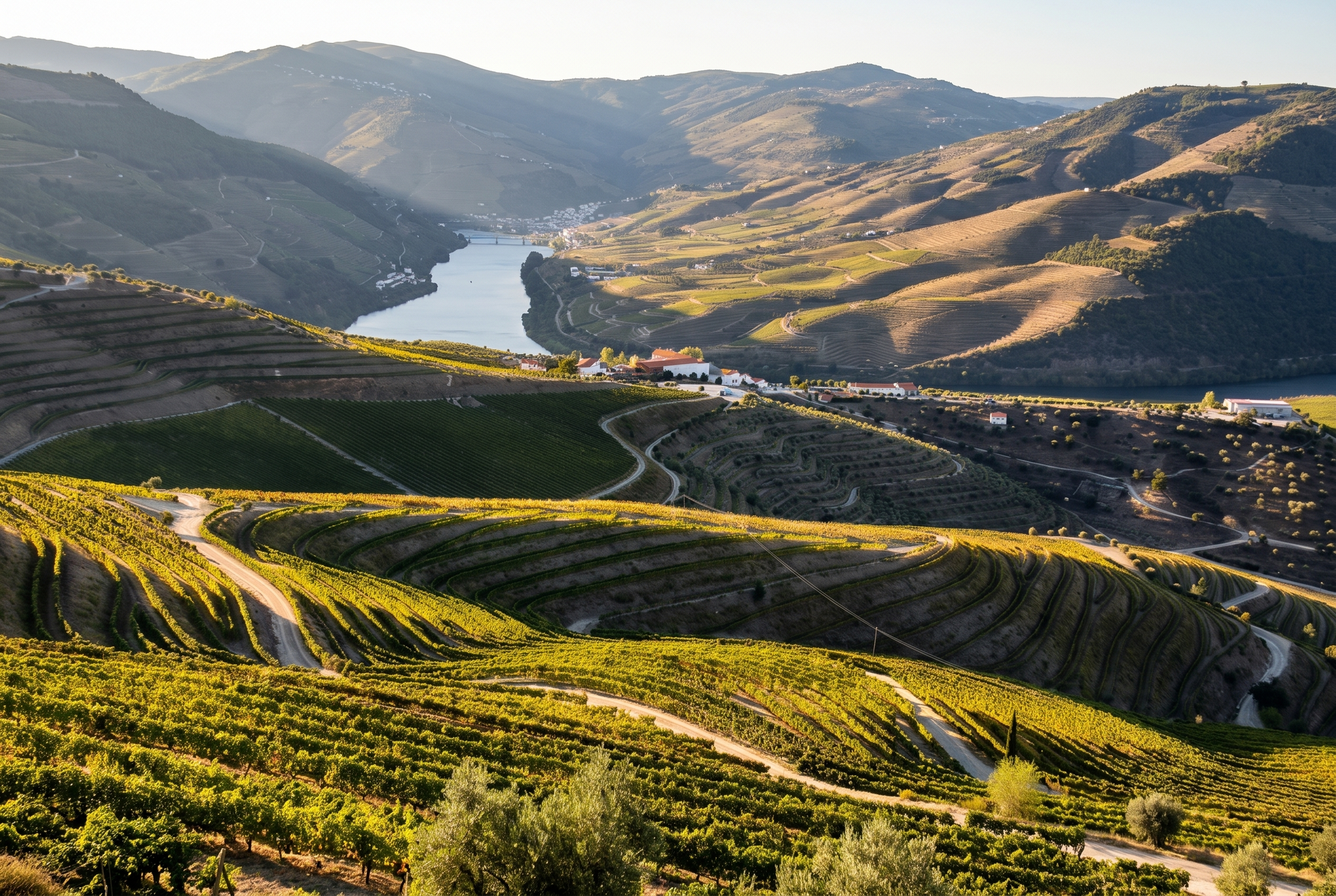
Mountains define everything. The Serra da Estrela, mainland Portugal's highest range at nearly 6,500 feet (2,000 meters), blocks weather from the southeast; the Serra do Caramulo screens out the Atlantic to the west; the Serra da Nave closes the north. Inside this bowl, vineyards sit at roughly 650 to 2,600 feet (200 to 800 meters) among pine forest and granite boulders, and the seasons swing hard: summer afternoons can pass 104°F (40°C) while winter nights drop below freezing.
The shelter brings hot, dry summers; the altitude brings cold nights that preserve acidity. Winters are cold and wet, refilling the water table before the dry season. Vineyards sit scattered among pine and eucalyptus forest along the valleys of the Dão and Mondego rivers rather than carpeting the hills. Soils are poor, sandy, granite-derived, and they keep yields low and flavors focused. The consequence in the glass is the Dão paradox: wines from a warm summer that still taste cool, with fine tannins, lifted floral aromas, and a faintly stony edge.
4. Grapes and Styles
About four-fifths of production is red, almost always a blend. Touriga Nacional leads with violet perfume, dark fruit, and structure; appellation rules require a minimum of 20 percent of it in every DOC red. Tinta Roriz (Tempranillo) adds body, Jaen (Spain's Mencía) adds juicy red fruit, and Alfrocheiro adds color and silk. Young Dão reds are firm and reserved; give them five years and they turn aromatic and fine-boned. The best last decades. The style has also changed for the better: the harshly extracted reds of the 1990s, undrinkable without a decade of patience, have given way to gentler winemaking that shows the granite rather than the press.
The white story is Encruzado, grown almost nowhere else and documented under that name for less than a century, with Bical and Malvasia Fina in supporting roles in the blends. It manages weight and freshness at once: citrus and white flowers young, then nutty, textured depth with age or careful oak, in the manner of fine white Burgundy. Encruzado deserves a place among Europe's great white grapes, and it will not stay this affordable forever.
Sparkling wine and rosé exist, but they are footnotes. The heart of the matter is the red blend and Encruzado, and a producer who does both well is worth following across vintages.
5. Reading the Label
"DOC Dão" (Denominação de Origem Controlada, the controlled appellation) is the designation on nearly every serious bottle. Seven subregion names, such as Serra da Estrela or Silgueiros, may appear alongside it.
"Reserva" signals a wine judged a cut above, usually with more aging. "Garrafeira" is stricter: at least 13 percent alcohol and a minimum of two years in oak for reds. A grape name on the label, "Touriga Nacional" or "Encruzado," means a varietal bottling, a practice the region pioneered in the 1990s. "Branco" is white, "Tinto" is red. One warning from experience: cheap cooperative-era Dão still exists on bottom shelves around the world, and the producer's name separates the old region from the new one faster than any legal term.
6. A Short History
Demarcated in 1908, the Dão was Portugal's first legally defined region for unfortified wine. From the 1940s, the Salazar government forced production through cooperatives with exclusive rights to the grapes; quality stagnated for a generation. The rules fell in 1979 as Portugal moved toward Europe, and after EU entry in 1986 independent estates returned, replanting noble varieties and reclaiming the region's name. DOC status followed in 1990.
Did You Know? Touriga Nacional, the most celebrated grape in Port and in Portuguese red wine generally, is native to the Dão. The grape that made the Douro famous grew up here first, on granite, at altitude.
7. At the Table
Dão reds are food wines with the acidity to prove it. The classic match is queijo da Serra da Estrela, the buttery raw sheep's-milk cheese from the neighboring mountains; the wine's freshness slices through it. Roast kid (cabrito assado), lamb, mushroom dishes, and the region's smoked sausages also work, with softer Jaen a natural for charcuterie boards. Serve reds at 61°F (16°C) and decant young Touriga Nacional for an hour. Encruzado, at 50 to 54°F (10 to 12°C), pairs with salt cod, octopus, and roast chicken, and a good one improves for a decade in a cool cellar.
Links
Regulatory body (CVR Dão): https://www.cvrdao.pt/en/
Official tourism board: https://www.visitportugal.com