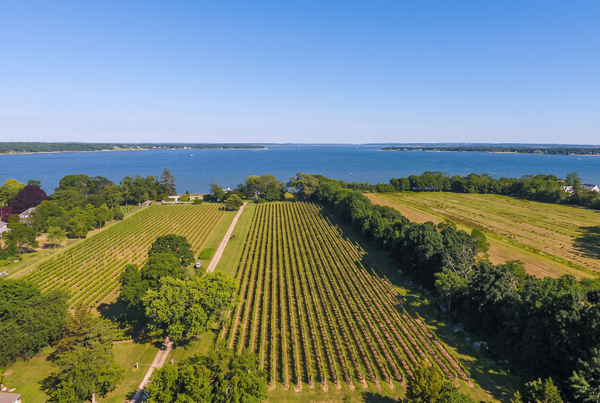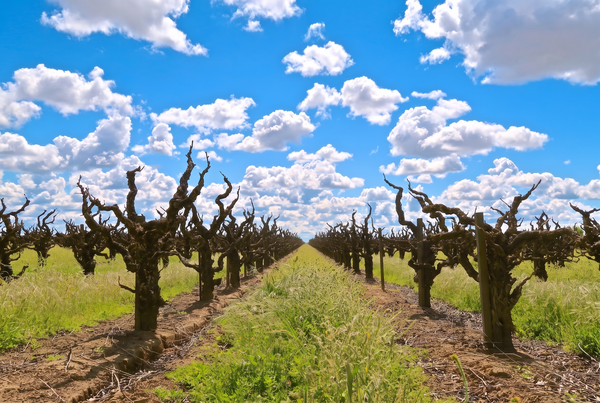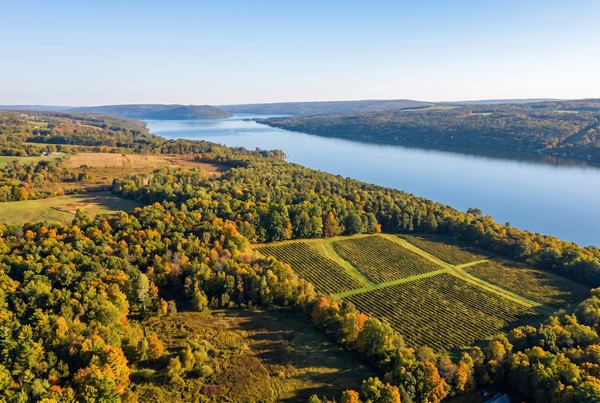


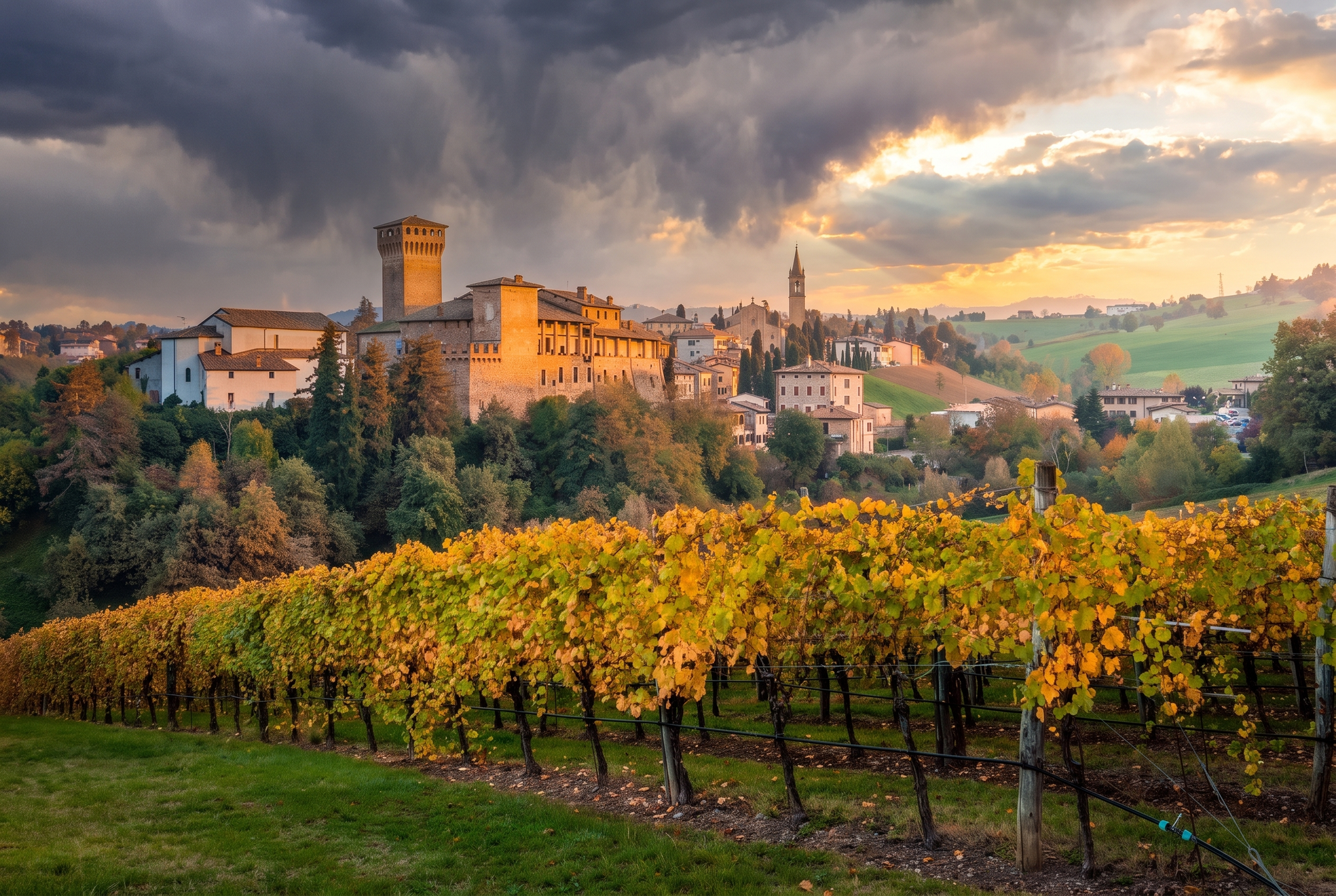
The home of Italy's most misunderstood wine, fizzy red Lambrusco, and its first white DOCG.
1. At a Glance
This long region stretches across north-central Italy, from Piacenza near Milan to the Adriatic beaches of Rimini. Two halves, two personalities: Emilia in the west makes sparkling Lambrusco; Romagna in the east builds its wines on Sangiovese and the white grape Albana.
Country: Italy
Main grapes: Lambrusco (several varieties), Sangiovese, Albana, Trebbiano
Signature styles: Sparkling red, dry red, dry and sweet white
Climate: Continental inland, milder toward the Adriatic coast
Key appellations: Lambrusco (several DOCs), Romagna DOC, Romagna Albana DOCG
Vineyard area: About 53,000 hectares registered (Istat, 2024 harvest)
2. Why It Matters
Emilia-Romagna is Italy's food heartland, home of Parmigiano-Reggiano, prosciutto di Parma, and balsamic vinegar. Its wines are built to go with that food. Lambrusco, the sparkling red, is the region's calling card and one of Italy's most-exported wines, even if its reputation abroad still suffers from the sweet, industrial versions of the 1970s.
3. Land and Climate
The region is dominated by the flat, fertile Po Valley plain, which is why it out-produces almost every other Italian region by volume. Flat land and rich soil mean high yields, and much of the plains fruit becomes easy, everyday wine. The quality story lives in the hills. In Romagna, the Apennine foothills rise toward Tuscany, giving Sangiovese the slopes and drainage it needs to make structured reds. The best Albana grows on a band of chalky, fossil-rich soil called the Spungone that runs through these hills; that limestone gives the wine its backbone. Adriatic breezes cool the eastern vineyards and keep the whites fresh. The takeaway: plains for volume, hills for character.
4. Grapes and Styles
Sparkling reds. Lambrusco is not one grape but a family of them, made into a lightly fizzy red using the tank method (a second fermentation in a pressurized steel tank, which keeps it fresh and fruity). Styles run from bone-dry to sweet. A good dry Lambrusco is purple, frothy, tart with red berries, and made to cut through fatty food.
Reds. Sangiovese di Romagna is the same grape as Chianti's, here often softer and earlier-drinking, though hillside sub-zones produce serious, savory reds.
Whites. Albana is the local specialty, a white with unusual grip and even light tannin. It comes dry, semi-sweet, and as a honeyed passito (made from grapes dried to concentrate their sugar). Pignoletto, a crisp sparkling or still white, is the everyday pour around Bologna.
5. Reading the Label
The word to decode first is "Lambrusco," which is always followed by a place: Lambrusco di Sorbara is lighter and pinker, Lambrusco Grasparossa di Castelvetro is darker and fuller. On the sweetness scale, look for "secco" (dry), "amabile" (off-dry), or "dolce" (sweet), because the difference is huge. In Romagna, "Romagna DOC" covers the reds and everyday whites; the grape name follows. "Romagna Albana DOCG" is the top-tier white. Recent labels increasingly show a sub-zone name (like Bertinoro or Predappio for Sangiovese), a sign the region is pushing toward single-place identity rather than generic blends.
6. A Short History
Lambrusco's modern fame, and its image problem, came from the 1970s and 1980s, when sweet, mass-market versions flooded export markets and sold by the tanker-load. The backlash was inevitable, but it obscured the region's real tradition of dry, food-friendly fizz, which serious growers have spent the last two decades restoring. Romagna's turn came later, as producers stopped chasing volume and started treating Sangiovese and Albana as wines worth taking seriously.
Did You Know? Albana was the first white wine in all of Italy to be granted DOCG status, the country's highest quality tier, back in 1987. The decision was controversial at the time; critics called the wine unworthy. Its producers have spent the years since proving them wrong.
7. At the Table
Dry Lambrusco is one of wine's great food partners. Its bubbles and acidity slice through the region's rich cooking: cured meats, Parmigiano, lasagne, tortellini in broth. Serve it cool, around 54°F (12°C), and never bother decanting; freshness is the point. It is made to drink young. Albana handles fuller dishes and, in its passito form, blue cheese and dessert. Sangiovese di Romagna suits grilled meats and tomato-based pasta; serve at about 64°F (18°C).
Links
Regulatory body (Consorzio Tutela Lambrusco): https://www.tutelalambrusco.it
Official tourism board: https://emiliaromagnaturismo.it/en