

French refugees planted this valley in 1688, and it still throws a Bastille festival.
1. At a Glance
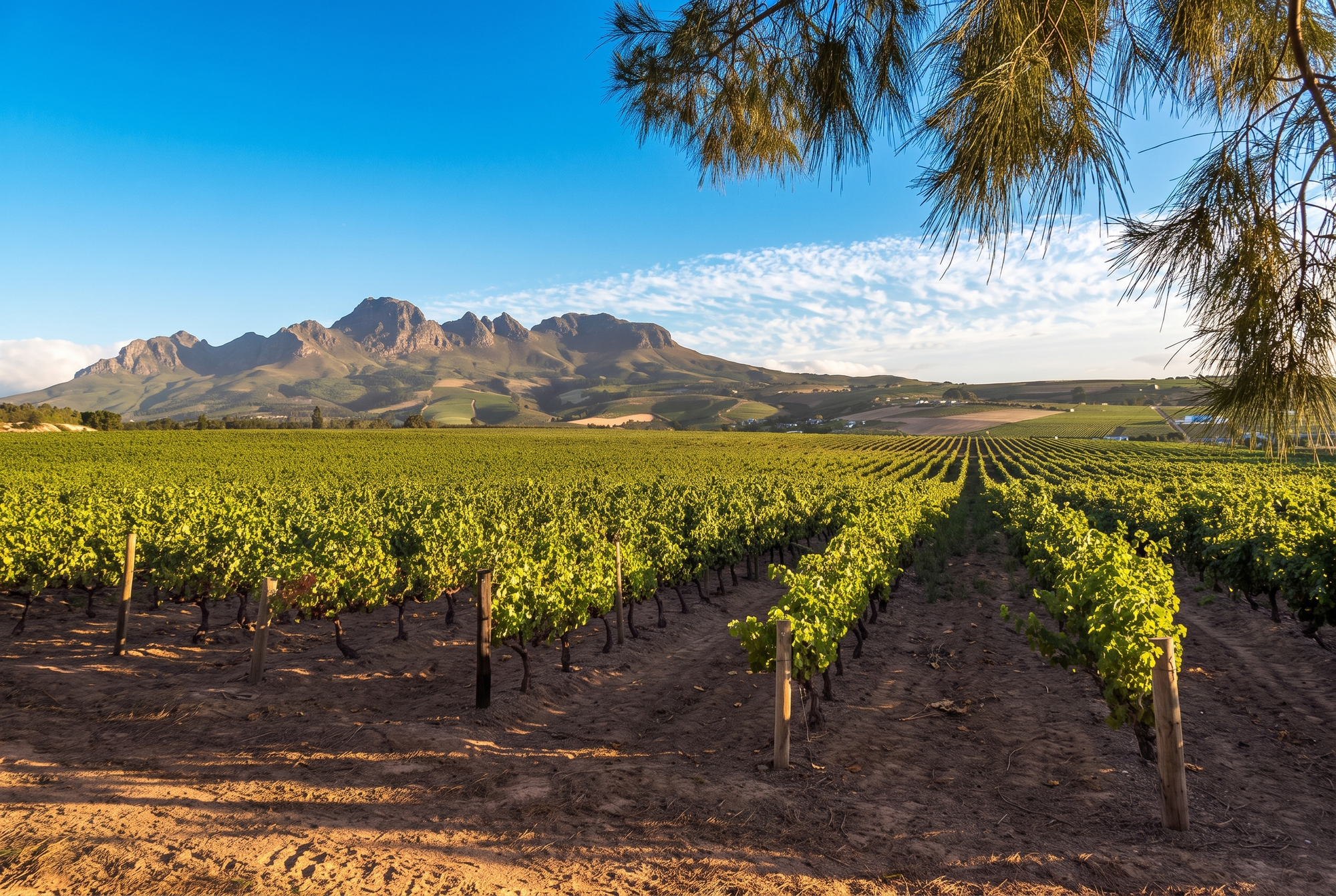
Franschhoek is a small, enclosed valley about 45 miles (75 kilometers) east of Cape Town, walled in on three sides by mountains. French Huguenot refugees settled it in 1688, and the name is Dutch for "French corner." Today the valley trades on that heritage with polished estates, the country's densest collection of fine restaurants, and a specialty in bottle-fermented sparkling wine. Around 50 wineries work the valley, from centuries-old Huguenot farms to boutique sparkling houses, and a hop-on wine tram shuttles visitors between them. Wine here comes wrapped in food: the village bills itself as South Africa's culinary capital.
Country: South Africa
Main grapes: Cabernet Sauvignon, Syrah (Shiraz), Sauvignon Blanc, Chardonnay, Semillon, Chenin Blanc, Pinot Noir
Signature styles: Cap Classique sparkling wine, Bordeaux-style reds, old-vine Semillon
Climate: Mediterranean; a warm valley floor with cooler mountain slopes
Key appellations: Wine of Origin Franschhoek Valley, a district of the Coastal Region since 2010
Vineyard area: About 3,100 acres (1,254 hectares) as of 2019 (Decanter regional profile)
2. Why It Matters
Franschhoek punches far above its size. With little more than one percent of South Africa's vineyards as of 2019, it supplies an outsized share of the country's image abroad: Cap Classique sparkling wine houses, luxury estates such as Boschendal and La Motte, and Boekenhoutskloof, one of the Cape's most acclaimed producers. It is also the survival story of the country's oldest Semillon vines, some planted over a century ago.
3. Land and Climate
The valley is an amphitheater. The Groot Drakenstein, Franschhoek, and Wemmershoek mountains enclose it on three sides, and the Berg River rises here before flowing out toward Paarl. That bowl shape matters twice over. The sheltered floor, on sandy alluvial soils left by the river, warms quickly and ripens Cabernet Sauvignon and Syrah fully. The slopes, on decomposed granite with pockets of sandstone, sit higher, catch mountain shade, and stay cool enough for Chardonnay, Semillon, and Pinot Noir, the grapes behind the sparkling wines. Rain is plentiful by Cape standards because the mountains trap winter storms, so young vines establish easily. Fast-draining sand below, cool granite above: the split explains how one small valley can make both plush reds and tense, citrusy bubbles.
4. Grapes and Styles
Start with the bubbles. Cap Classique is South Africa's term for sparkling wine made the Champagne way, with a second fermentation inside the bottle that traps the fizz; the French name is protected, so the Cape coined its own. Franschhoek is the style's showcase, with a dedicated Cap Classique route of more than twenty producers, mostly blending Chardonnay and Pinot Noir into dry, biscuity wines. Among still whites, Semillon is the historic grape, and the valley farms some of the oldest Semillon vines in the country; expect lanolin, lemon, and beeswax flavors that deepen for a decade. Sauvignon Blanc and Chardonnay are the volume whites, the former grassy and brisk from cooler slopes, the latter often barrel-fermented into lime-and-lemon styles with gentle oak. Reds center on Cabernet Sauvignon and Syrah, generally polished and full, with Pinot Noir claiming cooler corners for still wine as well as fizz. One opinion, freely admitted: old-vine Semillon, not the sparkling wine, is the most distinctive thing in the valley, and it deserves more attention than it gets.
5. Reading the Label
"Wine of Origin Franschhoek Valley" ("W.O. Franschhoek Valley") guarantees that 100 percent of the grapes grew in the valley; the Wine of Origin system is the government certification scheme South Africa has run since 1973, and Franschhoek has been a stand-alone district within it since 2010, after decades as part of Paarl. One practical warning: several famous Franschhoek-based brands buy grapes from elsewhere and legally label those wines "W.O. Western Cape," so the address on the front does not always match the vineyards. Check the origin statement, not the postcard scenery. As everywhere in South Africa, a named variety or vintage must be at least 85 percent of the blend, an "Estate Wine" was grown, made, and bottled on one registered property, and the numbered certification seal over the capsule confirms the claims were audited.
6. A Short History
Around 200 French Huguenots, Protestant refugees fleeing persecution after France revoked their religious protections, were granted farms here from 1688. They brought winegrowing know-how, and their farm names, such as La Motte and Cabrière, survive on labels today. The valley spent the 20th century as a quiet ward of Paarl, then gained its own district status in 2010, just as its food-and-wine tourism boom took off.
Did You Know? Every July, Franschhoek throws a full Bastille Festival for France's national day, complete with tricolor flags, berets, and boules, more than three centuries after its founding families left France. It is probably the biggest Bastille Day party in the Southern Hemisphere.
7. At the Table
Cap Classique is the aperitif, and its brisk acidity also loves oysters, sushi, and, in the local habit, fried chicken. Serve it at 43 to 46 degrees Fahrenheit (6 to 8 Celsius). Old Semillon suits butter-sauced line fish or roast pork at around 50 Fahrenheit (10 Celsius) and gains complexity for ten years or more in bottle. The Cabernets and Syrahs handle braised lamb shank at 62 to 64 Fahrenheit (17 to 18 Celsius); decant the young ones for an hour. Vintage-dated Cap Classique, unlike most fizz, rewards a few years of extra cellaring, and the local restaurants will happily prove every one of these pairings for you.
Links
Franschhoek Wine Valley (official tourism and producers' body): https://franschhoek.org.za
Wines of South Africa (national promotion body): https://www.wosa.co.za
SAWIS (industry statistics and Wine of Origin administration): https://www.sawis.co.za