

Atlantic rain, granite soils, and a white grape saved by a village festival.
1. At a Glance
Galicia occupies Spain's green northwest corner, above Portugal, where the Atlantic delivers more rain than anywhere else in the country's wine map. Its five appellations produce Spain's most celebrated whites, led by Albariño from Rías Baixas, plus mountain-grown reds from river canyons so steep the locals call the farming heroic.
Country: Spain (northwest coast, north of Portugal)
Main grapes: Albariño, Godello, Treixadura, Mencía
Signature styles: Crisp, saline whites; fresh, floral mountain reds
Climate: Cool, wet, Atlantic-dominated; drier and more continental inland
Key appellations: Rías Baixas, Ribeiro, Ribeira Sacra, Valdeorras, Monterrei
Vineyard area: About 4,200 hectares (10,400 acres) in Rías Baixas alone as of 2023
2. Why It Matters
Albariño changed how the world sees Spanish white wine. Thirty years ago Spain meant red; today Rías Baixas Albariño, bright, peachy, and sea-salty, is a fixture on wine lists from New York to Tokyo, and the appellation's vineyard has grown from a few hundred hectares in the 1990s to about 4,200 by 2023, farmed by roughly 5,000 growers. Inland, Godello whites and Mencía reds from Ribeira Sacra and Valdeorras have become the darlings of sommeliers hunting freshness, and prices for the best bottlings have started to climb accordingly.
3. Land and Climate
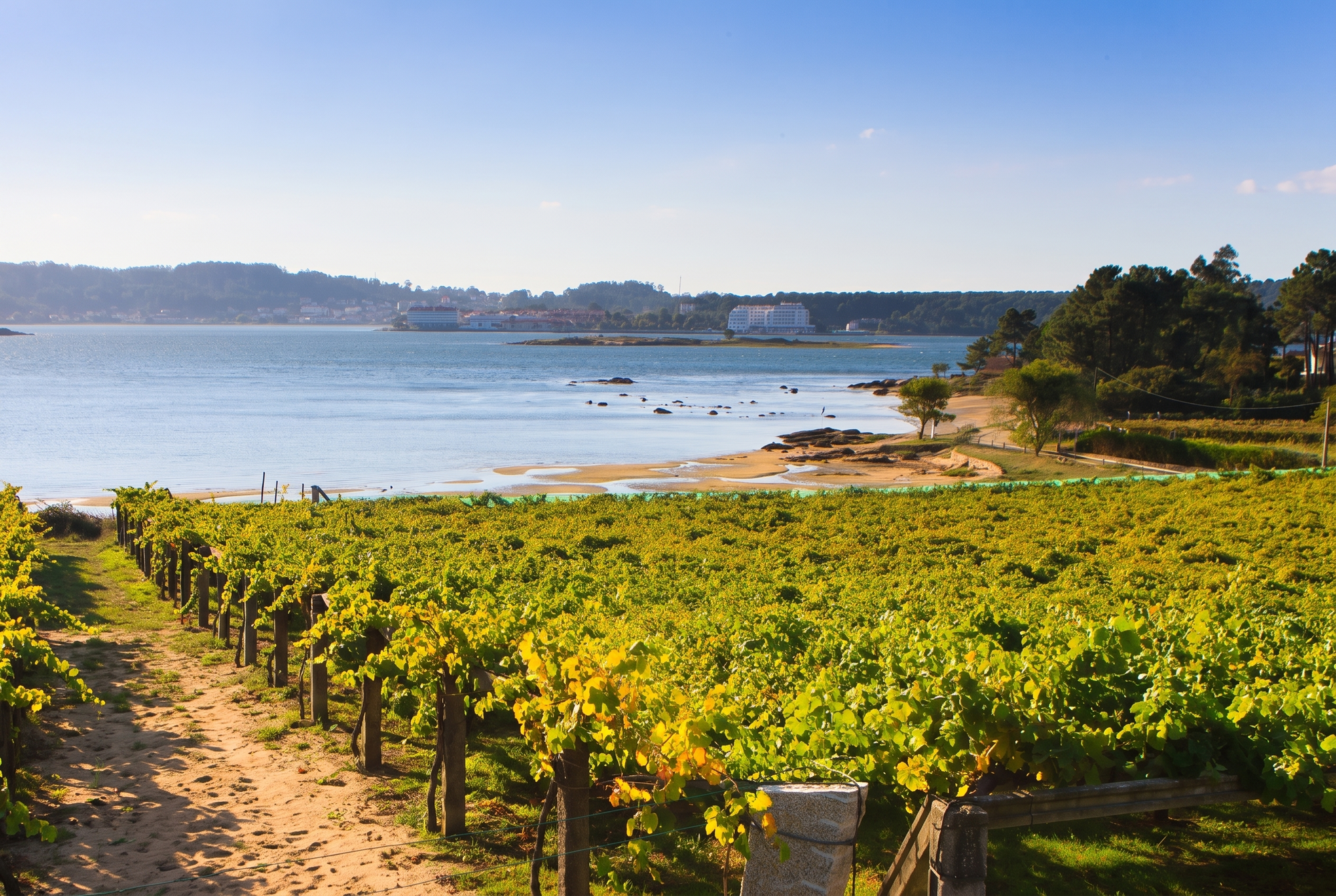
Rain defines the coast. Rías Baixas receives roughly 55 to 63 inches (1,400 to 1,600 millimeters) a year, among the wettest totals of any wine region in Spain. Humidity breeds rot, so growers train vines onto stone-pillared pergolas, overhead trellises that lift the grapes into the drying breeze. The payoff for all that water is wines of low alcohol and electric acidity.
Soils are mostly decomposed granite, which drains fast and adds the salty, stony bite Galician whites are known for. Holdings are minuscule: Rías Baixas splits its vines among more than 22,500 plots (2023), many the size of a backyard. Move inland along the Miño and Sil rivers and the climate turns warmer and drier: in Ribeira Sacra, vines cling to terraces first cut in Roman times on canyon walls too steep for machinery. Valdeorras, in the far east, mixes slate and granite, giving Godello its firm, mineral spine.
4. Grapes and Styles
Whites rule. Albariño makes up about 94% of Rías Baixas plantings (2023): expect white peach, lime, and a saline finish, sometimes enriched by lees aging, which means resting the wine on its spent yeast for creamier texture. Ribeiro blends Treixadura with local partners into floral, gently honeyed whites. Godello, from Valdeorras, is rounder and stonier than Albariño, closer to white Burgundy in build; to my taste it is Galicia's most underrated wine, and the one collectors will chase in a decade.
Reds are a small but growing story. Mencía, the key grape of Ribeira Sacra and Monterrei, gives pale-to-medium reds with raspberry, violets, and wet-stone freshness, usually 12 to 13% alcohol. Rare local reds like Caíño and Espadeiro, tangy and light, are worth trying chilled.
Nearly everything is dry; a little traditional-method sparkling Albariño exists too, and Rías Baixas even makes a trickle of red, barely 1 to 5% of output, usually served chilled. Alcohol across the region stays moderate, often 11 to 13%, which makes these some of Spain's most refreshing bottles.
5. Reading the Label
Galicia's five DOs (Denominación de Origen, Spain's regulated wine regions) each behave differently, so the region name is your best clue: Rías Baixas means Albariño country; Valdeorras usually means Godello or Mencía; Ribeira Sacra means Mencía.
Within Rías Baixas, a subzone such as Val do Salnés (the coolest, saltiest zone) or O Rosal (blends with Loureira and Caíño Blanco) may appear on the label. "Sobre lías" means aged on the lees for extra texture. Aging terms like Crianza are rare here; vintage freshness is the selling point, and the vintage date matters more than any aging category. Producer names count too, since holdings are tiny and quality varies house by house.
6. A Short History
Monasteries along the Camino de Santiago pilgrim routes shaped Galician wine in the Middle Ages, and Ribeiro exported widely as early as the 16th century. Phylloxera, the root-destroying vine louse, and rural emigration then gutted the vineyards, and high-yield grapes replaced native ones. Recovery began in the 1970s and 80s: Valdeorras won its DO in 1977 and launched a clonal study in 1985 to identify its best old Godello vines, and replanting of native grapes spread. Rías Baixas won DO status in 1988, and its boom has pulled the rest of Galicia upward since.
Did You Know? Albariño was rescued by a party. The Festa do Albariño, started by friends in Cambados in 1953 and now Galicia's oldest gastronomic festival, made a then-obscure local grape famous; in 1999 Galicia still had barely 200 hectares of it, against thousands today.
7. At the Table
This is seafood wine, full stop. Albariño with steamed mussels, oysters, or pulpo á feira (paprika-dusted octopus) is one of Europe's great regional pairings: the wine's salinity echoes the shellfish brine. Godello handles richer plates like hake in green sauce or roast chicken. Mencía, served slightly cool at about 57°F (14°C), suits Galicia's empanadas, cured meats, and the cocido stews of the inland winter.
Chill whites to 45 to 50°F (7 to 10°C). Drink most Albariño within three years, though good lees-aged bottlings and Godello improve for five or more. Decanting is unnecessary. Entry-level bottlings from the large cooperatives are widely exported, so this is an easy region to explore without a specialist shop.
Links
Consejo Regulador DO Rías Baixas (regulatory body): https://doriasbaixas.com/en/
Wines from Spain (ICEX) Rías Baixas profile: https://www.foodswinesfromspain.com/content/icex-foodswines/en/wine/regions/green-spain/rias-baixas-do.html