

New Zealand's oldest wine region built its best reds on a riverbed exposed in 1867
At a Glance
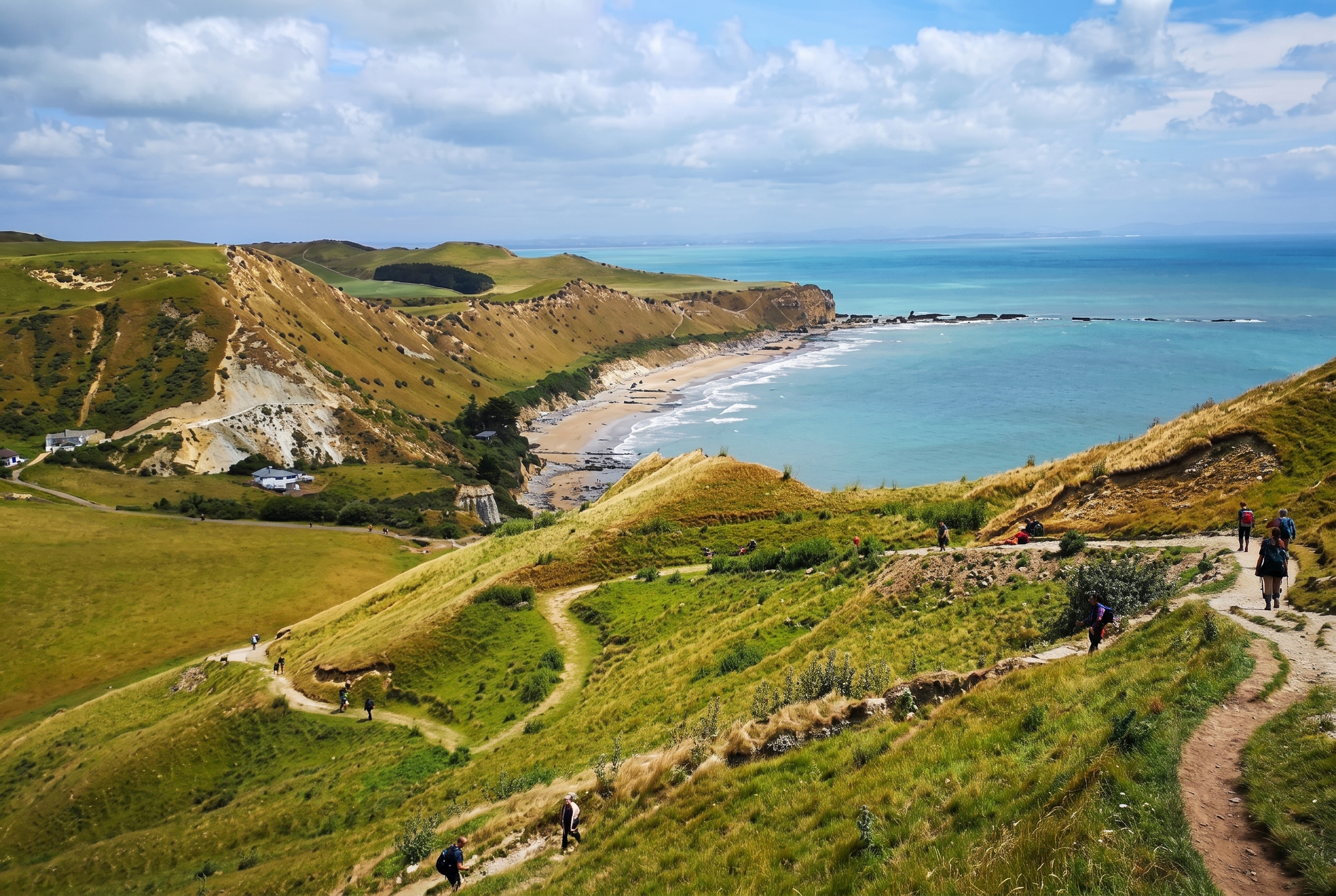
Hawke's Bay curves around the east coast of the North Island, centered on the twin cities of Napier and Hastings. Vines have grown here since 1851, longer than anywhere else in New Zealand. Today it is the country's second-largest wine region and its main source of full-bodied red wine and serious Chardonnay. The vineyards fan across river plains and hillsides between the sea and the ranges, a short drive from Napier's Art Deco waterfront.
Country: New Zealand
Main grapes: Chardonnay, Sauvignon Blanc, Merlot, Pinot Gris, Syrah, Cabernet Sauvignon
Signature styles: Merlot- and Cabernet-based red blends; peppery Syrah; rich Chardonnay
Climate: Warm, sunny maritime
Key appellations: Hawke's Bay GI; Gimblett Gravels and Bridge Pa Triangle districts
Vineyard area: About 11,300 acres (4,574 hectares) in 2024
Why It Matters
If Marlborough is New Zealand's white-wine engine, Hawke's Bay is its red-wine answer. This is where the country proves it can ripen Merlot, Cabernet Sauvignon, and Syrah to international standard, and where its most ambitious Chardonnays grow. In 2023 the region joined the Great Wine Capitals network as its twelfth member, alongside Bordeaux and Napa Valley.
Land and Climate
The region is one of New Zealand's warmest and sunniest, sheltered from westerly weather by inland ranges and open to the Pacific in the east. Its defining feature is a mosaic of soils across the Heretaunga Plains, and the consequences pour straight into the glass. The Gimblett Gravels, a former bed of the Ngaruroro River exposed by a flood in 1867, hold deep greywacke gravel under almost no topsoil. The stones store daytime heat and drain instantly, so vines struggle, berries stay small, and the reds come out dark and firm, built to age. Next door, the Bridge Pa Triangle layers loam over iron-rich gravel; its reds are softer and plusher. Cooler coastal and hillside sites keep acidity high, and that is where the sharpest Chardonnay grows.
Grapes and Styles
Reds. Merlot, about 2,080 acres (844 hectares) in 2024, anchors the region's Bordeaux-style blends, meaning wines assembled from Merlot, the Cabernets, and Malbec in the manner of Bordeaux. Expect dark plum, cedar, and firm tannin, the drying grip that gives a red wine its structure. Syrah, about 780 acres (317 hectares), delivers black pepper, violets, and medium weight, closer to France's Rhone Valley than to Australian Shiraz. Syrah, not the blends that made the region's name, is now its most exciting red. Cabernet Sauvignon, about 430 acres (174 hectares) in 2024, and Malbec play supporting parts, prized for the backbone and dark fruit they bring to blends.
Whites. Chardonnay is the largest single planting at about 2,555 acres (1,034 hectares) in 2024, ripe with peach and grapefruit and usually fermented in barrel. Sauvignon Blanc here is rounder and less pungent than Marlborough's. Pinot Gris, about 1,620 acres (656 hectares), fills the soft, fruity middle ground, and small plantings of Viognier and Albarino appear at ambitious cellar doors, the tasting rooms where wineries sell directly.
Reading the Label
'Hawke's Bay' is the registered Geographical Indication (GI), a protected place name that guarantees origin but says nothing about quality or method. At least 85 percent of a wine's region, variety, and vintage must match whatever the label claims. 'Gimblett Gravels' is different: a trademark owned by the district's growers rather than a government appellation. Using it requires that 95 percent of the grapes come from the roughly 2,000-acre (800-hectare) soil-defined district. 'Bridge Pa Triangle' works the same way as a producers' district. One practical tip: vintages differ more here than in most of New Zealand, because autumn rain is the recurring threat, so the year on the label matters. None of these district names guarantees quality; they guarantee place. The producer and the vintage still tell you more.
A Short History
French Marist missionaries planted vines in 1851, and the Mission Estate winery that grew from their work still operates, the country's oldest. Te Mata and Church Road followed in the late nineteenth century. The modern era began in 1981, when Chris Pask planted vines on the stony Gimblett land, then considered close to worthless. Growers formed the Gimblett Gravels association in 2001; the Hawke's Bay GI was registered in 2018. The region absorbed a heavy blow in 2023, when Cyclone Gabrielle flooded parts of the plains, yet that same year brought its Great Wine Capital recognition.
Did you know? The Gimblett Gravels district is drawn around a soil boundary rather than roads or town lines, which its growers believe made it the first wine district outside Europe defined strictly by soil type. Before vines arrived in 1981, the land was being mined for gravel.
At the Table
Syrah and lamb is the local axiom; a peppered rack makes the wine's spice ring. The Merlot and Cabernet blends want char-grilled beef, venison, or aged cheddar. Decant young reds for about an hour and serve them at 60 to 64 F (16 to 18 C); the top blends improve for a decade or more. Chardonnay pairs with roast chicken, crayfish, and cream sauces at 50 to 54 F (10 to 12 C), and the best bottles age well for eight years. Syrah also flatters game birds and peppered venison; save the biggest blends for the richest dishes on the table.
Links
Hawke's Bay Winegrowers (regional body): https://hawkesbaywine.co.nz
Hawke's Bay Tourism (official): https://www.hawkesbaynz.com
Gimblett Gravels Winegrowers Association: https://thegimblettgravels.com