

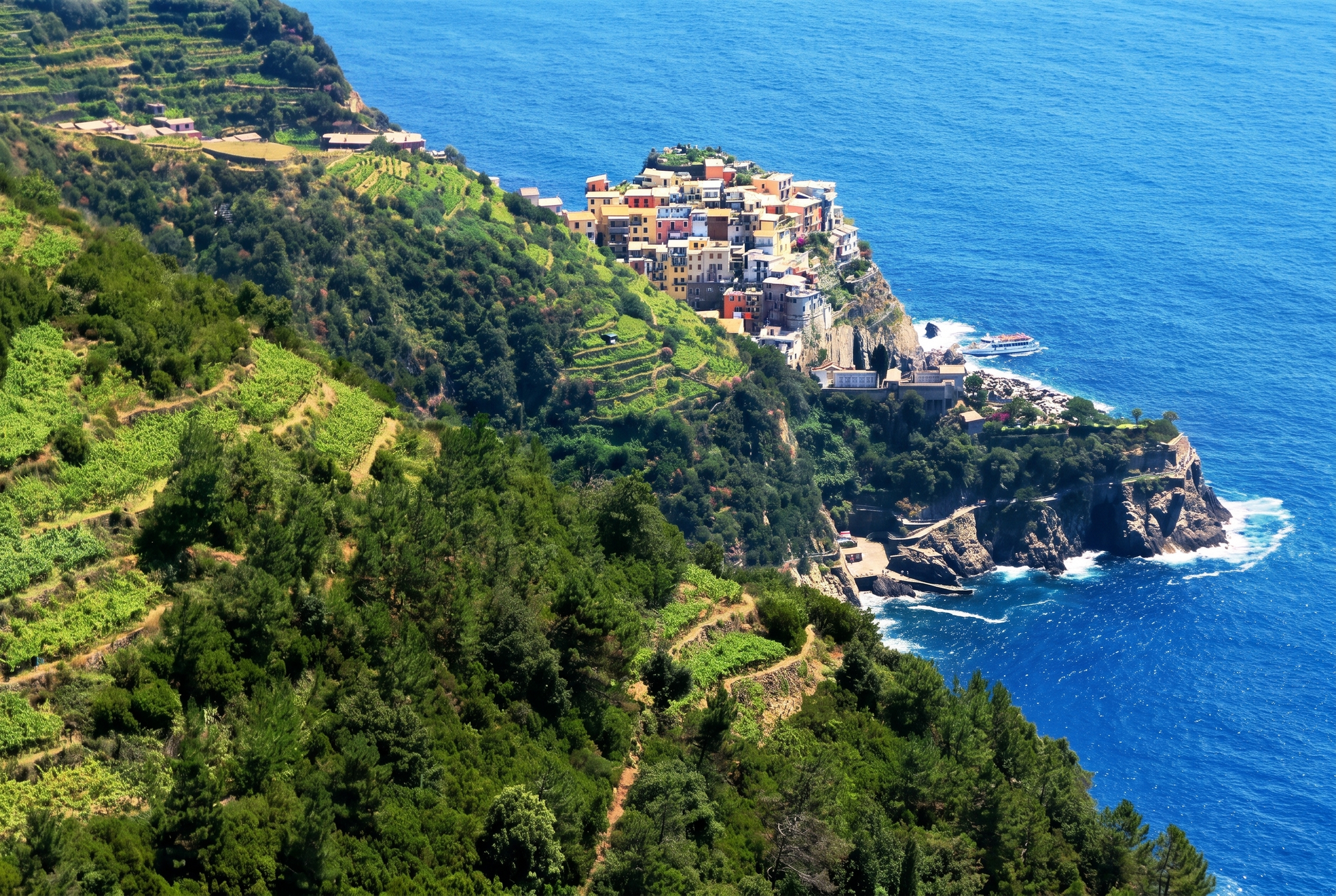
A sliver of coast so steep that vineyards need funicular rail and terraces built by hand.
1. At a Glance
Liguria is the thin crescent of coast around Genoa, the Italian Riviera. It is one of Italy's smallest wine regions and one of its hardest to farm, with tiny plots wedged onto cliffs above the sea. The wines, mostly whites, are made to drink beside the local seafood.
Country: Italy
Main grapes: Vermentino, Pigato, Rossese, Bosco, Albarola
Signature styles: Crisp coastal white, light aromatic red
Climate: Mediterranean, strongly moderated by the sea
Key appellations: Cinque Terre DOC, Rossese di Dolceacqua DOC, Riviera Ligure di Ponente DOC
Vineyard area: About 1,800 hectares registered (Istat, 2024 harvest)
2. Why It Matters
Liguria matters more for what it represents than for how much it makes: heroic viticulture, farming so steep and small-scale it can only be done by hand. Its production is tiny and rarely leaves Italy, which makes its whites a genuine find. The reds from Dolceacqua have a quiet cult following among sommeliers.
3. Land and Climate
Almost no flat land exists here. The Apennine and Maritime Alps drop straight into the Mediterranean, so vineyards are cut into terraces held up by dry-stone walls, some so remote they are reached by tiny monorail. This is why the wines are scarce and expensive to make: a grower may tend plots measured in rows, not acres. The sea moderates everything, keeping winters mild and summers from scorching, while constant breezes keep the grapes healthy and the whites saline. Soils are thin, rocky, and often schist (a flaky, mineral-rich stone). That combination, sea air plus stony ground, is exactly what gives Ligurian whites their brisk, salty, citrus character.
4. Grapes and Styles
Whites. Vermentino is the main grape: dry, medium-bodied, with citrus, herbs, and a salty tang that suits shellfish. Pigato, closely related, is a touch richer and more aromatic. In the Cinque Terre, a blend led by the Bosco grape makes a light, mineral coastal white.
Reds. Rossese, grown mainly around Dolceacqua near the French border, makes a pale, fragrant red with red berries and a floral, peppery lift. It is light in body but full of character, best served slightly cool.
Sweet. Sciacchetrà is the Cinque Terre's rare dried-grape dessert wine, intense and honeyed, made in tiny amounts.
5. Reading the Label
Liguria's labels are organized by stretch of coast. "Riviera Ligure di Ponente DOC" covers the western coast (west of Genoa) and is where most Vermentino and Pigato come from. "Cinque Terre DOC" is the famous eastern cliffside zone, meaning the Bosco-based white. "Rossese di Dolceacqua DOC" (sometimes just "Dolceacqua") is the red, always from Rossese. As elsewhere, the grape name often appears on the front. "Sciacchetrà" on a Cinque Terre label signals the sweet passito, not the dry white. Because production is so small, the producer's name is often the most useful thing on the bottle.
6. A Short History
Liguria has always made wine for itself. Genoa was a great maritime power, but its territory was too cramped and vertical for large vineyards, so wine stayed local, drunk fresh with the day's catch. The modern threat is not quality but survival: terraces are laborious and young people leave, so vineyard area has collapsed over the past century. The wines that remain endure because a stubborn minority keeps rebuilding the walls.
Did You Know? The Cinque Terre's cliffside vineyards are so steep that some growers move grapes on a cremagliera, a small rack-railway monorail that climbs the terraces. The system was built because no vehicle or animal could manage the slope.
7. At the Table
Ligurian whites exist to partner the local kitchen: trofie pasta with pesto (Genoa's basil sauce), anchovies, and every kind of shellfish. Vermentino's saltiness makes seafood taste sweeter. Serve whites cold, about 48°F (9°C). Rossese, light and aromatic, is a rare red that suits fish stews and rabbit; serve it slightly chilled, around 57°F (14°C), and skip the decanter, since the charm is its freshness. Drink these wines young; only Sciacchetrà rewards keeping.
Links
Official regional tourism portal (La Mia Liguria): https://lamialiguria.it/en/
Region overview (Italian national tourism board): https://www.italia.it/en/liguria