

Chardonnay from an uplifted seabed at the edge of the Atacama Desert.
1. At a Glance
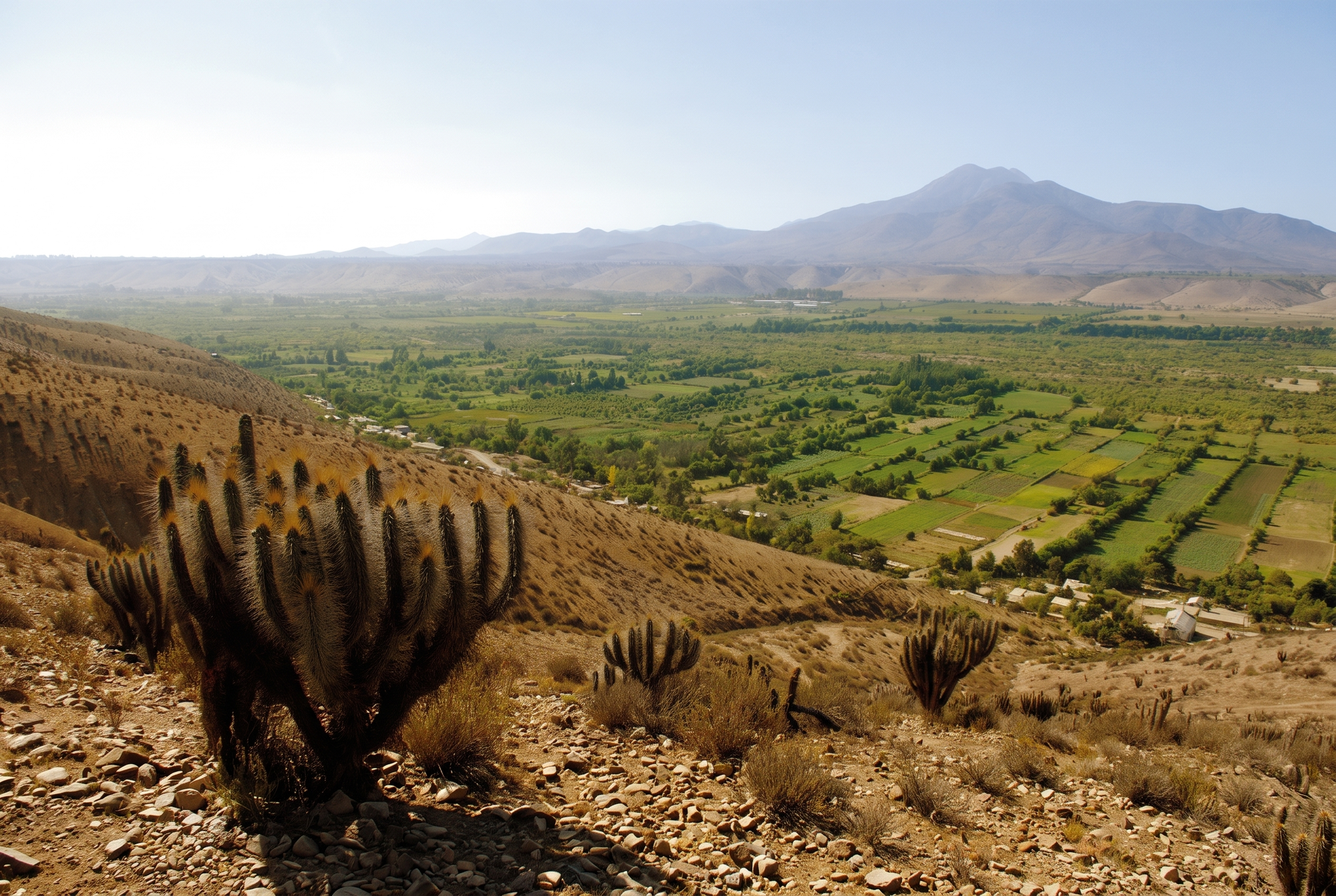
Limarí threads a green river valley through semi-desert, about 290 miles (470 kilometers) north of Santiago in the Coquimbo Region. Long known for pisco grapes, goat cheese and petroglyphs, it has spent the last two decades becoming Chile's most distinctive source of mineral, cool-climate Chardonnay.
Country: Chile
Main grapes: Chardonnay, Syrah, Sauvignon Blanc, Pinot Noir (plus Pedro Jiménez and Moscatel for pisco)
Signature styles: Taut, saline Chardonnay; savory coastal Syrah
Climate: Semi-arid and sunny, cooled by morning ocean fog; about 4 inches (100 millimeters) of rain a year
Key appellations: Limarí Valley DO, within the Coquimbo wine region
Vineyard area: Small by Chilean standards; Chardonnay is the most planted wine grape at about 780 hectares (1,900 acres) (Wines of Chile data published 2023)
2. Why It Matters
Two words: limestone and fog. Limarí holds Chile's greatest concentration of calcareous soil, meaning soil rich in limestone, a rarity in a country dominated by granite and volcanic ground, and it pairs that soil with a cool, foggy coastal climate. The combination produces Chardonnay, and increasingly Pinot Noir and Syrah, with a chalky, saline character that critics compare to fine white Burgundy. In a wine nation built on red exports, Limarí has become the specialist's tip.
3. Land and Climate
At 30 degrees south, Limarí sits on the fringe of the Atacama, the driest non-polar desert on Earth. Rainfall averages about 4 inches (100 millimeters) a year, so every vineyard depends on drip irrigation drawn from rivers and reservoirs fed by Andean snowmelt.
What makes wine possible, and distinctive, is the ocean. Each morning the camanchaca, a dense fog generated over the cold Humboldt Current offshore, rolls up the valley and shades the vines until the sun burns it off. Temperatures near the coast stay remarkably low for the latitude, and most activity centers on the market town of Ovalle. Then there is the ground: ancient marine terraces of porous limestone in a country where such soil is scarce. Grapes here can reach full ripeness while keeping unusually high acidity, and the wines carry a chalky, saline stamp you can pick out blind.
4. Grapes and Styles
Chardonnay is the most planted wine grape and the reason to come. The style is taut rather than tropical: lime, green apple and white flowers over a distinctly chalky, oyster-shell character, with a dry, salty finish. Oak, when used, stays in the background. These are Chile's most Burgundian whites, and the top bottlings from coastal limestone sites built the region's reputation.
Syrah is the red counterpart. Cooler coastal plantings give savory, medium-bodied wines with a peppery edge; warmer inland sites make them fuller and darker-fruited. Sauvignon Blanc offers a stony, citrus alternative to Casablanca's, and Pinot Noir from limestone is a small but fast-improving category. Around all of this, the valley still grows Pedro Jiménez and Moscatel for pisco, the grape brandy that dominated local agriculture for generations.
The opinion: Limarí, not Casablanca, now makes Chile's most distinctive white wine, and it remains underpriced for what lands in the glass.
5. Reading the Label
“DO Limarí Valley” (Denominación de Origen, or denomination of origin) guarantees where the grapes grew. At least 75 percent of grapes, variety and vintage must match the label, and exporters generally observe 85 percent for European markets. Some bottles carry “Coquimbo,” the broader northern wine region that also includes Elqui and Choapa. Neighboring Elqui, about 50 miles (80 kilometers) further north, ships similar coastal styles, so check the valley name if the distinction matters to you.
“Costa,” one of the coastal-to-mountain mentions created in 2011, is worth watching for here: it points to the cool, fog-shaded western sector where the finest Chardonnays grow. “Reserva” and “Gran Reserva” promise only modestly higher alcohol and, for the latter, oak treatment, so a named vineyard or a “Costa” mention is a stronger quality clue. One local distinction matters: pisco, the region's traditional grape spirit, has its own separate denomination and rules. A Limarí wine label and a pisco label are legally different worlds.
6. A Short History
Grapes have grown in Limarí since colonial times, but for centuries they went overwhelmingly to pisco stills, and the valley was better known for its petroglyphs and goat cheese than for wine. The modern chapter is short and steep. From the late 1990s onward, producers recognized what the limestone and fog could do, planted Chardonnay and Syrah toward the coast, and within about 15 years turned Limarí into a fine-wine name. Major Chilean houses and specialist estates now anchor the valley.
Did You Know? Limarí's defining limestone is a former seabed. The tectonic collisions that pushed up the Andes also lifted ancient marine terraces to the surface here, leaving porous calcareous soil that is rare anywhere in Chile. When tasters find an oyster-shell note in Limarí Chardonnay, the geology is being unusually literal.
7. At the Table
The Coquimbo coast nearby supplies the obvious partners. Limarí Chardonnay with seared scallops or grilled white fish is the regional default; the wine's saline finish acts like a squeeze of lemon. Sauvignon Blanc pairs naturally with the valley's own fresh goat cheese. Coastal Syrah suits herb-crusted lamb or duck rather than heavy barbecue. Serve the whites at 48 to 52°F (9 to 11°C), a touch warmer than fridge-cold so the mineral character shows. Decanting is unnecessary. Drink most bottles young, but the best coastal Chardonnays genuinely improve for five to eight years.
Links
Official industry body: Wines of Chile (regional profiles include Limarí) — https://www.winesofchile.org/
Regulator and vineyard census: Servicio Agrícola y Ganadero (SAG) — https://www.sag.gob.cl/ambitos-de-accion/catastro-viticola-nacional
Official tourism board: Chile Travel, Wine Route — https://chile.travel/en/destinations/wine-route/