

A fortified island wine that is deliberately heated and nearly impossible to kill.
1. At a Glance
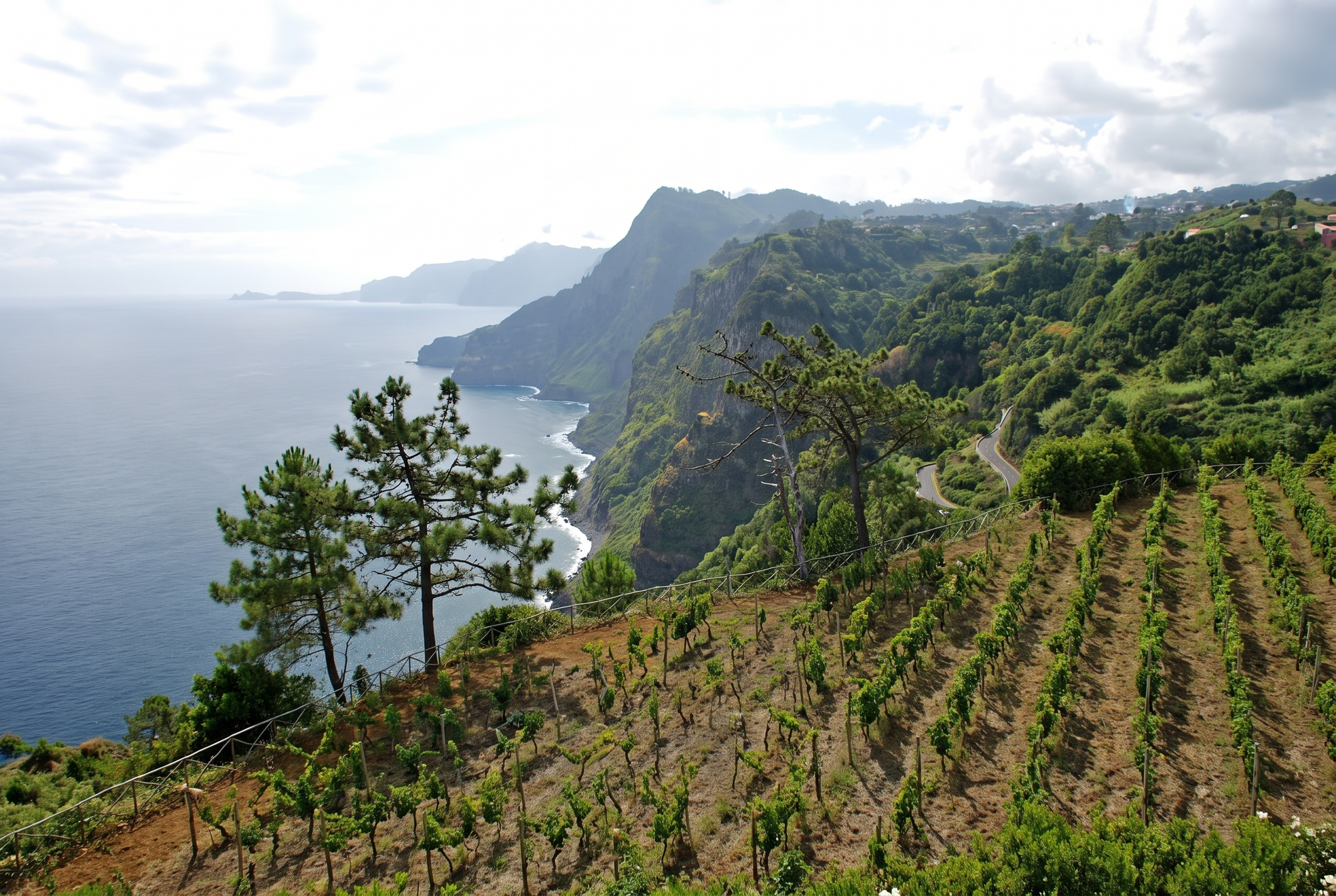
Madeira is a subtropical volcanic island in the Atlantic, about 320 miles (520 kilometers) west of Morocco and 500 miles (805 kilometers) from mainland Portugal, and the name of the fortified wine made on its terraced cliffs. The wine is intentionally warmed and slowly oxidized during aging, processes that would ruin any other wine but give Madeira its signature tang, and a lifespan measured in decades or centuries. A small but growing sideline in crisp, unfortified table wine rounds out the island's output.
Country: Portugal (Autonomous Region of Madeira)
Main grapes: Tinta Negra (red); Sercial, Verdelho, Bual, Malvasia, plus rare Terrantez (white)
Signature styles: Fortified wines from dry to lusciously sweet; small amounts of dry table wine
Climate: Subtropical maritime; mild, humid, with vineyards on steep terraces
Key appellations: DOP Madeira (fortified); Madeirense and Terras Madeirenses (table wines)
Vineyard area Small; thousands of tiny terraced plots on steep slopes
2. Why It Matters
No other wine is made this way. Madeira is fortified with grape spirit, then deliberately exposed to heat and air, either baked for months in warmed tanks or left for years in casks stored in hot attic lofts. The result is effectively indestructible: acidity stays electric, flavors of caramel, citrus peel, and walnut deepen for generations, and an opened bottle keeps for months. Sommeliers call it the closest thing wine has to immortality, and restaurants love it for the same reason: nothing is wasted.
3. Land and Climate
The island is a volcano's flank rising steeply from the sea, so flat land barely exists. Vines grow on poios, narrow hand-built terraces stacked up the slopes, and are traditionally trained on low pergolas called latadas, which lift the fruit off the humid ground and away from rot. Nearly all work is manual; there is nowhere for a tractor to stand, and plots are counted in rows rather than acres.
The climate is mild and damp year-round, with volcanic soils and dramatic differences between the warmer, sunnier south coast and the cooler, wetter north, where the pergolas matter most in keeping humid air off the fruit. Altitude sorts the grapes: Sercial ripens slowly on high, cool sites and keeps searing acidity; Malvasia ripens fully on warm, low ones. High natural acidity is the island's gift, and it is precisely what lets the wine survive the heating that defines it.
4. Grapes and Styles
Four white "noble" grapes map onto four traditional sweetness levels, driest to sweetest: Sercial (dry), Verdelho (medium-dry), Bual (medium-sweet), and Malvasia, historically sold as Malmsey (sweet). Sweetness is set by timing: the winemaker adds high-strength grape spirit to stop fermentation, and the earlier it is added, the more natural sugar remains; Malvasia is fortified almost at the start, Sercial only after weeks of fermenting dry. A fifth noble grape, Terrantez, nearly went extinct and is being replanted with official support.
The everyday grape is Tinta Negra, a versatile red variety that became the island's mainstay after the phylloxera outbreak of 1872 and now stands behind roughly 85 percent of production and most 3- and 5-year blends; since 2015 it may be named on labels. Aging then does the sculpting: the estufagem method bakes young wine at around 113 to 122°F (45 to 50°C) for about three months, while the canteiro method, reserved for finer wines, means years in casks stored in naturally warm lofts. Expect flavors of toffee, dried fig, orange peel, roasted nuts, and a cut of acidity that keeps even the sweetest styles fresh.
5. Reading the Label
Read the sweetness first: a noble grape name (Sercial, Verdelho, Bual, Malvasia) or the Portuguese scale from extra-seco (extra dry) and seco (dry) through meio-doce (medium-sweet) to doce (sweet) tells you the style. "Rainwater" is a lighter, off-dry blend popular in the United States.
Then read the age. "3 years" or "5 years" indicates young blends; 10-, 15-, 20-, 30-, 40- and 50-year bottlings state the character of the blend rather than an exact average. "Colheita" is wine from a single stated year, cask-aged at least five years. "Frasqueira," the summit, is a single-vintage wine aged at least 20 years in wood before bottling. The word "canteiro" signals the slow, cask-in-warm-loft method.
6. A Short History
From the 15th century, Madeira was a supply stop for ships bound across the Atlantic and around Africa, and wine went aboard as cargo. Producers noticed that barrels returning from long tropical voyages tasted better, and eventually reproduced the effect on land with heated stores; fortification made the wine sturdier still. Oidium and phylloxera wrecked the vineyards in the 19th century. The modern industry, regulated today by the island institute IVBAM, rebuilt around the noble grapes and long aging.
Did You Know? Properly stored Madeira from the 18th and 19th centuries is still drinkable today, and once opened, a bottle stays sound for months rather than days. Collectors regularly taste wines older than the countries whose independence they have toasted.
7. At the Table
Serve dry styles cool and sweet styles barely below room temperature. Sercial at 48 to 52°F (9 to 11°C) is a superb aperitif with almonds, olives, or consommé. Verdelho suits smoked fish and rich soups. Bual and Malmsey, at 57 to 61°F (14 to 16°C), pair with caramel desserts, blue cheese, and dark chocolate. Keep an inexpensive bottle for the kitchen as well; a splash transforms sauces and gravies. Decant old Frasqueiras a day ahead; the extra air genuinely helps. An open bottle of Madeira is the most practical fine wine in existence, and every kitchen should keep one.
Links
Regulatory body (IVBAM): https://ivbam.madeira.gov.pt
Official Madeira wine portal (IVBAM): https://vinhomadeira.com
Official tourism board (Visit Madeira): https://visitmadeira.com/en