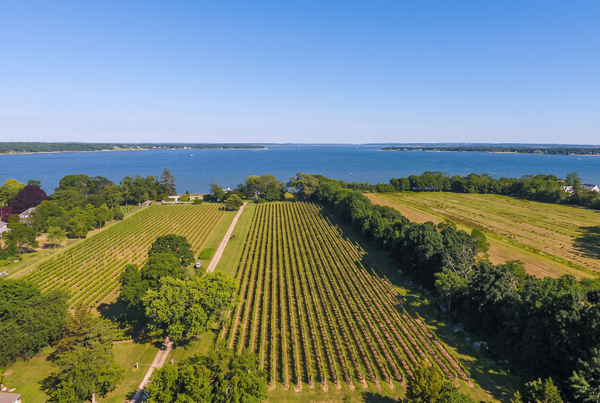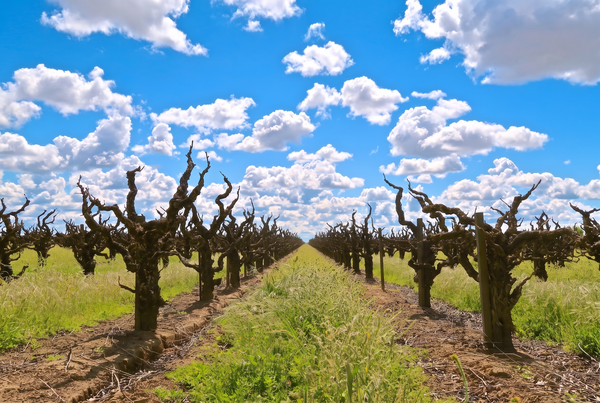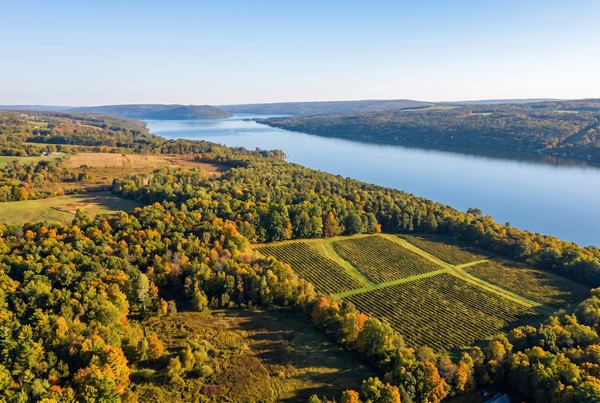


The vineyard where Chile's “Merlot” turned out to be a lost Bordeaux grape.
1. At a Glance
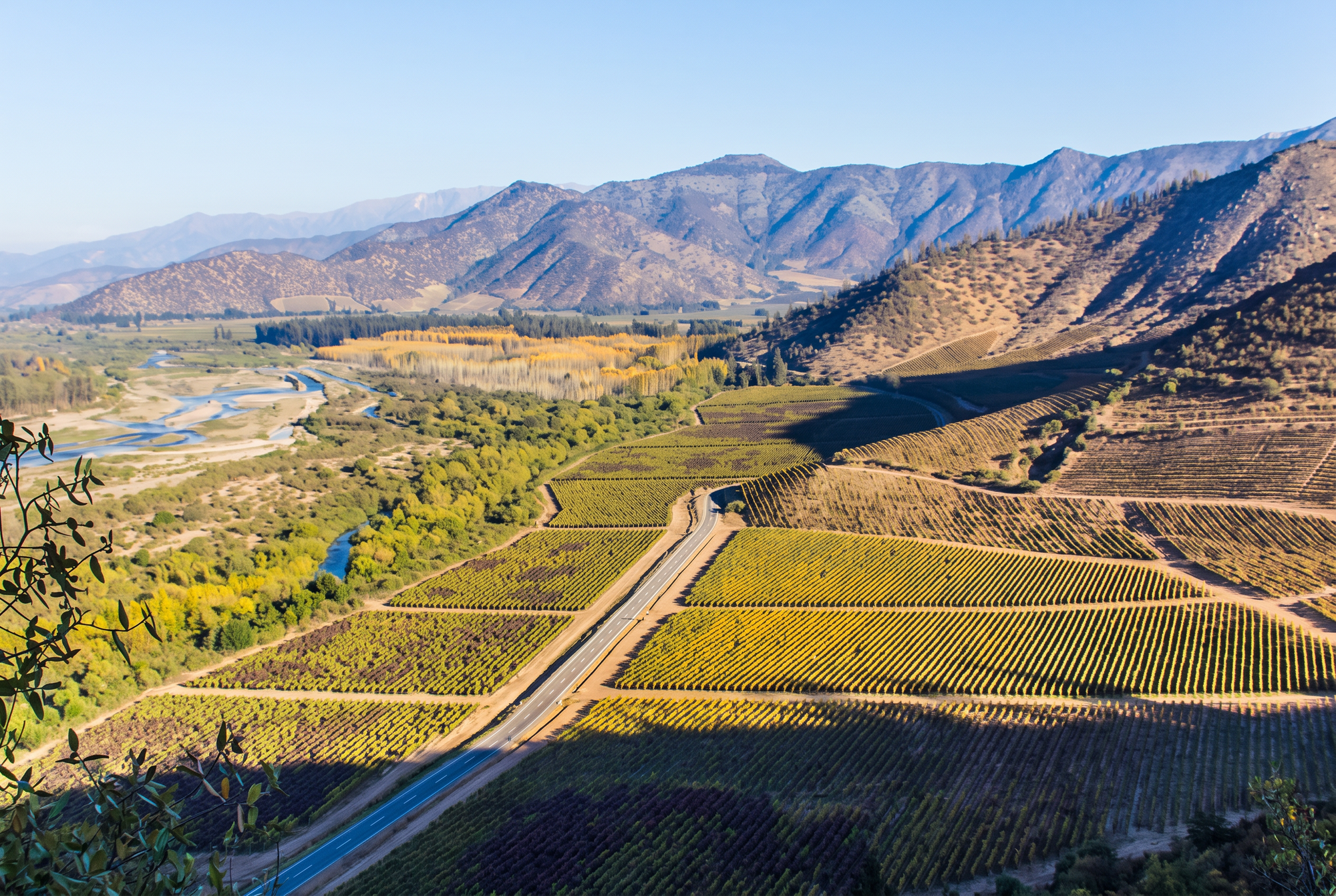
Maipo wraps around the southern edge of Santiago, Chile's capital, and runs east into the foothills of the Andes. It is the country's oldest wine region and still its most prestigious address for Cabernet Sauvignon, the grape that built Chile's reputation abroad. Most of the estates a collector would recognize farm here, within an hour of the city.
Country: Chile
Main grapes: Cabernet Sauvignon, Merlot, Syrah, Carmenère
Signature styles: Firm, blackcurrant-scented Cabernet Sauvignon; polished red blends
Climate: Mediterranean, with hot dry summers and cool wet winters
Key appellations: Maipo Valley DO; Puente Alto and Pirque in the high “Alto Maipo”
Vineyard area: About 8,900 hectares (22,000 acres) of wine grapes in the surrounding Metropolitan Region as of 2024 (SAG national vineyard census)
2. Why It Matters
Maipo is where Chilean wine began and where its modern reputation was won. Spanish settlers planted the first vines near Santiago in the 1540s, and the country's most expensive, most collected reds still come from a handful of gravelly sites at the valley's eastern edge. When critics compare a Chilean Cabernet to good Bordeaux, they are almost always tasting Maipo. The valley also witnessed the 1994 discovery that redefined Chile's entire wine identity. More on that below.
3. Land and Climate
The valley sits between two mountain ranges. To the west, the low coastal range blocks most ocean influence, so summers are dry and dependably warm. To the east, the Andes rise abruptly, and that wall of rock does two useful things. It sends cold air sliding down into the vineyards every evening, stretching out ripening and preserving fresh acidity in the grapes. It also feeds meltwater rivers for irrigation in a region with almost no summer rain.
The most prized ground is the Alto Maipo, the eastern terraces around Puente Alto and Pirque at roughly 1,600 to 2,300 feet (500 to 700 meters). Here the Maipo River has dumped stony, fast-draining alluvial soil, meaning material carried and deposited by water. Poor soil keeps the vines small and the berries concentrated. You taste it as density and firm structure.
4. Grapes and Styles
Cabernet Sauvignon dominates, with about 5,500 hectares (13,600 acres) recorded in Wines of Chile's regional data published in 2023, several times more than any other variety here. Classic Maipo Cabernet shows blackcurrant and dark cherry, a cool herbal freshness, and tannins, the grippy, mouth-drying compounds from grape skins, that are firm but fine. Entry-level bottles are supple and fruit-forward. Wines from Alto Maipo sites climb toward genuine grandeur: denser, more savory, built for a decade or more in the cellar.
Merlot, Syrah and Carmenère play supporting roles, usually as blending partners or mid-priced varietal wines. Puente Alto Cabernet in particular anchors the country's most famous icon blends, wines that now trade on international fine-wine markets. Carmenère from warmer Maipo sites gives dark fruit and spice wrapped in a plush texture. Whites exist, mostly Sauvignon Blanc and Chardonnay from cooler corners, but they are a footnote.
One mild opinion: mid-priced Maipo Cabernet is among the best values in structured red wine anywhere, and it is routinely overlooked in favor of flashier regions.
5. Reading the Label
Chilean labels are simpler than European ones. “DO,” short for Denominación de Origen, means denomination of origin: a guarantee of where the grapes grew, not a quality ranking. If a label says Maipo Valley, at least 75 percent of the grapes must come from there. The same 75 percent rule applies to the stated grape variety and vintage, though most exporters work to 85 percent to satisfy European rules.
“Puente Alto” or “Pirque” on a label signals a specific commune and usually higher ambition. “Andes,” “Entre Cordilleras” or “Costa,” mentions introduced in 2011, tell you whether the vineyard sits toward the mountains, between the ranges, or near the coast. “Reserva” and “Gran Reserva” are loosely regulated; they require slightly higher alcohol and, for Gran Reserva, some oak aging, so treat them as a style hint rather than a promise of quality.
6. A Short History
Vines arrived with Santiago's founding in the 1540s and served local needs for three centuries. The turn came in the mid-1800s, when fortunes from northern mining paid for Bordeaux grape varieties and French-styled estates on the city's outskirts. Those cuttings arrived before phylloxera, the root-eating insect that later devastated Europe's vineyards, a stroke of timing that preserved old plant material. Export success from the 1980s onward pushed quality upward, and the recognition of Puente Alto as a singular site gave Chile its first internationally famous vineyard land.
Did You Know? On November 24, 1994, French vine expert Jean-Michel Boursiquot stopped mid-row in a “Merlot” block at Viña Carmen in Maipo. The twisted stamens told him these vines were Carmenère, a Bordeaux variety presumed lost for a century. DNA testing later confirmed it. Chile's signature grape had been hiding in plain sight for roughly 150 years.
7. At the Table
Maipo Cabernet was made for beef. Chilean asado, meat grilled over coals, is the local default, and the wine's firm tannins also handle braises like cazuela de vacuno, a beef and vegetable stew. Hard, salty cheeses work well too. Serve reds at 60 to 64°F (16 to 18°C), a touch cooler than most rooms. Young Alto Maipo Cabernet tightens up in the glass, so give serious bottles 30 to 60 minutes in a decanter; the top wines reward 10 to 20 years of patience. If you open a Maipo Carmenère instead, pair it with empanadas de pino, the classic beef-and-onion turnovers, and serve it slightly cooler.
Links
Official industry body: Wines of Chile — https://www.winesofchile.org/
Regulator and vineyard census: Servicio Agrícola y Ganadero (SAG) — https://www.sag.gob.cl/ambitos-de-accion/catastro-viticola-nacional
Official tourism board: Chile Travel, Wine Route — https://chile.travel/en/destinations/wine-route/