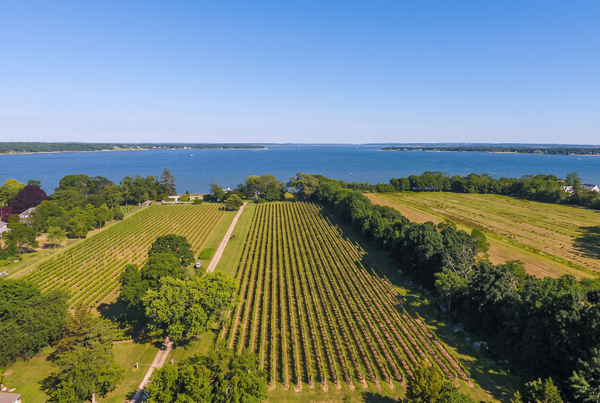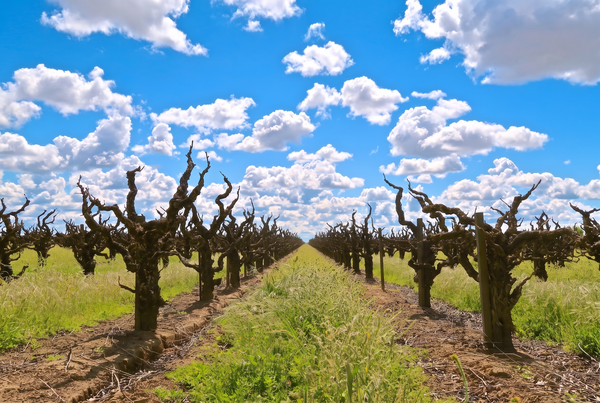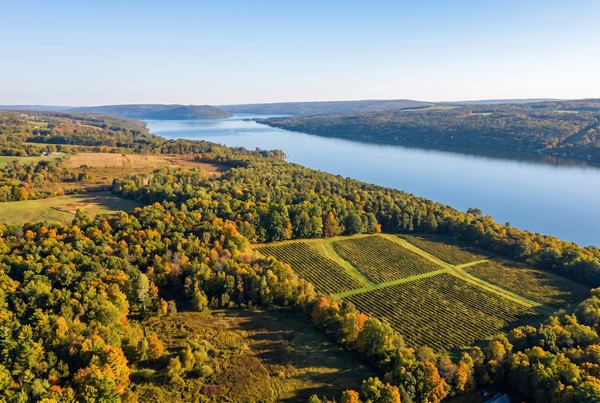


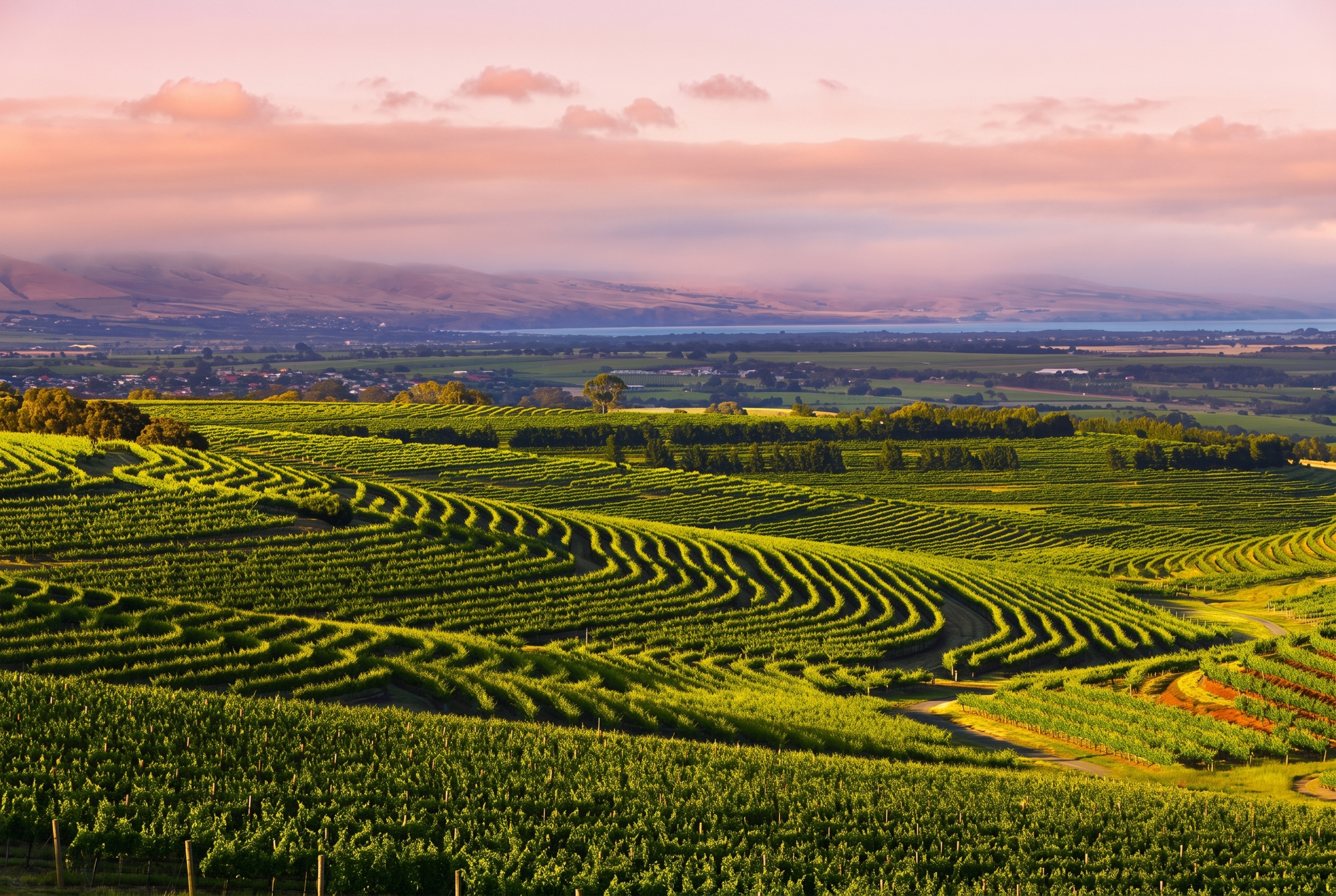
Century-old Grenache bush vines grow within sight of the beach south of Adelaide.
1. At a Glance
McLaren Vale sits about 22 miles (35 kilometers) south of Adelaide on South Australia's Fleurieu Peninsula, squeezed between the Mount Lofty Ranges and the waters of Gulf St Vincent. South Australian winegrowing began here in the late 1830s. The region is famous for plush Shiraz, old bush-vine Grenache, and a national lead in organic, biodynamic, and sustainable farming, with more than 170 producers and some 80 tasting rooms, called cellar doors, packed into a compact district.
Country: Australia
Main grapes: Shiraz, Cabernet Sauvignon, Grenache, Chardonnay; growing Fiano and Vermentino
Signature styles: Rich Shiraz; perfumed old-vine Grenache; GSM blends; Mediterranean whites
Climate: Mediterranean, moderated by sea breezes
Key appellations: McLaren Vale GI (declared 1997), within the Fleurieu zone
Vineyard area: About 18,380 acres (7,438 hectares), 2020 national vineyard scan
2. Why It Matters
McLaren Vale delivers what many drinkers want from Australia, generous sun-ripened reds, while quietly leading the country's reinvention. It has Australia's highest concentration of certified organic and biodynamic vineyards, pioneered the region-wide sustainability reporting later adopted nationally, and moved early on Mediterranean grapes like Fiano and Vermentino as the climate warms. Its old bush-vine Grenache has become one of Australian wine's hottest categories, celebrated by critics who a generation ago dismissed the grape as bulk material.
3. Land and Climate
The vale is a natural amphitheater opening onto the sea. Warm, dry summers ripen red grapes with ease, while afternoon breezes off Gulf St Vincent and gully winds from the hills cool the vineyards at night, preserving freshness. Rain comes mostly in winter, so disease pressure is low and many old vineyards grow as unirrigated bush vines.
Underfoot, the geology is remarkably jumbled, with dozens of distinct soil types mapped across a small area: sand at Blewitt Springs that gives fragrant, fine-boned Grenache; heavier clays and loams on the flats that build rich Shiraz; limestone and higher, cooler slopes toward Clarendon that add structure. Because South Australia has never had phylloxera, the root-eating vine pest that devastated Europe, many vines here grow on their own original roots, some for more than a century, protected by strict quarantine rules that greet every visitor.
4. Grapes and Styles
Shiraz accounts for a little over half of all plantings (regional figures, mid-2020s) and sets the house style: full-bodied, saturated with blackberry and dark chocolate, softer and rounder in tannin than Barossa's version, with a saline freshness the locals credit to the sea air. Most drink beautifully at 3 to 10 years; single-vineyard wines from producers like d'Arenberg, Wirra Wirra, and Yangarra go longer.
Grenache is the rising star, and honestly often the better buy: pale-ish, perfumed, raspberry-and-spice reds from gnarled old bush vines, closer in spirit to Pinot Noir than to blockbuster Shiraz. The traditional GSM blend combines Grenache, Shiraz, and Mataro (Mourvedre).
Cabernet Sauvignon adds a firm, blackcurrant-driven option, completing what locals call the trilogy of regional reds. Whites were long an afterthought, but Fiano and Vermentino, Italian varieties built for heat, now make some of Australia's best examples: textural, saline, and refreshing, and a smarter climate bet than the Chardonnay that persists in cooler corners. Tempranillo, Sangiovese, and Nero d'Avola extend the Mediterranean theme among the reds.
5. Reading the Label
"McLaren Vale" is a Geographical Indication, or GI, Australia's legally defined wine region system; the name, declared in 1997, requires at least 85 percent of the fruit to come from inside the boundary. The same 85 percent rule applies to any named grape variety or vintage, and blends must list grapes in descending order, so a "Grenache Shiraz Mataro" contains more Grenache than anything else.
There are no official subregions, but district names such as Blewitt Springs, Clarendon, or Willunga appear on labels as informal indications of site; Blewitt Springs, in particular, signals sandy-soil Grenache. Terms like "organic" or "biodynamic" on Australian labels indicate certification by an accredited body. "Bush vine" or "old vine" claims are unregulated here, unlike in the Barossa.
6. A Short History
English settlers planted vines in the late 1830s, and names from that first wave, Reynell and Hardy among them, became pillars of Australian wine; the vale is fairly described as the birthplace of South Australian winegrowing. For decades the region shipped sturdy reds and fortifieds to Britain. The modern era brought a wave of new wineries from the 1960s and 70s, GI status in 1997, and a deliberate turn toward sustainability and Mediterranean varieties that has redefined the vale's identity.
Did You Know? McLaren Vale claims more certified organic and biodynamic vineyards than any other Australian wine region, and it remains entirely free of phylloxera, which is why gnarled Grenache and Shiraz bush vines planted in the 19th century still produce commercial crops on their own roots.
7. At the Table
McLaren Vale Shiraz stands up to barbecue, braised beef, and anything char-grilled; serve it around 61 to 64 degrees Fahrenheit (16 to 18 Celsius) and give young, dense bottles a 30-to-60-minute decant, meaning a rest in a wide carafe to soften with air. Grenache is more flexible: try it with slow-roasted lamb shoulder, pork, or even richer fish like tuna, served a touch cooler, about 59 degrees Fahrenheit (15 Celsius), and never decanted for long, since its perfume fades. Fiano and Vermentino are built for the local calamari, whiting, and olive-oil-driven Mediterranean food, well chilled. Most reds here drink well young; only the top Shiraz and Cabernet demand a decade of patience.
Links
Official regional body (McLaren Vale Grape Wine & Tourism Association): https://mclarenvale.info/
Wine Australia regional profile: https://www.wineaustralia.com/market-insights/regions-and-varieties/south-australia-wines/mclaren-vale